
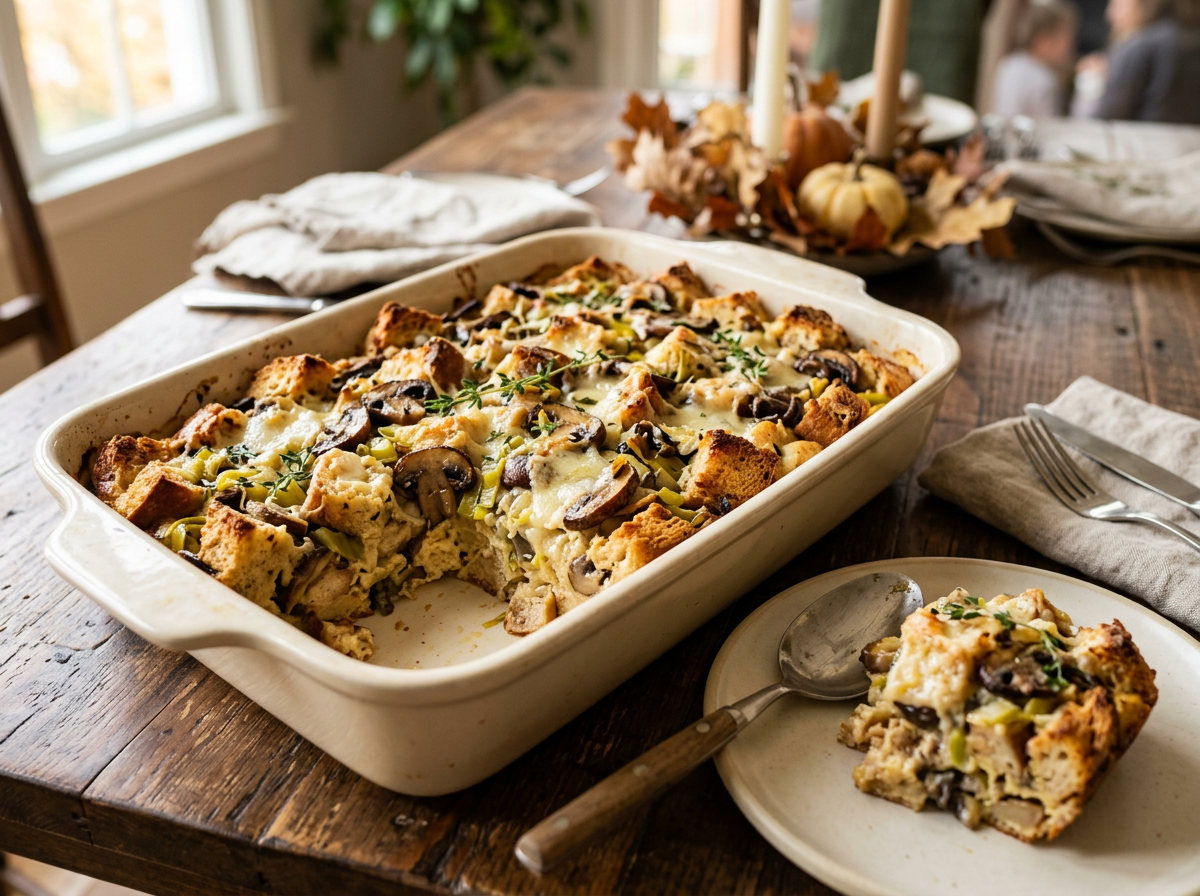
A spoonful of this savory bread pudding brings together crisp, golden bread, a soft custardy center, and pockets of melted Gruyère. Browned mushrooms give it an earthy richness, while buttery leeks add a gentle sweetness that keeps the dish from feeling too heavy. Fresh thyme ties everything together, with a little Dijon mustard adding depth to the custard.
It’s a natural fit for Thanksgiving, especially if you enjoy a bread-based side with a creamy interior and plenty of browned edges. But it deserves a place beyond the holiday table, too. Serve it with roast chicken for Sunday dinner, bring it to a brunch, or make it the main event alongside a sharp, leafy salad.
A Rich, Savory Alternative to Stuffing
Savory bread pudding shares some ingredients with stuffing, but its texture gives it a character of its own. Eggs, milk, and cream soak into the bread and set as the casserole bakes, creating a tender interior that holds together when spooned onto a plate. The exposed bread on top becomes crisp, giving each serving a mix of soft and crunchy bites.
The vegetables are just as important as the custard. Cooking the mushrooms until they brown concentrates their flavor and removes moisture that could otherwise water down the dish. The leeks soften into silky ribbons, and the Gruyère melts throughout rather than forming one thick layer of cheese. The result is rich enough to feel special, with a clear balance of bread, vegetables, and custard.
Choosing the Best Ingredients
Start with a Sturdy Loaf
Country bread, French bread, and mild sourdough all work well here. Look for a loaf with a substantial crumb that can absorb liquid while retaining some structure. Very airy bread with large holes will produce a different balance of bread and custard, which is why weighing the bread is more reliable than measuring cubes alone.
Leave the crust on for texture, trimming away only particularly thick or tough sections. Cut the bread into roughly 1-inch cubes so the pieces remain distinct after soaking. Even day-old bread benefits from a short time in a low oven: stale bread can still contain plenty of moisture, while oven-dried bread takes up the custard more readily.
Use Tender Leeks and Well-Browned Mushrooms
Use the white and light green portions of the leeks, saving the tough dark green tops for stock if you like. Dirt often hides between their layers, so halve the trimmed leeks lengthwise, slice them, and swish the slices in a large bowl of cold water. Lift them out rather than pouring them through a strainer with the sandy water, then drain and dry well.
Cremini mushrooms are an easy, flavorful choice. A mixture of cremini and shiitake adds variety, though shiitake stems should be removed before slicing. Whichever mushrooms you choose, cook them in batches so they have room to brown. A crowded pan traps steam and makes it harder to develop those savory golden edges.
Choose a Flavorful Melting Cheese
Gruyère brings a nutty, slightly sweet flavor that complements both the mushrooms and leeks. Grating it from a block helps it melt smoothly and dividing it between the filling and topping gives the whole casserole flavor while encouraging a golden surface.
The custard uses whole milk and heavy cream for richness, with eggs providing enough structure to hold everything together. Dijon mustard and fresh thyme season the mixture without overpowering the vegetables. Keep the salt measured: the bread and cheese contribute seasoning of their own.
How to Get a Tender Center and Golden Top
The bread should feel dry on the surface after its first trip through the oven, but it doesn’t need to become deeply toasted or hard all the way through. This drying step gives you a more consistent starting point and helps prevent a dense, soggy layer at the bottom.
Once the vegetables and bread are combined with the custard, allow time for soaking. Turn the mixture gently once or twice so the upper cubes absorb liquid as well. After the rest, most of the custard should be taken up by the bread, though a little liquid between the pieces is normal. Avoid pressing the mixture into a tightly packed mass; a loosely arranged surface leaves plenty of edges to crisp.
Bake covered at first to allow the center to heat without overbrowning the top, then uncover to finish. The pudding is ready when the center is set with no liquid custard pooling between the bread cubes. Resting it before serving gives the custard time to settle while keeping the interior tender.
Recipe: Savory Bread Pudding with Leeks, Mushrooms, and Gruyère
Makes 8-10 servings
Ingredients
- 1 pound sturdy country bread, French bread, or mild sourdough, cut into 1-inch cubes (about 10–12 cups)
- 3 tablespoons unsalted butter, divided, plus more for greasing the dish
- 2 tablespoons olive oil, divided
- 1 pound cremini mushrooms, trimmed and sliced about ¼ inch thick
- 3 medium leeks, white and light green parts only, cleaned and sliced (about 3 cups)
- 3 garlic cloves, minced
- 2 teaspoons fresh thyme leaves, plus more for garnish if desired
- 1 teaspoon kosher salt, divided, plus more to taste
- ½ teaspoon freshly ground black pepper, divided
- 6 large eggs
- 2½ cups whole milk
- 1 cup heavy cream
- 2 teaspoons Dijon mustard
- 8 ounces Gruyère, coarsely grated (about 2 cups), divided
Instructions
- Heat the oven to 300°F. Spread the bread cubes on two rimmed baking sheets. Bake for 15–20 minutes, tossing halfway through, until dry on the surface but not deeply browned. Transfer to a large mixing bowl. Increase the oven temperature to 350°F and butter the baking dish.
- Heat 1 tablespoon each of the butter and olive oil in a large skillet over medium-high heat. Add half the mushrooms and cook for 6–8 minutes, stirring occasionally, until browned and their released liquid has evaporated. Transfer to a bowl. Repeat with the remaining mushrooms, 1 tablespoon butter, and remaining tablespoon olive oil. Season the cooked mushrooms with ¼ teaspoon salt and ¼ teaspoon pepper.
- Reduce the heat to medium and melt the remaining tablespoon butter in the skillet. Add the leeks and ¼ teaspoon salt. Cook for 8–10 minutes, stirring often, until tender, reducing the heat if they begin to brown too quickly. Add the garlic and thyme and cook for 1 minute. Return the mushrooms to the pan, combine, and remove from the heat. Let cool for about 10 minutes.
- Whisk the eggs, milk, cream, Dijon, remaining ½ teaspoon salt, and remaining ¼ teaspoon pepper in a separate bowl until evenly combined.
- Add the vegetables and 1½ cups of the Gruyère to the bread. Pour in the custard and fold gently to combine. Let stand for 30 minutes, turning gently twice to moisten the bread evenly.
- Transfer to the prepared dish, spreading the mixture evenly without packing it down. Sprinkle with the remaining ½ cup Gruyère. Cover with buttered foil, buttered side down, and bake for 25 minutes.
- Uncover and bake for another 25–35 minutes, until the top is golden and the center is set with no liquid custard visible when gently checked with a knife. A thermometer inserted into the center should register at least 160°F. If the top browns before the center sets, loosely cover with foil.
- Let rest for 15 minutes before serving. Garnish with additional thyme if desired.
Recipe Notes
- Bread density affects how quickly the custard is absorbed, so use the bread weight as your main guide. If a few cubes still look dry during the soaking period, gently turn them into the liquid rather than adding more milk immediately. The finished mixture should be thoroughly moistened without becoming a smooth mash.
- Salt levels vary among breads and cheeses, and kosher salt brands differ in density. Use a light hand if your loaf is particularly salty. For a vegetarian dish, check that the Gruyère is made with microbial or vegetarian rennet.
How to Make It Ahead
For an easier cooking day, dry the bread up to two days ahead and store it in an airtight container once completely cool. You can also cook the mushroom and leek mixture a day ahead, cool it, and refrigerate it in a covered container. With those components ready, assembly is mostly a matter of whisking the custard and grating the cheese.
To assemble the whole dish ahead, combine the bread, cooled vegetables, cheese, and custard, transfer to the baking dish, and refrigerate promptly, covered, for up to 24 hours. Reserve the topping cheese separately and add it just before baking. The overnight rest replaces the 30-minute countertop soak.
Bake the chilled pudding with the same covered-then-uncovered method, allowing approximately 10–20 additional minutes and checking the center for doneness. Use a baking dish rated for refrigerator-to-oven use and follow its manufacturer’s instructions to avoid thermal shock. A metal baking pan is a practical choice for this make-ahead approach.
Variations and Substitutions
Comté makes an especially good substitute for Gruyère, with a similar balance of nuttiness and richness. Fontina produces a milder, softer result, while a flavorful Swiss cheese is another accessible option. Whichever cheese you use, choose one that melts well and has enough character to stand alongside the mushrooms.
For a greener version, fold in about 1 cup of cooked, well-drained spinach or finely chopped cooked kale. Remove excess moisture before adding it to the bread mixture. Cooked bacon, pancetta, or browned sausage also works well; use about ½ cup crumbled bacon or pancetta, or up to 8 ounces cooked sausage, and reduce the added salt to account for the extra seasoning.
A sturdy gluten-free loaf can replace the regular bread by weight. Dry it as directed, then check its texture during soaking because different loaves absorb custard differently and some break down more readily. Fold gently to preserve the cubes and verify that the mustard and other packaged ingredients suit your gluten-free needs.
What to Serve with Savory Bread Pudding
At Thanksgiving, this bread pudding pairs beautifully with roast turkey, tart cranberry sauce, and simply prepared green vegetables. Its richness means it can take the place of another substantial bread-based side, leaving room for brighter dishes such as a lemony salad or green beans with a light vinaigrette.
Outside the holidays, serve it with roast chicken, pork tenderloin, or beef. It also makes a satisfying vegetarian main dish alongside an arugula or mixed greens salad dressed with mustard vinaigrette. For brunch, add a platter of fresh fruit or a crisp apple salad to balance the custard and cheese.
Storing and Reheating
Refrigerate leftovers within two hours, dividing them into shallow covered containers so they cool promptly. Store in the refrigerator for up to 3–4 days. The pudding firms as it chills, which makes it easy to cut into portions for another meal.
Reheat portions in a covered oven-safe dish at 350°F until hot throughout, then uncover briefly to restore some crispness to the top. Add a small splash of milk around the edges if the bread looks dry. A microwave works for individual servings, though the surface will soften. Reheat leftovers to 165°F in the center.
For longer storage, freeze cooled individual portions in airtight containers for up to two months for best quality. Thaw overnight in the refrigerator before reheating. The custard may be slightly less delicate after freezing, but the smaller portions reheat more evenly than a whole frozen casserole.
With its browned edges, tender bread, and generous layers of vegetables and cheese, this savory bread pudding is a side dish worth making room for. Prepare it ahead for a holiday meal or bake it on a quiet weekend, then serve it while the top is still crisp and the Gruyère is warm and melted.



Leave a Reply