
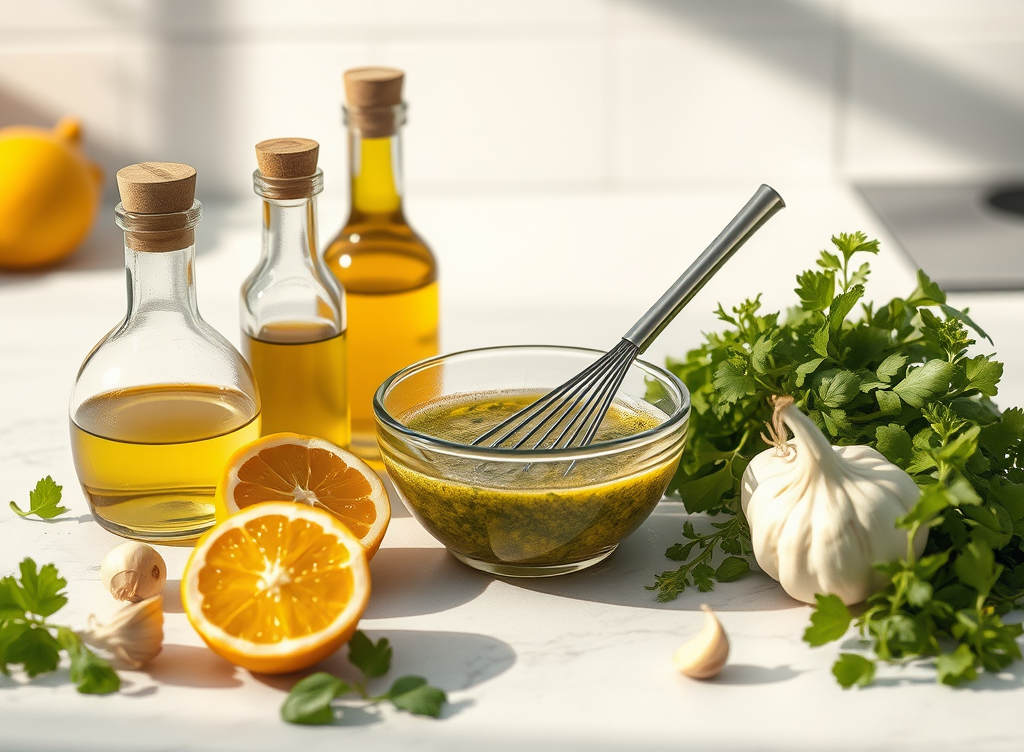
When the weather warms up, salads often steal the spotlight. And nothing brings them to life quite like a homemade vinaigrette. Simple, fresh, and endlessly adaptable, mastering a basic vinaigrette isn’t just a recipe, it’s a technique you’ll use all year long. Here’s how to make it your own.
The Classic Ratio: 3 to 1
At the heart of every vinaigrette is a simple formula:
3 parts fat + 1 part acid
Step-by-Step: How to Make a Basic Vinaigrette
Think of this ratio as a starting point, not a rule carved in stone. Love a sharper bite? Add a little more acid. Prefer something milder? Use a bit less. Once you understand the balance of fat and acid, you can mix and match ingredients to suit your taste and what you have on hand.
- Choose your acid – vinegar (like red wine, white wine, balsamic, sherry, apple cider) or citrus juice (lemon, lime, orange).
- Add flavor boosters – minced garlic or shallots, mustard, honey, maple syrup, ginger, or fresh herbs.
- Season – a dash of salt and freshly ground black pepper. A pinch of sugar can help mellow an especially sour or tart dressing.
- Whisk or shake – combine the acid and seasonings in a bowl or jar, then slowly whisk in or shake with the fat until it emulsifies.
- Taste and adjust – add more acid, fat, or seasoning as needed.
Oils, Fats, and Acids: Mix and Match
Your 3 parts fat doesn’t have to be only oil:
- Extra virgin olive oil
- Neutral oils like grapeseed, avocado, or sunflower
- Melted bacon fat for a smoky twist
- A spoonful of mayonnaise or Greek yogurt for creaminess
- Nut oils like walnut or hazelnut oil
Your 1 part acid isn’t limited to vinegar either:
- Fresh citrus juice (lemon, lime, orange)
- Wine vinegars, apple cider vinegar, balsamic, or sherry vinegar
- Even a splash of pickle brine for something unexpected
The fun comes from pairing these in ways that complement your salad ingredients — or using what’s already in your pantry.
Tips for Success
- Emulsify easily by adding mustard, honey, or even a spoonful of mayo — these help the dressing stay together rather than separate.
- Dress right before serving so your greens stay crisp.
- Make extra — most vinaigrettes keep in the fridge for about a week. Just give it a good shake before using.
Beyond Greens: Other Delicious Uses
Vinaigrettes aren’t just for lettuce. Try drizzling over:
- Roasted or grilled vegetables
- Grain salads with quinoa, farro, or bulgur
- Cold pasta salads
- Beans or lentil salads
- As a quick marinade for chicken, fish, or tofu
Our Favorite Flavor Combos
- Classic: Lemon juice + olive oil + Dijon mustard + fresh thyme
- For heartier greens like kale: Balsamic vinegar + olive oil + honey + cracked black pepper
- Great for southwestern or taco salad: Lime juice + avocado oil + chopped cilantro + pinch of cumin
- Perfect for fall salads with roasted squash: Sherry vinegar + walnut oil + minced shallot + splash of maple syrup
- Creamy dill: Dill pickle juice + mayo + fresh dill
Once you know the simple 3-to-1 ratio, homemade vinaigrette becomes less of a recipe and more of a habit. Start with the basics, taste as you go, and don’t be afraid to get creative — it’s the easiest way to turn even the simplest salad into something special.



Leave a Reply