
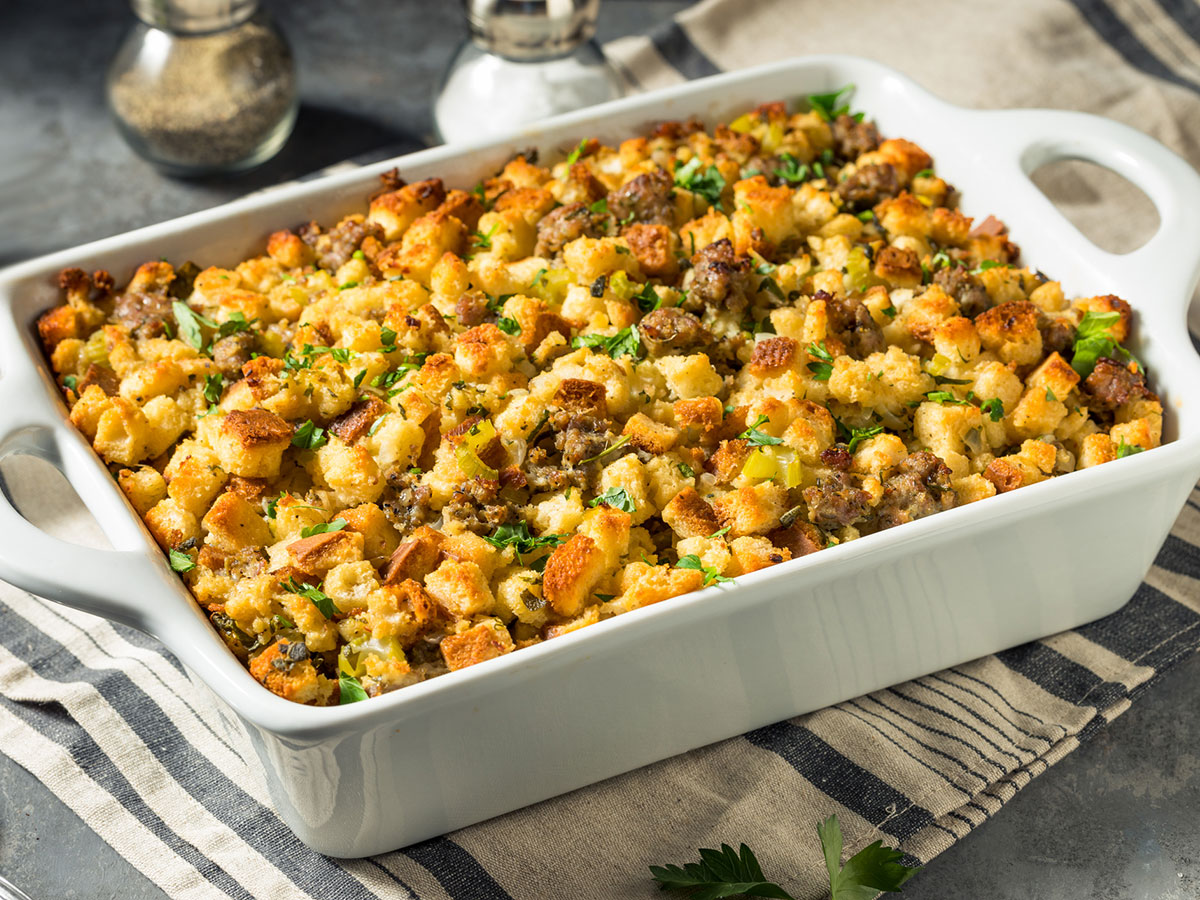
Stuffing is one of those dishes that feels like the heartbeat of the Thanksgiving table—warm, savory, nostalgic, and adaptable. Every family has a version they swear by, whether it’s baked inside the turkey, prepared in a casserole dish, or made with sourdough, cornbread, sausage, apples, mushrooms, or herbs. This guide breaks down the essentials so you can master the classic version and make it your own with confidence.
Stuffing vs. Dressing: Is There Really a Difference?
Traditionally, stuffing referred to the mixture cooked inside the turkey, while dressing was baked separately in a casserole dish. Today, the terms are often used interchangeably, but how you cook it still has real implications for texture, timing, and volume.
The difference isn’t just the name—it’s the cooking method and the results it yields.
Stuffing (Inside the Bird)
When cooked inside the turkey, stuffing absorbs flavorful drippings, which makes it incredibly moist, rich, and deeply savory. But it also means:
- Longer cook times: A stuffed turkey requires longer cooking time, roughly an additional 5 minutes per pound.
- No crispy edges: Stuffing inside the bird stays soft, moist and tender throughout.
- Limited quantity: You can only bake as much stuffing as the cavity can hold.
Dressing (Baked Separately)
Baking the mixture on its own gives you:
- Crispy, golden edges: The surface caramelizes beautifully in the oven.
- Make-ahead flexibility: Dressing can be assembled in advance and baked just before serving.
- Scalability: You can easily double or triple the amount to feed a larger group.
A Great Approach for a Crowd
If you’re hosting a big Thanksgiving, consider making both. Cook a portion inside the turkey for moisture and flavor, and bake another batch separately for crisp, golden texture. Guests can choose their favorite—or enjoy a little of both.
The Anatomy of a Classic Stuffing
Nearly every stuffing recipe—no matter how fancy or tradition-bound—comes back to a few core elements. Knowing these building blocks helps you tweak or reinvent your own signature version.
Bread
Bread gives stuffing its structure, so it must be dry enough to absorb stock. Use white sandwich bread, French bread, Italian bread, or sourdough. Cut into cubes and dry overnight or toast lightly in the oven.
Aromatics
A mix of onions and celery is essential for flavor and texture. Many cooks also add garlic, leeks, or shallots for depth.
Fat
Butter makes stuffing rich and aromatic. Olive oil works too, especially if you’re adding Mediterranean flavors.
Herbs
Fresh parsley, sage, rosemary, and thyme are the classic quartet. Dried herbs can be used but require adjusting quantities.
Stock
Chicken or turkey stock moistens the bread without making it soggy. Add it gradually so the mixture feels damp but not wet.
Seasoning
Salt and pepper bring everything into balance. Poultry seasoning, a splash of white wine, or a touch of Worcestershire can add complexity.
Variations on a Classic
Once you’ve mastered the building blocks, stuffing becomes a canvas. Try these adaptable ideas:
- Sausage & Herb Stuffing: Add browned Italian or breakfast sausage to the classic recipe for richness and savory depth.
- Mushroom & Leek Stuffing: Sauté sliced mushrooms and leeks until caramelized for an earthy, aromatic version.
- Apple & Cranberry Stuffing: Sweet-tart fruit adds brightness and a festive note.
- Parmesan & Herb Sourdough Stuffing: Sourdough’s tang pairs beautifully with nutty Parmesan.
- Nutty Herb Stuffing: Toast pecans, walnuts, or chestnuts and fold them into the bread mixture for crunch.
Tips for the Best Stuffing Every Time
- Dry Your Bread Properly: Dry bread absorbs more flavor and holds its structure. Cube bread the night before or toast it at a low temperature until it feels slightly crisp.
- Sauté Aromatics Low and Slow: Cooking onions and celery gently in butter brings out their sweetness and prevents browning.
- Add Stock Gradually: You want stuffing that’s moist but never mushy. Drizzle in stock slowly and stop when the mixture holds together when pressed but doesn’t release liquid.
- Season as You Go: Bread absorbs salt, so taste and adjust seasoning before baking. Fresh herbs should go in at the end so they stay bright.
- Aim for Textural Contrast: Bake stuffing uncovered for a crispy top, or cover for a softer result. A compromise: Bake covered, then uncover for the final 15 minutes.
- Make It Ahead: Assemble stuffing a day in advance and refrigerate. Bake just before serving. Leftovers reheat beautifully in the oven.
Three Essential Stuffing Recipes
Classic Herb Stuffing

Makes 8 servings
Ingredients
- 12 cups cubed day-old bread (about 1 large loaf)
- 8 tablespoons (1 stick) unsalted butter
- 1 large onion, diced
- 3 celery stalks, diced
- 2 cloves garlic, minced
- ½ cup chopped fresh parsley
- 1 tablespoon fresh sage, chopped
- 1 tablespoon fresh thyme leaves
- 1 teaspoon fresh rosemary, minced
- 2–3 cups chicken or turkey stock, warmed
- 2 large eggs, lightly beaten
- 1 teaspoon salt, plus more to taste
- ½ teaspoon black pepper
Instructions
- Preheat oven to 350°F. Grease a 9×13-inch baking dish.
- Spread the cubed bread on a baking sheet and toast 10–15 minutes until dry but not browned.
- In a large skillet, melt the butter over medium heat. Add the onion and celery and cook 10 minutes, stirring often, until tender. Add the garlic and cook 1 minute more.
- Transfer the mixture to a large bowl. Add bread cubes, parsley, sage, thyme, and rosemary.
- Pour in 2 cups of stock and the beaten eggs. Toss gently. Add more stock if needed until the mixture feels moist but not soggy.
- Season with salt and pepper.
- Transfer to the baking dish. Cover with foil and bake 30 minutes.
- Remove foil and bake an additional 15–20 minutes, until the top is golden and crisp.
Cornbread Stuffing with Sage & Onion

Makes 8 servings
Ingredients
- 10 cups crumbled day-old cornbread
- 6 tablespoons unsalted butter
- 1 large onion, diced
- 3 celery stalks, diced
- 2 cloves garlic, minced
- 1 tablespoon fresh sage, chopped
- 1 teaspoon thyme leaves
- 2 eggs, lightly beaten
- 2–3 cups chicken stock
- 1 teaspoon salt
- ½ teaspoon black pepper
Instructions
- Preheat oven to 350°F. Grease a 9×13-inch dish.
- Spread cornbread on a baking sheet and toast 10 minutes to dry slightly.
- Melt butter in a skillet over medium heat. Add onion and celery and cook 10 minutes until soft. Add garlic; cook 1 minute.
- Transfer mixture to a large bowl. Add sage, thyme, and cornbread.
- Add 2 cups of stock and eggs; fold gently. Add more stock as needed to moisten.
- Season with salt and pepper.
- Transfer to the baking dish, cover, and bake 25–30 minutes.
- Uncover and bake 10–15 minutes more until lightly golden.
Gluten-Free Wild Rice & Mushroom Dressing

Makes 6–8 servings
Ingredients
- 2 cups uncooked rice
- 4 cups chicken or vegetable stock
- 3 tablespoons olive oil or butter
- 1 large onion, diced
- 2 celery stalks, diced
- 8 ounces mushrooms, sliced
- 2 cloves garlic, minced
- ½ cup chopped fresh parsley
- 1 tablespoon fresh thyme leaves
- 1 tablespoon fresh sage, chopped
- ½ cup chopped toasted pecans or walnuts (optional)
- Salt and black pepper, to taste
Instructions
- In a large pot, combine rice and stock. Bring to a boil, reduce heat, cover, and simmer 40–45 minutes or until tender.
- Meanwhile, heat oil in a large skillet over medium heat. Add onion and celery; cook 8–10 minutes.
- Add mushrooms and cook until browned and tender, about 7 minutes. Add garlic and cook 1 minute.
- Transfer cooked rice to a large bowl. Add vegetable mixture, parsley, thyme, sage, and nuts (if using).
- Season to taste with salt and pepper.
- Transfer mixture to a greased baking dish. Bake at 350°F for 20 minutes to warm through before.
Stuffing is one of those timeless Thanksgiving dishes that brings comfort, nostalgia, and a sense of tradition to the table. Whether you prefer the rich, tender texture of stuffing cooked inside the bird or the golden, crispy edges of dressing baked in a casserole, the beauty of this dish is its adaptability. Once you understand the core formula, you can customize it to suit your holiday menu, your guests’ dietary needs, or simply what you have on hand. With the classic recipe, the cornbread variation, and the gluten-free rice version in your toolkit, you’re ready to create a stuffing that feels both dependable and special—no matter how you celebrate.



Leave a Reply