
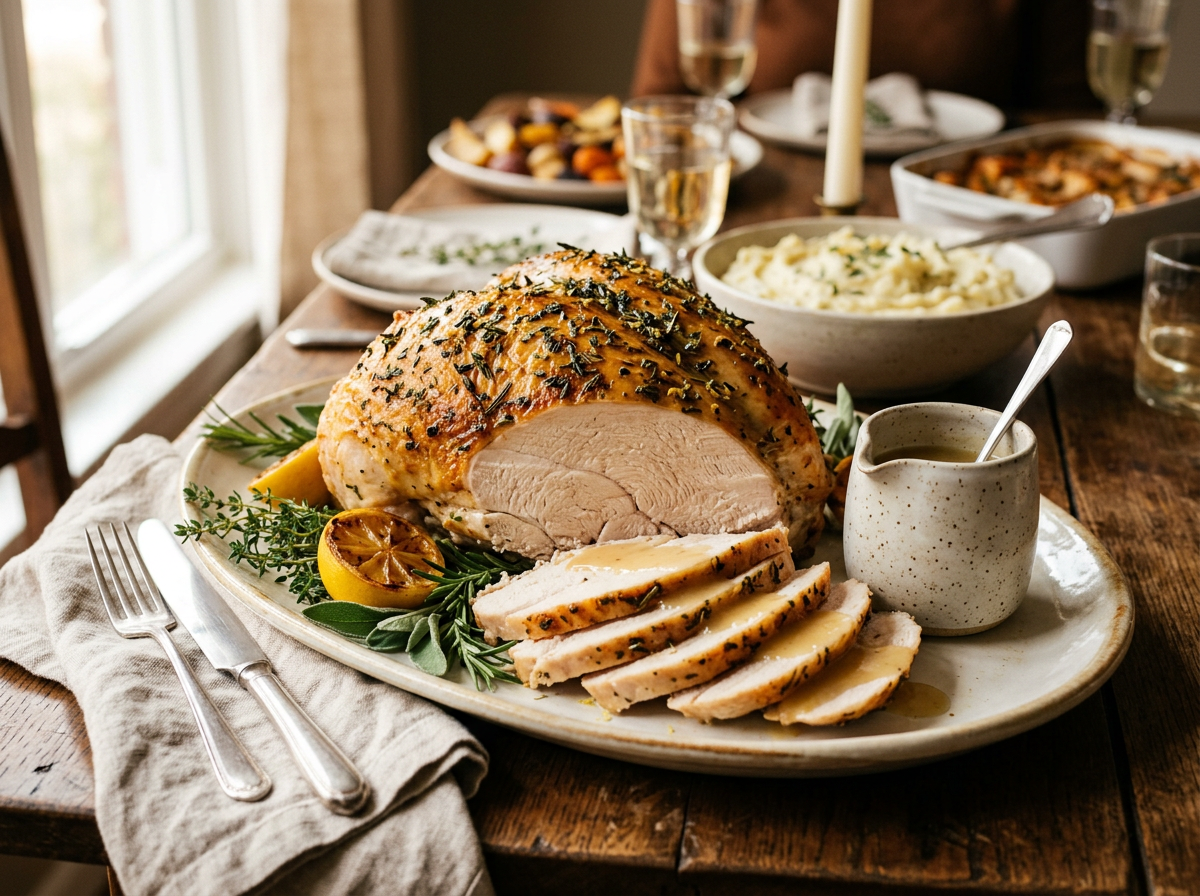
A whole turkey makes a beautiful holiday centerpiece, but a smaller gathering calls for something a little more manageable. This slow cooker turkey breast delivers the familiar flavors of a holiday roast with fresh lemon, garlic, and a generous handful of herbs. Butter tucked beneath the skin seasons the meat, while onion and celery flavor the juices that collect below.
It is an especially useful choice for a small Thanksgiving dinner, when oven space is often spoken for long before the turkey goes in. The slow cooker handles most of the cooking, leaving the oven available for stuffing, casseroles, and vegetables. A quick turn under the broiler at the end gives the turkey a golden finish, and the cooking juices become a simple gravy to spoon over the sliced breast.
Why Cook Turkey Breast in a Slow Cooker?
Turkey breast is lean, so the goal is to cook it through without leaving it on the heat longer than necessary. A slow cooker provides a gently heated, covered environment with very little hands-on work. It does not make turkey impossible to overcook, but it does make preparation straightforward: season the breast, arrange it over the aromatics, and let it cook until the thermometer tells you it is ready.
The one thing a slow cooker cannot produce is browned, crisp skin. Steam keeps the surface soft during cooking, so this recipe includes a brief broiling step. You can skip that finish if you plan to remove the skin before serving, but the color makes a noticeable difference when bringing the turkey to the table.
Choosing Your Turkey Breast
For this recipe, use a 4- to 5-pound, skin-on, bone-in turkey breast. A whole bone-in breast generally includes both breast halves attached to the breastbone, although packaging and cuts vary. The skin gives you room to tuck the lemon-herb butter directly against the meat and provides a surface to brown before serving.
An oval 6- to 7-quart slow cooker is a useful starting point, but the shape of the breast matters as much as its weight. Follow your appliance’s guidance for large poultry cuts and make sure the turkey fits with the lid fully closed. If it is too tall or wide, choose a smaller breast rather than trying to force the lid into place.
Check the package for wording such as “enhanced,” “self-basting,” or “contains a solution.” These products already contain salt, so reduce the added salt accordingly. A boneless breast can also work, but a smaller roast will generally cook faster. If yours is held together with oven-safe cooking netting, follow the package instructions and leave that netting in place during cooking; remove any outer packaging.
Fresh Lemon and Herbs Bring the Flavor
Lemon zest supplies most of the citrus flavor here. Mixed into softened butter, it adds fragrance without flooding the cooking liquid with acidity. Just a tablespoon of lemon juice goes into the bottom of the cooker, where it blends with the broth and turkey juices. Avoid adding whole lemon halves or thick slices for the long cooking time, as the peel and pith can make the juices bitter.
Rosemary, thyme, and sage give the turkey its savory holiday character. Keep the rosemary finely chopped and use a little less of it than the other herbs so it does not overpower the meat. Garlic rounds out the butter, while the onion and celery underneath create a flavorful base. Low-sodium broth gives you more control over the final seasoning, especially if you plan to make gravy.
How to Make Slow Cooker Turkey Breast
Mix the Lemon-Herb Butter
Start with butter soft enough to stir easily but not melted. Combine it with the lemon zest, garlic, chopped herbs, salt, and pepper, mixing until the seasonings are evenly distributed. Softened butter is easier to spread beneath the skin and stays where you put it better than melted butter.
Fresh herbs are particularly nice in this recipe, but dried herbs can stand in when needed. Because dried herbs are more concentrated, use the smaller quantities listed in the recipe notes.
Season Beneath the Skin
Pat the turkey dry with paper towels, then gently slide your fingers between the skin and the breast meat, beginning at an accessible edge. Work slowly to loosen the skin without tearing it or detaching it completely. Spread about two-thirds of the butter over the meat beneath the skin, reaching as far across both breast halves as you comfortably can.
Rub the remaining butter over the outside. It may not spread into a perfectly smooth layer on the cool skin, and that is fine. The goal is to distribute the seasoning, not create a flawless coating. Do not rinse raw turkey; patting it dry is all the preparation it needs.
Arrange and Cook
Scatter the onion and celery across the bottom of the slow cooker, then pour in the broth and lemon juice. Set the turkey on top with the skin facing up. The vegetables support it slightly above the bottom, although the lower part may sit in liquid as the turkey releases its juices.
Cover and cook on low, allowing approximately 5 to 6 hours for a 4- to 5-pound bone-in breast. Begin checking around 4 hours, since slow cookers and turkey shapes vary. Keep the lid closed between checks and use an instant-read thermometer in several thick areas, avoiding the bone. The turkey is ready when all those areas reach 165°F; elapsed time alone cannot confirm doneness.
Brown the Skin and Rest
Transfer the cooked breast to a foil-lined, broiler-safe metal pan using two sturdy utensils or a utensil and tongs for support. It will be hot and tender, so take your time. Position the pan so the top of the turkey is about 6 to 8 inches from the broiler element, adjusting as needed for your oven.
Broil briefly, watching continuously, until the skin turns golden in spots. This is a finishing step, so a few minutes is usually enough. Let the turkey rest for about 15 minutes afterward, loosely tenting it with foil if needed. Avoid wrapping it tightly, which traps steam against the newly browned skin.
Turn the Cooking Juices into Gravy
The liquid left in the slow cooker contains broth, turkey juices, melted butter, and the flavor of the aromatics. Strain it into a heatproof measuring jug and skim off the excess fat. Taste before adding salt, since an enhanced turkey can release quite salty juices. If the flavor is too strong or too lemony, dilute it with unsalted broth.
For a classic gravy, cook butter and flour together in a saucepan, then gradually whisk in the strained liquid. A short simmer thickens it into a smooth sauce. The result will be lighter in color than gravy made from deeply browned roasting-pan drippings, but it brings plenty of savory flavor to the plate. A cornstarch variation is included below if you prefer to skip the flour.
Tips for Tender Turkey
Start with a completely thawed breast. A partially frozen center makes cooking less predictable, and poultry should be thawed before it goes into a slow cooker. Thaw it in the refrigerator with a tray underneath to catch any leaks, and keep it refrigerated until you are ready to prepare it.
The most useful tool for this recipe is a thermometer. Begin checking before the estimated cooking time is up and stop cooking once the thickest areas reach 165°F. Leaving the breast on low for several additional hours can dry it out even though there is liquid in the cooker.
Keep the lemon and herbs balanced, too. More lemon juice is not necessarily better, especially when the cooking liquid will become gravy. Add extra brightness at the table with a small squeeze of fresh lemon rather than making the entire pot sharply acidic.
Recipe: Slow Cooker Turkey Breast with Lemon and Herbs
Makes 6-8 servings
Ingredients
For the turkey:
- 1 skin-on, bone-in turkey breast, 4–5 pounds, completely thawed
- 4 tablespoons unsalted butter, softened
- 1 tablespoon finely grated lemon zest
- 3 garlic cloves, finely minced
- 1 tablespoon chopped fresh thyme leaves
- 1 tablespoon finely chopped fresh sage
- 2 teaspoons finely chopped fresh rosemary
- 6 grams kosher salt, about 2 teaspoons Diamond Crystal or 1¼ teaspoons Morton, reduced for enhanced or pre-brined turkey
- ½ teaspoon freshly ground black pepper
- 1 medium yellow onion, cut into thick wedges
- 2 celery stalks, cut into 3-inch pieces
- ½ cup low-sodium turkey or chicken broth
- 1 tablespoon fresh lemon juice
- Fresh herbs and lemon wedges, for serving, optional
For the optional gravy:
- 2 cups strained, defatted cooking liquid, supplemented with low-sodium or unsalted broth as needed
- 2 tablespoons unsalted butter
- 2 tablespoons all-purpose flour
- Salt and freshly ground black pepper, to taste
Instructions
- Remove any giblets or gravy packet from the turkey cavity. Pat the turkey dry with paper towels.
- Mix the softened butter with the lemon zest, garlic, thyme, sage, rosemary, salt, and pepper.
- Gently loosen the skin over the breast. Spread about two-thirds of the butter beneath the skin and rub the remainder over the outside.
- Place the onion and celery in the slow cooker. Add the broth and lemon juice, then set the turkey on top, skin-side up.
- Cover and cook on low for approximately 5–6 hours, beginning temperature checks around 4 hours. Continue cooking until the thickest parts of both breast halves reach 165°F, checking without touching bone.
- Heat the broiler. Carefully transfer the turkey to a foil-lined, broiler-safe metal pan. Broil with the top about 6–8 inches from the element for approximately 3–6 minutes, watching continuously, until golden.
- Rest the turkey for 15 minutes. Meanwhile, strain the cooking liquid and skim off excess fat. Measure 2 cups for gravy, adding broth if needed.
- For the gravy, melt 2 tablespoons butter in a saucepan over medium heat. Whisk in the flour and cook for 1–2 minutes. Gradually whisk in the measured liquid. Bring to a simmer and cook for 3–5 minutes, stirring, until thickened. Adjust the consistency with broth and season to taste.
- Cut each breast half away from the breastbone, then slice across the grain. Serve with gravy and optional fresh herbs and lemon wedges.
Recipe Notes and Variations
- Boneless turkey breast: A 2½- to 3-pound boneless breast will generally take less time, roughly 3–5 hours on low depending on its shape and your cooker. Begin checking around 2½ hours and cook to 165°F throughout. Use skin-on turkey if you want the browned finish; skip broiling for a skinless roast. Follow package directions for cooking netting and slice after removing it.
- Dried herbs: Substitute 1 teaspoon each dried thyme and dried sage and ½ teaspoon dried rosemary for the fresh herbs. Rub them between your fingers before mixing them into the butter.
- Pre-brined or enhanced turkey: Reduce the added salt to about half, or omit it if the package indicates the turkey is heavily seasoned. Use unsalted broth if possible and season the gravy only after tasting.
- Gluten-free gravy: Omit the gravy’s butter and flour. Bring 2 cups strained, defatted cooking liquid to a simmer. Mix 1½ tablespoons cornstarch with 2 tablespoons cold water, whisk into the liquid, and simmer briefly until thickened. Use gluten-free broth and check the turkey’s added ingredients if preparing the meal gluten-free.
What to Serve with It
Mashed potatoes are a natural companion, especially with the lemon-herb gravy spooned over both the potatoes and turkey. Stuffing, green beans, roasted carrots, and cranberry sauce round out a small holiday dinner without requiring a whole bird. Since the turkey cooks separately, you can use the oven for the sides that need browning or a crisp topping.
For a Sunday dinner, keep the accompaniments simpler. Serve the sliced turkey with buttered rice and a green vegetable or pair it with roasted potatoes and a crisp salad. The seasoning works comfortably beyond Thanksgiving, making this a useful recipe whenever you want turkey for dinner and sandwiches the next day.
Storing and Reheating Leftovers
Carve the remaining turkey off the bone and refrigerate it in shallow containers within 2 hours of cooking. Store the gravy separately and use refrigerated leftovers within 3–4 days. For longer storage, freeze the turkey in meal-size portions with a little broth; use within 2–3 months for best quality.
To reheat, arrange the turkey in a baking dish with a splash of broth, cover, and warm in a 325°F oven until it reaches 165°F. The added liquid and cover help protect the slices from drying out. Reheat gravy separately in a saucepan, bringing it to a boil and adding broth as needed to loosen it.
Leftover turkey makes excellent sandwiches with cranberry sauce and a little mayonnaise, but it is equally useful in pot pie, turkey-and-rice soup, or a quick skillet meal with vegetables. The lemon and herbs add flavor without limiting you to another holiday-style plate.
Slow cooker turkey breast brings the best parts of a turkey dinner to a more manageable scale: fragrant herbs, tender slices, and gravy made from the cooking juices. With most of the work handled in the slow cooker and just a brief broiling step before serving, it fits comfortably into a small Thanksgiving celebration or an ordinary weekend dinner.



Leave a Reply