
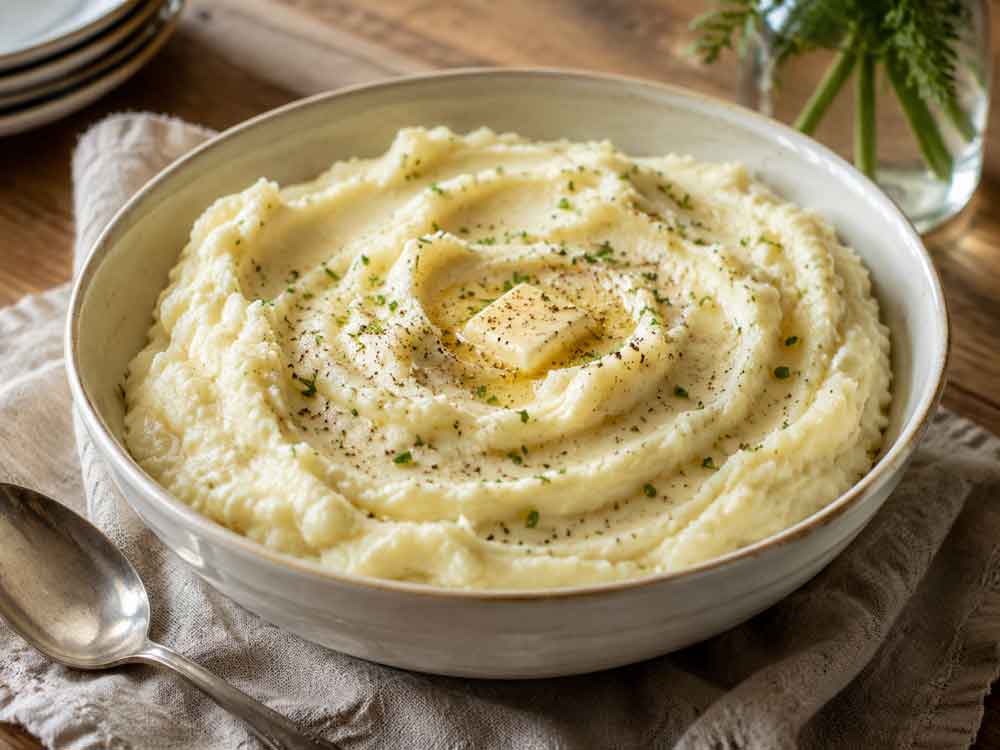
Mashed potatoes are one of the simplest side dishes you can make, yet there is a surprisingly fine line between a bowl that is light, buttery, and cloudlike and one that is heavy, watery, or unpleasantly gluey. Because the ingredient list is so short, every part of the process matters. The potatoes you choose, the way you cook them, and even the order in which you add the butter and milk can change the finished texture.
The real secret to perfect mashed potatoes is not an unusual ingredient or a complicated restaurant technique. It is moisture control. Potatoes need enough water to cook evenly, but that water must be thoroughly removed before the butter and dairy are added. From there, gentle handling keeps the starches from becoming sticky. Master those two principles, and you can make dependable mashed potatoes for an ordinary weeknight supper, holiday dinner, or any meal in between.
Start with the Right Potatoes
The best mashed potatoes begin with a variety that contains enough starch to produce a soft, fluffy texture. Russet potatoes are particularly high in starch and break apart easily when cooked. They make exceptionally light mashed potatoes, although their mild flavor benefits from a generous amount of butter, salt, and dairy.

Yukon Gold potatoes are moderately starchy, with a naturally rich flavor and a dense, creamy texture. Their golden flesh also gives the finished potatoes an appealing buttery color even before the butter is added. Mashed potatoes made entirely with Yukon Golds tend to feel a little more substantial than those made with russets, but they are still smooth and tender when handled properly.
For the best balance, use equal amounts of russet and Yukon Gold potatoes. The russets bring fluffiness, while the Yukon Golds contribute flavor and creaminess. Waxy varieties such as red potatoes can be mashed, but they hold their shape more firmly and are easier to overwork. Save those for rustic, skin-on mashed potatoes rather than an especially light and smooth version.
Cut the Potatoes Evenly
Peeling the potatoes is largely a matter of preference. Russet skins are thicker and usually best removed, while the thin skins of Yukon Gold potatoes can be left in place for a more rustic dish. For the smoothest presentation, peel both varieties before cooking.

Cut the potatoes into pieces that are roughly the same size so they finish cooking at the same time. Large chunks measuring about 1½ to 2 inches work well. Very small pieces cook quickly, but they also expose more surface area to the water and may absorb too much of it. If the pieces are uneven, the smaller ones can begin to fall apart while the centers of the larger pieces remain firm.
Once cut, place the potatoes directly into the cooking pot and cover them with cold water. This keeps the exposed flesh from discoloring while you finish preparing the batch.
Begin with Cold, Salted Water
It can be tempting to drop the potatoes into already-boiling water to save time, but starting them in cold water allows the pieces to heat gradually and cook evenly. When potatoes are added to boiling water, the outsides may soften and begin to break down before the centers are fully tender.

Cover the potatoes with approximately one inch of cold water and season the water generously with salt. This is the first opportunity to season the potatoes all the way through. Water that tastes pleasantly salty—not aggressively briny—will give the cooked potatoes a better foundation of flavor than seasoning only after they have been mashed.
Bring the pot to a boil, then lower the heat and maintain a gentle simmer. Vigorous boiling can knock the potato pieces against one another, causing their edges to disintegrate and release excess starch into the water. The potatoes are ready when a paring knife or fork slides easily into the center of a piece without resistance. Do not stop cooking while the centers are still slightly firm; undercooked potatoes will leave hard, stubborn lumps in the mash.
The Most Important Step: Dry the Potatoes
Once the potatoes are tender, drain them thoroughly in a colander. Then return them to the warm cooking pot and place it over low heat for one to two minutes. Gently shake the pot or turn the potatoes once or twice as the remaining surface moisture evaporates.

This brief drying step is one of the biggest differences between acceptable mashed potatoes and excellent ones. Potatoes that carry excess cooking water into the mash can taste diluted and become loose or watery. Dry potatoes, on the other hand, are ready to absorb flavorful butter and warm milk.
You will know they are sufficiently dry when their surfaces look matte rather than wet. Russet potatoes may also develop a pale, floury coating around their edges. Remove the pot from the heat as soon as the visible moisture is gone so the potatoes do not begin to brown or stick.
Use the Right Tool
A potato ricer produces the lightest and most uniformly smooth texture. It presses the cooked potatoes through small holes without requiring repeated stirring or crushing, which helps prevent the starch from being overworked. A food mill offers a similarly smooth result and can be especially convenient when preparing a large batch.

A handheld potato masher also works well, particularly if you prefer a little texture. Mash with an up-and-down motion only until no large pieces remain. Avoid scraping and stirring excessively as you work.
Never use a blender, food processor, or immersion blender for mashed potatoes. Their fast-moving blades rupture too many of the potato cells and release a large amount of starch. Within seconds, the potatoes can change from fluffy to stretchy and glue-like. Once that happens, additional milk or butter will not restore their original texture.
Add the Butter Before the Milk
For especially rich mashed potatoes, add the butter while the potatoes are still hot and before introducing any milk or cream. The melted butter coats some of the starch granules, helping the potatoes maintain a soft, luxurious texture once the liquid is folded in.

Use softened or melted unsalted butter so it distributes quickly without requiring excessive mixing. Unsalted butter also gives you better control over the final seasoning, particularly because the potatoes were cooked in salted water.
This order is a small detail, but it makes a noticeable difference. If the milk is added first, the potatoes absorb more of its water. Adding the butter first means the dairy can loosen and enrich the potatoes without making them taste diluted.
Warm the Dairy
Cold milk lowers the temperature of the potatoes and does not blend into them as readily. Before you drain the potatoes, gently warm the milk or half-and-half in a small saucepan or in the microwave. It should be steaming and warm to the touch but does not need to boil.

Add the warm dairy gradually rather than pouring it in all at once. Different potato varieties—and even different batches of the same variety—can absorb slightly different amounts. Folding in a little at a time gives you control over the consistency and prevents an unexpectedly runny result.
Whole milk makes creamy mashed potatoes that are rich enough for everyday meals. Half-and-half creates a fuller, more indulgent side dish without becoming as heavy as one made entirely with cream. Heavy cream can also be used, but it produces a very rich result and may mute some of the potato flavor. For a gentle tang, replace a small portion of the milk with sour cream, crème fraîche, or buttermilk.
Fold, Don’t Whip
Despite the familiar term “whipped potatoes,” vigorous beating is not the best way to create a fluffy texture. The more the potatoes are stirred, the more starch they release. Too much agitation eventually turns the mixture sticky.

After adding the butter, fold in the warm dairy with a flexible spatula or sturdy wooden spoon. Use broad, gentle strokes and stop as soon as the liquid is incorporated. The potatoes should look smooth and creamy but still have enough body to hold soft peaks.
It is helpful to leave them just slightly looser than you want them to be at the table. Mashed potatoes naturally thicken as they stand, particularly if they are being held warm before serving.
Season at Every Stage
Even perfectly textured mashed potatoes can be disappointing if they are under-seasoned. Salting the cooking water gives you a strong start, but the potatoes should be tasted again after the butter and dairy have been added. Add more salt in small increments until the flavors taste full and balanced rather than merely salty.

Freshly ground black pepper provides a gentle bite and a speckled, homemade appearance. White pepper offers similar warmth without visible flecks if you prefer a pristine bowl of pale potatoes.
Classic mashed potatoes need little more than butter, milk, salt, and pepper, but the recipe is easy to customize. Roasted garlic adds mellow sweetness, while chopped chives, parsley, or dill bring freshness. Parmesan contributes savory depth, and browned butter introduces a warm, nutty flavor. Additions should enhance the potatoes rather than disguise them, so begin with a modest amount and taste as you go.
Recipe: Perfect Mashed Potatoes
This recipe combines russet and Yukon Gold potatoes for a mash that is both fluffy and naturally creamy. Adding the butter before the warm half-and-half gives the potatoes a rich flavor without making them heavy.
Makes 8 servings
Ingredients
- 2 pounds russet potatoes
- 2 pounds Yukon Gold potatoes
- 1 tablespoon kosher salt, plus more as needed
- 10 tablespoons unsalted butter, softened or melted
- 1 to 1¼ cups half-and-half or whole milk
- ½ teaspoon freshly ground black pepper, plus more to taste
- Chopped fresh chives or parsley, for serving (optional)
- Additional butter, for serving (optional)
Instructions
- Peel the russet potatoes. Peel the Yukon Gold potatoes as well for completely smooth mashed potatoes or leave their thin skins in place for a more rustic texture. Cut all the potatoes into evenly sized pieces measuring approximately 1½ to 2 inches.
- Place the potatoes in a large pot and add enough cold water to cover them by about one inch. Add 1 tablespoon of kosher salt.
- Bring the water to a boil over medium-high heat. Reduce the heat and simmer gently for 15 to 20 minutes, or until a fork or paring knife slides easily into the center of the potatoes without resistance.
- While the potatoes cook, warm the half-and-half or milk in a small saucepan over low heat. Alternatively, warm it in a microwave-safe measuring cup. Keep it warm without allowing it to boil.
- Drain the potatoes thoroughly in a colander. Return them to the warm pot and place the pot over low heat for one to two minutes. Shake the pot gently once or twice, allowing the remaining moisture to evaporate. Remove it from the heat when the potatoes appear dry and matte.
- Pass the potatoes through a potato ricer or food mill and return them to the warm pot. If using a handheld masher, mash them directly in the pot just until the large pieces are gone.
- Add the butter to the hot potatoes. Fold gently with a spatula or wooden spoon until the butter is melted and evenly incorporated.
- Add 1 cup of the warm half-and-half, about one-third at a time, folding gently after each addition. If needed, add more half-and-half a few tablespoons at a time until the potatoes are creamy and slightly softer than your desired serving consistency.
- Add the black pepper and taste the potatoes. Season with additional salt and pepper as needed. Transfer them to a warm serving bowl and top with chopped herbs and an extra pat of butter, if desired. Serve immediately.
How to Fix Common Mashed Potato Problems
If the potatoes are too thick, fold in additional warm milk or half-and-half one tablespoon at a time. Make sure the liquid is warm; cold dairy can cool the entire batch and make the butter firm up. Mix only enough to incorporate each addition.
If they are too thin, place them over very low heat for a few minutes and fold gently as some of the excess moisture evaporates. Watch them carefully to prevent scorching. Avoid adding flour, which can give the potatoes a raw, pasty flavor.
Bland potatoes usually need more salt rather than more elaborate ingredients. Add a small pinch, stir gently, and taste again. An additional pat of butter or spoonful of sour cream can round out the flavor, but it cannot fully compensate for insufficient seasoning.
Unfortunately, potatoes that have become gluey cannot be returned to a fluffy texture. Instead of discarding them, spread them in a casserole dish, top them with cheese and breadcrumbs, and bake until golden. They can also be repurposed as potato cakes, croquettes, or a topping for shepherd’s pie.
How to Make Mashed Potatoes Ahead
Mashed potatoes are best shortly after they are prepared, but they can be made several hours ahead when the stove is needed for other dishes. Transfer the finished potatoes to a buttered baking dish or slow cooker while they are still warm. Smooth the top, add a few small pieces of butter, and cover tightly.
To hold them in a slow cooker, use the warm setting for up to two hours. Stir them gently once or twice, adding a small splash of warm milk if they begin to thicken. Make sure the slow cooker does not run excessively hot around the edges.
To reheat them in the oven, cover the baking dish tightly and place it in a 350°F oven for approximately 25 to 35 minutes, depending on the depth of the potatoes. Stir gently halfway through and add a little warm dairy if necessary. Individual portions can also be reheated in the microwave at reduced power, stirring between short intervals.
What to Serve with Mashed Potatoes
A bowl of mashed potatoes is a natural partner for roast chicken, turkey, steak, meatloaf, pork chops, or beef stew. Their mild flavor and creamy texture are especially welcome alongside foods with flavorful pan juices, sauces, or gravy.
They can also anchor a meatless meal. Serve them with roasted mushrooms and mushroom gravy, lentils cooked with herbs, or a medley of roasted vegetables. For a simple presentation, spoon the potatoes into a warm bowl and use the back of a spoon to create broad swirls across the surface. Those shallow ridges catch melted butter or gravy and make even a familiar side dish look inviting.
Small Techniques Make the Difference
Perfect mashed potatoes do not require a long ingredient list. They depend on choosing suitably starchy potatoes, cooking them gently, and removing excess water before anything else is added. Butter goes in first, followed by warm dairy, and the mixture is folded only until it becomes creamy.
Once those fundamentals are in place, the recipe is both dependable and flexible. Keep it classic for a weeknight dinner, enrich it for a holiday table, or add herbs, garlic, or browned butter to complement the rest of the meal. Either way, the result will be soft, buttery mashed potatoes with the light texture this comforting side dish deserves.



Leave a Reply