
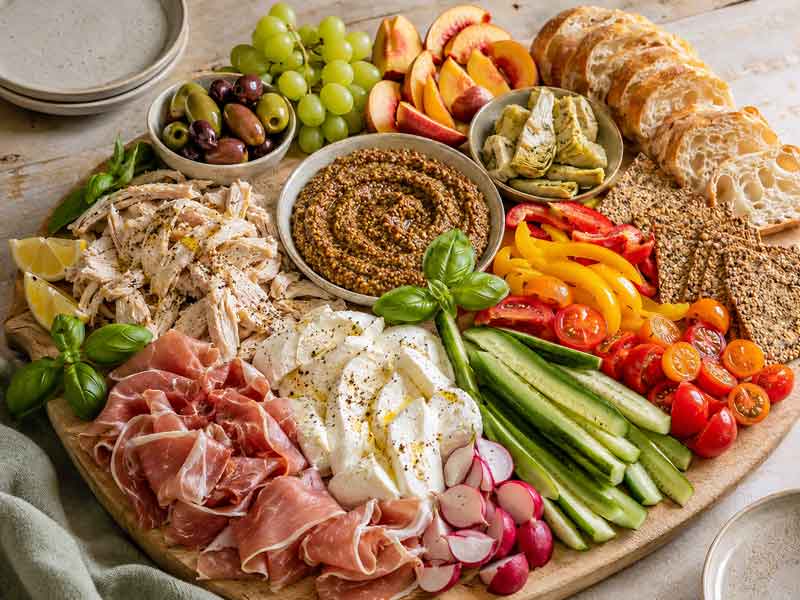
By late summer, even the thought of preheating the oven can feel like too much. The kitchen is already warm, the evening light is lingering, and everyone is hungry. But no one wants a heavy meal or a sink full of pots and pans. A summer dinner board answers all those problems with one colorful, generous spread.
Unlike an appetizer board, dinner boards are meant to be the entire meal. They combine satisfying proteins, cheese, vegetables, fruit, bread, and flavorful extras in portions substantial enough for everyone to build a plate. There is no fixed arrangement to master and very little preparation beyond slicing and arranging. Set the finished board in the middle of the table, pour something cold, and let dinner unfold at its own pace.
What Turns a Snack Board Into Dinner?
The difference between a snack board and a dinner board is balance. A few crackers, a wedge of cheese, and a handful of grapes make a lovely nibble, but they may leave everyone searching the pantry an hour later. For a board to serve as dinner, it needs at least one substantial protein, a generous assortment of produce, something filling and starchy, and enough contrasting flavors and textures to keep the meal interesting.
A simple formula makes planning easy: begin with one or two proteins, add one or two cheeses, then fill roughly half the board with vegetables and fruit. Include bread, crackers, pita, or flatbread, along with a dip or spread that helps tie everything together. Finish with small, assertive extras such as olives, pickles, marinated artichokes, fresh herbs, mustard, or lemon wedges.
Texture matters as much as quantity. Creamy mozzarella becomes more appealing alongside crisp radishes; juicy peaches play well against salty prosciutto; crunchy crackers are especially satisfying with smooth hummus. When the board includes something creamy, crisp, juicy, salty, tangy, and fresh, a meal assembled from simple ingredients feels complete rather than improvised.
Choosing Ingredients for Summer Dinner Boards
There is no need to buy every tempting item in the deli case. In fact, a board often feels more cohesive when it is built around a smaller number of ingredients that naturally belong together. Choose two or three seasonal vegetables, one or two fruits, and a few flavorful prepared foods, then repeat colors and ingredients across the board to create a sense of abundance.
For protein, rotisserie chicken is especially convenient because it can be served chilled or at room temperature and appeals to a wide range of eaters. Prosciutto, salami, smoked salmon, canned tuna, marinated chickpeas, white beans, and store-bought hard-boiled eggs are equally useful. Pair the protein with a cheese that brings richness without requiring much work. Fresh mozzarella, burrata, feta, goat cheese, cheddar, and Brie are all easy choices.
Summer produce provides most of the board’s color and freshness. Cherry tomatoes, cucumber spears, sweet peppers, snap peas, and radishes can be served raw, while peaches, nectarines, watermelon, cherries, berries, grapes, and figs add a juicy counterpoint to the savory ingredients. Use whatever looks best at the market rather than trying to follow an exact list.
Bread and crackers give diners a way to turn the smaller components into satisfying bites. A sliced baguette, pita wedges, flatbread, breadsticks, or sturdy seeded crackers will all work. Finally, add a creamy dip or punchy spread—perhaps hummus, tzatziki, whipped feta, pesto, tapenade, or grainy mustard. These condiments provide the connective tissue between otherwise separate ingredients and make it easy to create a different combination with every bite.
Recipe: Summer Dinner Board

This version pairs tender rotisserie chicken and delicate prosciutto with fresh mozzarella, mustard, crisp vegetables, sweet peaches, and a few briny pantry staples. It is generous enough to feed four people as a meal, but every component can be adjusted according to appetite and what you already have on hand.
Makes 4 servings
Ingredients
- 2 cups sliced or pulled rotisserie chicken
- 4 ounces thinly sliced prosciutto
- 8 ounces fresh mozzarella, drained and sliced or torn
- 1/2 cup grainy mustard
- 1 pint cherry tomatoes
- 1 small English cucumber, sliced into spears or rounds
- 2 small sweet bell peppers, seeded and sliced
- 1 small bunch radishes, trimmed and halved
- 2 ripe peaches or nectarines, pitted and sliced
- 1 cup seedless grapes
- 1 small baguette, sliced
- 4 to 6 ounces crackers
- 1/2 cup mixed olives, drained
- 1/2 cup marinated artichoke hearts, drained
- 1 small handful fresh basil leaves
- 1 lemon, cut into wedges
- Extra-virgin olive oil, for drizzling
- Flaky salt and freshly ground black pepper, to taste
Instructions
- Choose a large serving board, platter, or rimmed sheet pan. Spoon the mustard into a small, shallow bowl and place it slightly off-center on the board. Arrange the olives and marinated artichokes in two additional small bowls, then position them in different areas of the board.
- Add the chicken, prosciutto, and mozzarella. Keep each ingredient in its own loose cluster, leaving room between them for the produce. Fold the prosciutto into soft ribbons rather than laying the slices flat so it is easier to pick up.
- Arrange the tomatoes, cucumber, peppers, radishes, peaches, and grapes in small groupings around the proteins and bowls. Divide larger quantities into two clusters if that helps distribute color across the board.
- Tuck the baguette slices and crackers into open spaces just before serving. Add the basil leaves and lemon wedges, then lightly drizzle the mozzarella and chicken with olive oil. Season them with flaky salt and black pepper.
- Serve immediately with small plates, napkins, cheese knives, and serving forks. If the board will remain outdoors for an extended period, set out smaller quantities and replenish the perishable ingredients from the refrigerator as needed.
How to Arrange Dinner Boards Without Overthinking It
A dinner board should feel welcoming and plentiful, not painstakingly styled. Begin with anything that needs a container, such as hummus, olives, or artichokes. Small bowls act as visual anchors and prevent oily or briny ingredients from running into the crackers. Place them in different parts of the board rather than clustering every bowl in the center.
Next, add the largest and most substantial foods: the chicken, prosciutto, and cheese. Space these elements apart so people can reach a protein from more than one side of the table. Fill the remaining areas with loose clusters of produce, allowing curved slices, stems, and leaves to create natural movement. If you have a large quantity of one ingredient, divide it into two piles instead of building a single oversized mound.
Save bread and crackers for last so they stay crisp, and resist the urge to fill every sliver of exposed board. A little breathing room makes foods easier to serve and keeps juicy peaches or tomatoes from dampening neighboring ingredients. The goal is an abundant arrangement that people can comfortably take apart—not a picture-perfect display that no one wants to disturb.
Simple Ways to Change the Flavor
Once you understand the basic formula, the same idea can take on a completely different personality.

For a Mediterranean board, combine hummus, feta, cucumber, tomatoes, olives, stuffed grape leaves, marinated chickpeas, and pita. A bowl of tzatziki and a handful of fresh dill bring the ingredients together without adding extra work.

An Italian-inspired board might include prosciutto, salami, fresh mozzarella, tomatoes, peaches, marinated artichokes, pesto, and sliced ciabatta. Add pepperoncini or balsamic glaze for a sharper accent.

For a coastal variation, arrange smoked salmon or good-quality tuna with store-bought hard-boiled eggs, cucumbers, radishes, herbed cream cheese, capers, lemon wedges, and seeded crackers.
These themes are starting points, not rigid menus. A leftover wedge of cheddar can sit happily beside Mediterranean-style olives, and hummus does not need to disappear simply because the rest of the board leans Italian. Use a flavor direction to make shopping simpler, then give yourself permission to include what you have.
Adapting Dinner Boards for Different Diets
A dinner board is naturally easy to customize because no single ingredient defines the meal. For a vegetarian version, replace the meat with marinated chickpeas or white beans, stuffed grape leaves, nuts, and an additional cheese or dip. Make sure the board still includes a hearty source of protein so it remains satisfying.
For a gluten-free meal, use certified gluten-free crackers, corn chips, or crisp vegetable slices in place of bread. If other diners will be eating regular bread, place it on a separate platter and give each dip its own serving utensil to reduce cross-contact. A dairy-free board can center on hummus, white bean dip, avocado, olives, nuts, vegetables, and a substantial meat or plant-based protein.
When serving children, include several familiar foods—mild cheese, sliced turkey or chicken, crackers, cucumber, and berries—alongside the more adventurous ingredients. Strong cheeses, olives, spicy pickles, and assertive dips can stay in separate bowls, allowing everyone to compose a plate that suits them without requiring a different dinner.
How to Shop Without Overbuying
Boards have a way of encouraging enthusiastic shopping, but too many choices can become expensive and visually chaotic. Before heading to the store, check the refrigerator and pantry for open crackers, a partial jar of olives, a wedge of cheese, or vegetables that need to be used. Those ingredients can form the beginning of the plan.
As a general guide, allow about 4 to 6 ounces of combined protein per adult, 2 to 3 ounces of cheese, at least 1 cup of fruit and vegetables, and 2 to 3 ounces of bread or crackers. You do not need two types of everything. One protein, one cheese, three kinds of produce, bread, and a good dip can still make a varied and satisfying meal.
Prepared ingredients are part of what makes this dinner practical. Rotisserie chicken, store-bought hummus, washed vegetables, marinated antipasti, and pre-sliced bread can reduce assembly to little more than opening packages and arranging the contents. Spend your effort on one or two particularly good seasonal ingredients, then let convenience fill in the rest.
What to Prepare Ahead
Most of the work can be completed earlier in the day, while the kitchen is still cool. Wash and thoroughly dry the vegetables and grapes, slice sturdy items such as cucumbers and peppers, and portion dips and briny ingredients into covered containers. The chicken can be pulled from the bones and refrigerated, and firm cheeses can be cut in advance.
Wait until shortly before dinner to slice peaches or nectarines, tear delicate mozzarella, and cut the bread. These ingredients lose quality more quickly once prepared: fruit can brown or release juice, fresh cheese may dry at the edges, and bread can become stale. Assemble the board about 15 minutes before serving, then return any unused perishable food to the refrigerator rather than crowding everything onto the platter at once.
Making the Most of Leftovers
Because the components remain mostly separate, dinner-board leftovers are often easier to repurpose than the remains of a composed dish. Layer chicken, cheese, vegetables, and a swipe of hummus into sandwiches or wraps. Toss the produce and protein with greens for lunch, using a spoonful of pesto or hummus loosened with lemon juice and olive oil as the dressing.
Marinated vegetables, chickpeas, olives, and herbs can be folded into cooked grains or pasta the next day, when turning on the stove feels more manageable. Store bread and crackers separately from juicy produce and dips so they remain crisp. Even a few small remnants—a spoonful of olives, half a peach, and several slices of mozzarella—can become the start of tomorrow’s lunch rather than kitchen clutter.
A More Relaxed Way to Eat in Summer
Summer dinner boards are less a strict recipe than a dependable way to put a complete meal on the table. They make room for peak-season produce, prepared grocery-store favorites, leftovers, and the individual tastes of everyone eating. Best of all, dinner boards require no oven, no stovetop, and almost no cleanup.
Bring the board outside or set it in the middle of the kitchen table, pour cold drinks, and let everyone graze until satisfied. On the hottest nights of the year, that relaxed approach is not a compromise—it may be exactly the kind of dinner summer calls for.



Leave a Reply