
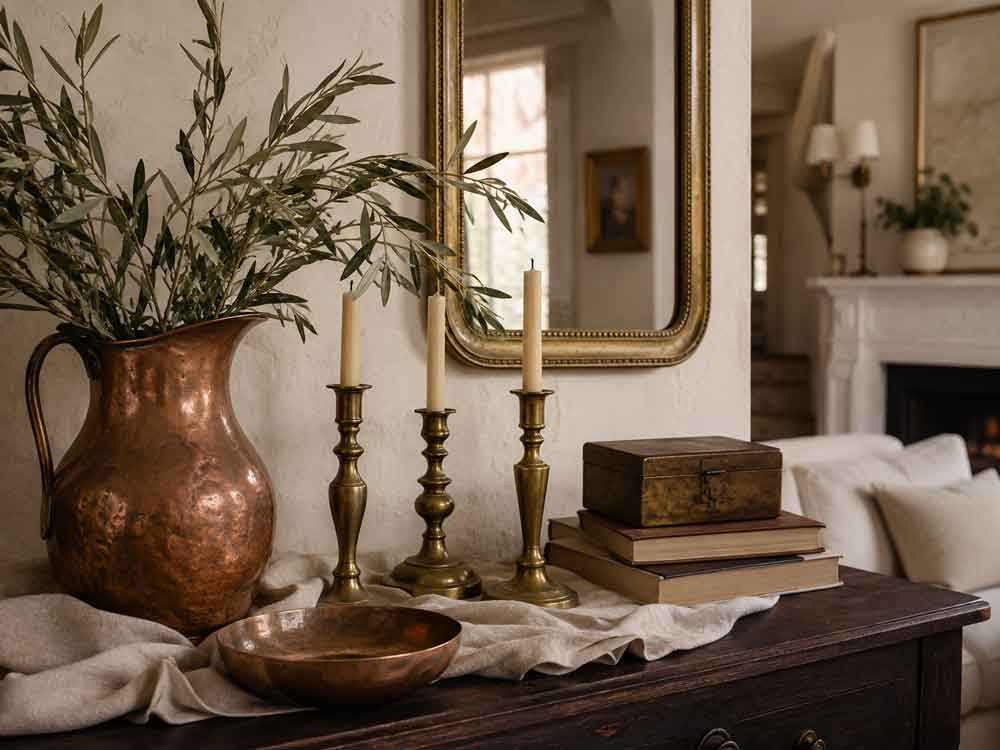
Vintage copper and brass bring something to a room that new accessories often cannot: warmth, character, and a visible sense of history. Their surfaces reflect light softly, while small dents, darkened areas, and variations in color make each piece feel collected rather than mass-produced.
These metals also have remarkable decorating range. A row of copper pans can make a farmhouse kitchen feel established and welcoming, while a sculptural brass lamp can add warmth to a modern living room. They work beautifully in traditional interiors, but they are equally effective in cottage, rustic, eclectic, and contemporary spaces.
You do not need an extensive collection to make an impact. One substantial copper vessel, a pair of brass candlesticks, or a small cluster of vintage objects can give a room depth and personality. The key is to choose pieces thoughtfully, allow their aged finishes to show, and mix them with materials that keep the overall look balanced.
Why Vintage Copper and Brass Work So Well
Copper and brass are naturally warm metals. While chrome and polished nickel tend to introduce cooler tones, copper brings shades of russet, rose, and reddish brown into a room. Brass contributes gold, amber, and muted yellow tones. Both can make an interior feel more inviting, especially when paired with warm wood, natural stone, woven fibers, and soft textiles.
Their aged surfaces are another part of their appeal. Vintage copper may develop areas of deep brown, soft orange, or even green-blue verdigris. Brass often darkens unevenly, creating a mellow finish with subtle changes in tone. These variations allow the metals to function almost like natural materials. Much like wood grain or the markings in stone, the imperfections become part of the design.
Vintage metal also offers a welcome contrast to rooms filled with smooth, newly manufactured surfaces. A weathered brass tray on a clean-lined console or a copper pot displayed against simple painted cabinetry can prevent a space from feeling too polished. The contrast makes both the old and new elements more interesting.
How to Mix Copper and Brass
Copper and brass are close enough in warmth to work together, but different enough to create visual variety. There is no need to choose one metal and use it exclusively throughout the room. In fact, a carefully mixed combination often feels more natural and collected.
The easiest way to make the pairing feel intentional is through repetition. If you place a brass lamp on one side of a room, echo that finish with a small frame, bowl, or candlestick elsewhere. The same principle applies to copper. A copper vessel on a shelf may connect visually with a small copper tray or framed copper artwork across the room.
Varying the finishes also helps. A room filled entirely with bright, highly polished metal can feel formal or overly decorative. Mixing one polished piece with several darker, patinated objects creates more depth. It also makes the arrangement look as though it developed gradually rather than being purchased all at once.
Keep scale in mind when combining metals. One large copper bowl may be balanced by two or three smaller brass objects. If everything is the same height and size, the display can look flat. A mix of tall, low, rounded, and angular forms makes the metals feel like part of a composition rather than a matched set.
Where to Find Vintage Metal Pieces
Antique stores and flea markets are natural places to begin, especially if you want to inspect the weight, finish, and condition of an item before buying it. Estate sales can be particularly good sources for copper cookware, brass candlesticks, trays, fireplace accessories, and lighting. Thrift stores sometimes require more patience, but they can offer excellent finds at lower prices.
Architectural salvage shops are worth exploring for brass hardware, hooks, switch plates, door knockers, and lighting components. These smaller pieces can introduce vintage character without requiring much display space. Online vintage marketplaces provide a broader selection, although photographs and descriptions should be reviewed carefully.
Do not overlook family collections. A tarnished tray stored in a cabinet or an old copper pot that is no longer used for cooking may become a meaningful decorative piece. Objects with a personal history often add more character to a home than something selected purely for its appearance.
Before purchasing, check for cracks, deep corrosion, broken solder joints, loose handles, sharp edges, and unstable bases. Some damage adds charm, but structural problems may make an object difficult to display or use. If a piece is particularly old, rare, or expensive, ask the seller about its history and whether it has been repaired.
Vintage Copper and Brass Pieces Worth Looking For
Kitchenware is among the most plentiful and versatile vintage metal decor. Copper pots, kettles, pitchers, colanders, and molds can be hung, stacked, or displayed on open shelves. Even pieces that are no longer suitable for cooking can be repurposed to hold utensils, flowers, or seasonal branches.
Brass candlesticks are another useful starting point. They are widely available, easy to move from room to room, and especially attractive when grouped in different heights. Look beyond matching pairs. A collection of related but slightly different candlesticks often creates a more relaxed display.
Trays, cachepots, bowls, and planters can serve both decorative and practical purposes. They can corral small items on a table, hold a potted plant, or anchor a group of objects. Picture frames, mirrors, bookends, bells, boxes, and small sculptures are helpful for adding metallic accents without overwhelming a room.
Larger pieces, such as lamps, sconces, umbrella stands, and fireplace accessories, can become focal points. These items often require a greater investment, but they can define the character of a space more effectively than a collection of small accessories.
Decorating with Copper and Brass, Room by Room
In the Kitchen
The kitchen is a natural home for vintage copper. Cookware displayed on a rail or pot rack brings warmth to a practical space and keeps beautiful pieces where they can be appreciated. A few pans are often more effective than covering an entire wall. Choose pieces in different sizes and leave enough space around them for each silhouette to be visible.

Vintage copper molds can also become wall decor. Arrange a small collection over a sideboard, breakfast nook, or open shelf, varying the shapes while keeping the overall grouping compact. A large copper bowl can hold fruit on an island, while a pitcher or utensil holder adds character to a countertop.
Brass works well in the kitchen through smaller, repeated details. Cabinet hardware, a faucet, picture frames, lighting, or a narrow tray can connect the vintage copper to the rest of the room. The finishes do not need to match precisely. Slight variations help the space feel layered.
Vintage cookware should be evaluated carefully before it is used for food preparation. Some pieces have worn linings, unstable handles, or materials that are no longer considered suitable for cooking. When in doubt, enjoy an older piece as decoration rather than cookware.
In the Dining Room
Copper and brass look especially beautiful in a dining room because candlelight enhances their warm tones. A row of mismatched brass candlesticks can create a flexible centerpiece that works throughout the year. Keep the tallest pieces low enough that guests can still see one another across the table.

A copper pitcher, bowl, or handled vessel makes an attractive container for flowers, greenery, or branches. The arrangement does not need to be elaborate. A few loose stems often complement the informal character of aged metal better than a perfectly structured bouquet.
On a sideboard, use a vintage tray to anchor a group of objects. It might hold a decanter and glasses, a collection of candlesticks, or a vase alongside a small, framed picture. Layering the metals with linen, ceramic, glass, and wood prevents the display from becoming too shiny or formal.
In the Living Room
In the living room, copper and brass can add warmth without becoming the dominant feature. A brass lamp introduces both color and soft illumination, while copper or brass frames can bring attention to artwork and family photographs.

Shelves offer an ideal place to mix vintage metal with books, pottery, baskets, and collected objects. Rather than placing every metallic item together, distribute a few pieces throughout the arrangement. A small brass box may sit on a stack of books, while a copper bowl occupies another shelf. This creates movement and allows the eye to travel around the display.
A vintage tray or low bowl can anchor a coffee table. Use it to hold a candle, a small vase, or a few everyday items. If the room has a fireplace, brass and copper tools, screens, and log holders can turn practical necessities into part of the decor.
In the Bedroom
A bedroom benefits from a restrained approach to metal. A small brass tray on a dresser can hold jewelry, perfume, or personal items, while a pair of candlesticks adds height without taking up much surface space.

Vintage brass lamps or sconces can make a bedroom feel established and thoughtfully furnished. Their warm finish pairs particularly well with linen bedding, painted furniture, floral patterns, and upholstered headboards. In a more modern bedroom, a single sculptural brass lamp can soften clean lines and neutral colors.
Because the bedroom should feel restful, avoid filling every surface with reflective accessories. One or two well-placed metal pieces will usually have more impact than a large collection.
In the Bathroom
Small copper and brass accents can give a bathroom warmth, particularly in a room dominated by white tile, porcelain, or stone. A brass dish can hold jewelry, while a small tray keeps bottles and grooming items organized. A copper cup or pitcher can be used decoratively to hold dried flowers, brushes, or rolled washcloths.

Vintage-style hooks, mirrors, and lighting can provide a stronger metallic presence. If you are installing functional hardware, make sure it is suited to a humid environment. Genuine vintage pieces may need to be sealed or used only as decoration, especially if the finish is delicate or already corroded.
Place metal objects where they will not remain in standing water. A small felt pad or protective liner can also prevent dark marks and scratches on countertops.
In the Entryway
An entryway is a good place to feature one memorable vintage piece. A brass bowl on a console can collect keys, while a copper tray keeps mail and other small essentials contained. A brass-framed mirror reflects light and introduces warmth near the front door.

For a larger statement, consider a vintage copper planter or brass umbrella stand. These pieces provide function while setting the tone for the rest of the home. Pair them with wood furniture, a woven runner, pottery, or a simple lamp to keep the entryway grounded and welcoming.
Simple Ways to Style a Vintage Metal Collection
A collection is most effective when it has clear boundaries. Rather than scattering many small pieces throughout a room, create a few focused arrangements. A group of three to five objects on a shelf, mantel, or table will feel intentional while still allowing each item to be noticed.
Vary the height and shape of the pieces. A tall candlestick, a rounded bowl, and a low rectangular box create a more interesting silhouette than three objects of similar proportions. Use books, trays, or small stands to raise pieces when necessary and give the arrangement structure.
Not every object in the grouping needs to be metal. Ceramic vessels, dark wood, glass, and framed artwork provide visual pauses and make copper and brass stand out. Textiles can serve the same purpose. A linen runner or folded cloth beneath a metal tray softens its reflective surface.
Leave some open space around a collection. Vintage objects are often detailed, and overcrowding can hide the qualities that made them appealing in the first place. If you own more pieces than you can comfortably display, rotate them with the seasons.
Colors and Materials That Pair Beautifully with Copper and Brass
Warm white, cream, beige, and taupe create a calm background for both copper and brass. These light neutrals allow the metals to provide color without making the room feel busy. Charcoal and black create stronger contrast and can make traditional pieces feel more graphic and contemporary.
Deep blue and forest green are classic companions for warm metals. Navy cabinetry with brass hardware feels rich and established, while dark green walls can bring out the earthy tones in aged copper. Burgundy, rust, muted terracotta, and dusty rose create a warmer, more enveloping palette.
Natural materials reinforce the depth of vintage metal. Dark wood makes brass feel stately, while pale wood gives it a lighter and more casual quality. Marble and stone introduce coolness that balances the warmth of copper. Linen, leather, wool, wicker, and clear or smoky glass help create a collected mix of textures.
For a rustic room, combine darkened copper with reclaimed wood, stoneware, and natural linen. In a traditional setting, pair polished or gently aged brass with rich wood, patterned fabric, and framed artwork. For a modern interior, use one or two streamlined vintage pieces against simple cabinetry, clean walls, and sculptural furniture.
Polished or Patinated?
Whether to polish a vintage piece is largely a matter of personal preference. Polished copper and brass reflect more light and create a brighter, more formal appearance. This can be useful when you want a piece to feel crisp or prominent, particularly in a dark room.
Patina creates a softer and more relaxed effect. It highlights age, adds tonal variation, and often makes an object easier to mix with casual furnishings. A completely uniform shine can sometimes erase the qualities that made a vintage piece distinctive.
The choice does not need to be all or nothing. You may polish raised areas while allowing darker color to remain in crevices or clean a piece gently without restoring it to a high shine. Consider where the object will be displayed and how it relates to nearby finishes.
Before polishing something that may be valuable, research it or consult a knowledgeable dealer. Original patina can contribute to the appeal and value of an antique, and aggressive cleaning cannot always be reversed.
How to Clean and Care for Vintage Copper and Brass
Begin with the gentlest cleaning method. Remove loose dust with a soft, dry cloth. If the piece needs more attention, use a small amount of mild dish soap diluted in warm water. Wipe the surface with a soft cloth, avoid soaking pieces with joints or wooden components, and dry everything thoroughly.
Before applying a commercial metal polish, determine whether the object is solid copper or brass, plated metal, lacquered, or another material with a metallic finish. A strong cleaner that is appropriate for solid brass may damage thin plating or remove a protective coating. Test any product on a small, inconspicuous area first.
Avoid steel wool, harsh scouring pads, and highly abrasive powders. These can leave scratches that are especially visible on polished surfaces. Cotton swabs and soft brushes can help clean detailed areas without applying too much pressure.
Use felt pads beneath metal objects displayed on wood, stone, or painted furniture. Copper and brass can sometimes leave discoloration, particularly when exposed to moisture. In kitchens and bathrooms, check periodically for condensation or dampness beneath decorative pieces.
Common Decorating Mistakes to Avoid
One of the easiest mistakes is introducing too many small, shiny objects at once. Warm metal should catch the eye, but it should not compete from every surface. Start with a focal piece, then add smaller accents only where the room needs them.
It is also unnecessary to match every finish. A newly polished faucet, an aged brass lamp, and a darkened vintage tray can coexist if their placement feels balanced. Trying to make every item identical may give the room a staged rather than collected appearance.
Avoid overcrowding shelves and tabletops. Vintage copper and brass often have distinctive shapes and details that need breathing room. Edit the arrangement until the individual pieces are easy to see.
Finally, resist the temptation to remove every sign of age. Darkened areas, softened edges, and minor dents can be part of an object’s charm. Clean away dirt and address damaging corrosion but allow harmless evidence of age to remain when it adds character.
Easy Seasonal Updates
Copper and brass can remain on display year-round, changing character as they are paired with different seasonal materials. In spring, combine brass candlesticks with delicate greenery, flowering branches, or bowls of citrus. The fresh colors brighten the metals and keep them from feeling heavy.
During summer, fill copper vessels with garden flowers or leafy stems. A brass tray can organize drinks or serving pieces for casual gatherings, while a few candlesticks add a warm glow to an outdoor table once the sun begins to set.
Fall brings out the richest qualities of both metals. Pair them with dried branches, apples, pears, small pumpkins, amber glass, and textured linens. Copper is especially effective among rust, brown, cream, and deep green.
For the holidays, brass bells, candlesticks, and bowls work naturally with evergreen, velvet ribbon, pinecones, and candlelight. Copper adds a softer alternative to bright gold decorations and pairs beautifully with simple greenery and warm white lights.
Let the Collection Develop Slowly
Decorating with vintage copper and brass is less about following a formula and more about noticing pieces that feel useful, beautiful, or meaningful. Start with one object that suits your home, whether it is a copper bowl for the kitchen, a brass lamp for the living room, or a pair of candlesticks for the dining table.
Over time, you may find related pieces that expand the collection. They do not need to come from the same period or have identical finishes. The subtle differences in color, shape, and wear are what make the arrangement personal.
When copper and brass are allowed to show their age, they bring warmth and history into even the newest home. A thoughtful collection feels as though it belongs there, not because every piece matches, but because each one has found a natural place in the room.


Leave a Reply