

There is something instantly appealing about a kitchen that feels as though it has come together over time. A row of well-used cutting boards leans beside the stove. A favorite ceramic pitcher holds wooden spoons. Cookbooks share a shelf with an old, framed painting, while a bowl of lemons brings color to the counter. Nothing looks too perfect or overly coordinated, yet everything seems to belong.
This is the essence of a collected kitchen. Rather than being decorated all at once, it develops gradually through meaningful objects, useful tools, natural materials, and pieces with a little history. It feels personal, warm, and lived-in but it can also become crowded if every beloved bowl, flea-market find, and decorative object is displayed at the same time.
The secret is thoughtful editing. A collected kitchen is not about filling every shelf and surface. It is about choosing the right pieces, arranging them with intention, and leaving enough open space for the room to function. With a little restraint, you can create a kitchen that has depth and personality without making it difficult to cook, clean, or simply enjoy the space.
What Makes a Kitchen Feel Collected?
A collected kitchen is built around objects that look as though they were chosen individually rather than purchased as a perfectly matched set. New cabinets might be paired with vintage brass hardware. Contemporary dinnerware may sit beside an inherited serving bowl. A sleek range can share a wall with an old landscape painting or a row of antique plates.
These contrasts give the room character. Different periods, materials, and styles create a sense of history, even in a newly renovated kitchen. Small signs of age and use—a worn wooden handle, a slightly uneven glaze, or the softened edges of an old breadboard—add warmth that brand-new objects sometimes lack.
However, “collected” and “cluttered” are not interchangeable. A collected room still has structure. Colors, materials, and shapes repeat throughout the space, helping seemingly unrelated pieces feel connected. Displays are concentrated in deliberate areas rather than scattered across every surface. Most importantly, the room still functions well. There is space to chop vegetables, set down groceries, open cabinets, and wipe the counters without moving a dozen accessories.
The collected look can work in nearly any style of kitchen. A traditional room may feature ironstone, copper, and framed botanicals, while a modern kitchen might use hand-thrown ceramics, abstract art, and a few sculptural wooden objects. The individual pieces will vary, but the guiding principles—personality, usefulness, cohesion, and restraint—remain the same.
Start with a Clear Foundation
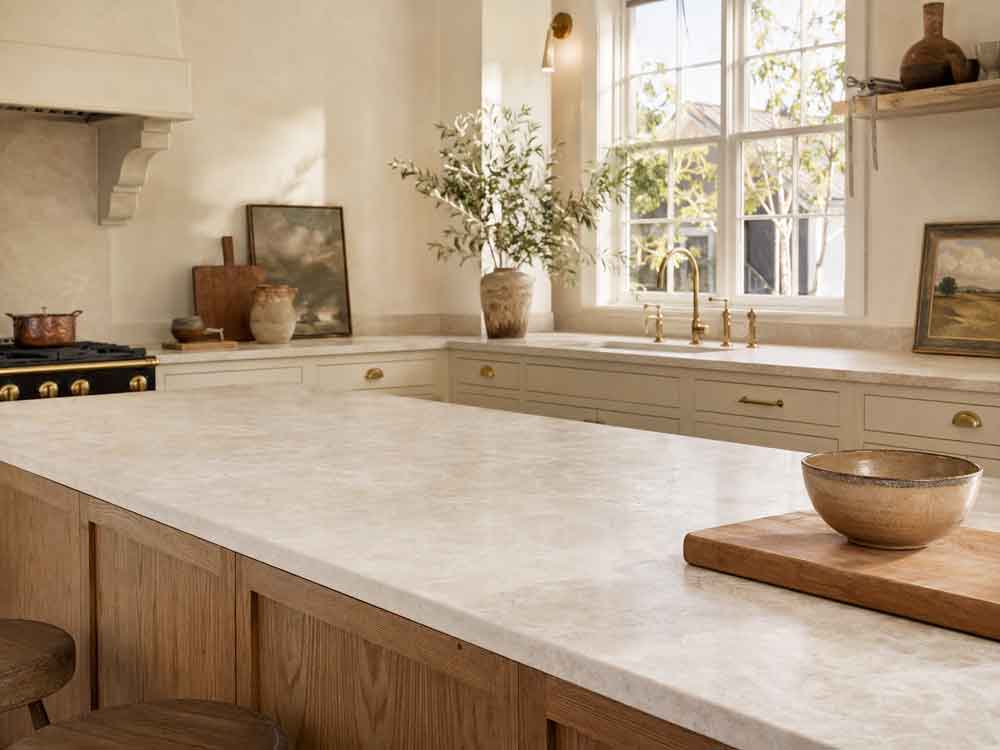
Before adding anything, begin by removing as much as possible from the counters, shelves, and other visible surfaces. This temporary reset makes it easier to see the room’s architecture and decide where character is needed.
As you clear the space, pay attention to what has accumulated. Return items that belong elsewhere, discard anything damaged or expired, and store appliances or tools that are used only occasionally. If an object has been sitting out for months without being used or appreciated, it may not deserve such valuable space.
Next, identify the kitchen’s natural focal points. Depending on the room, that might be the range and hood, the sink window, an island, a bank of open shelves, or a breakfast nook. These are the areas where a thoughtful display will have the greatest impact. Not every wall, counter, and corner needs its own decorative moment.
It also helps to designate quiet zones. Leave at least one generous section of the counter completely or nearly empty for food preparation. Keep the area around the sink easy to clean and avoid placing decorative objects where they will block cabinet doors or crowd small appliances. Open space may not feel like a decorating choice, but it gives special pieces room to stand out.
Choose a Loose Visual Thread
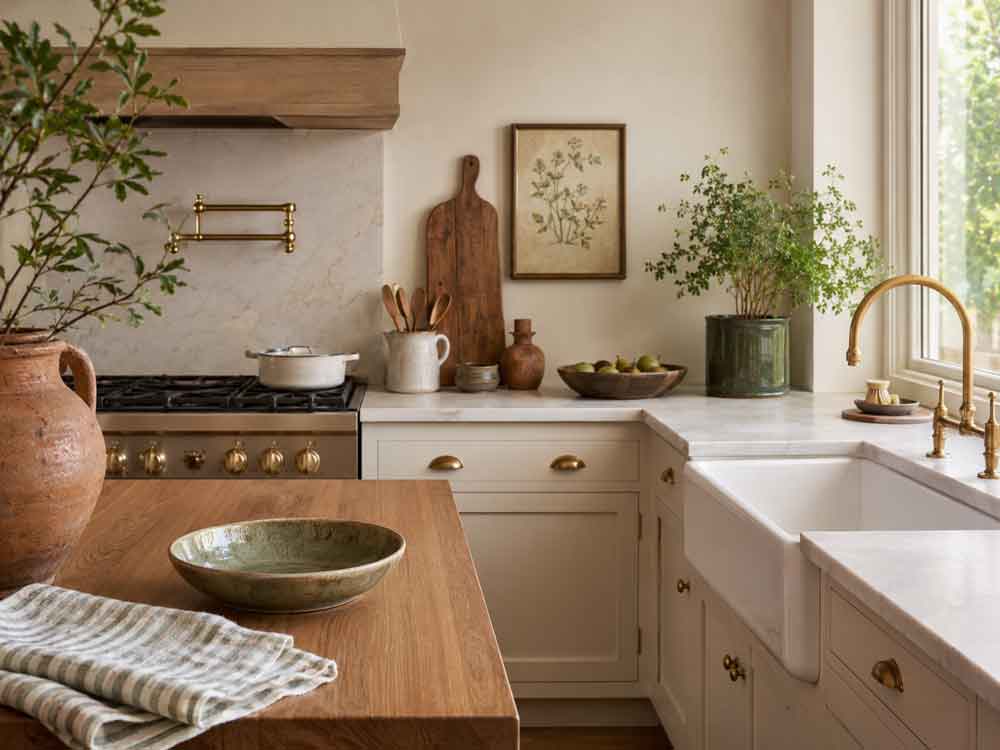
A collected kitchen should not look as though everything came from the same store, but it still needs a sense of connection. Choosing a loose visual thread can unite objects from different periods and styles without making the room feel overly coordinated.
That thread might be a limited color palette. Creamy ceramics, warm wood, muted green, and aged brass, for example, can tie together a wide variety of pieces. It could also be a recurring material, such as copper, woven rattan, blue-and-white pottery, or black iron. Even a repeated shape—arched cutting boards, round baskets, or softly curved vessels—can create subtle continuity.
This does not mean every object has to fit a rigid formula. In fact, one or two unexpected pieces often keep the room interesting. The goal is simply to give the eye something familiar to follow around the room. A copper kettle might relate to cabinet knobs, while a blue stripe in a dish towel echoes the color of a framed painting across the kitchen.
When in doubt, look at the finishes already present. Cabinetry, countertops, flooring, hardware, and appliances create the room’s foundation. Choosing decorative pieces that repeat or complement a few of those colors and materials will make even an eclectic assortment feel intentional.
Let Useful Objects Do the Decorating
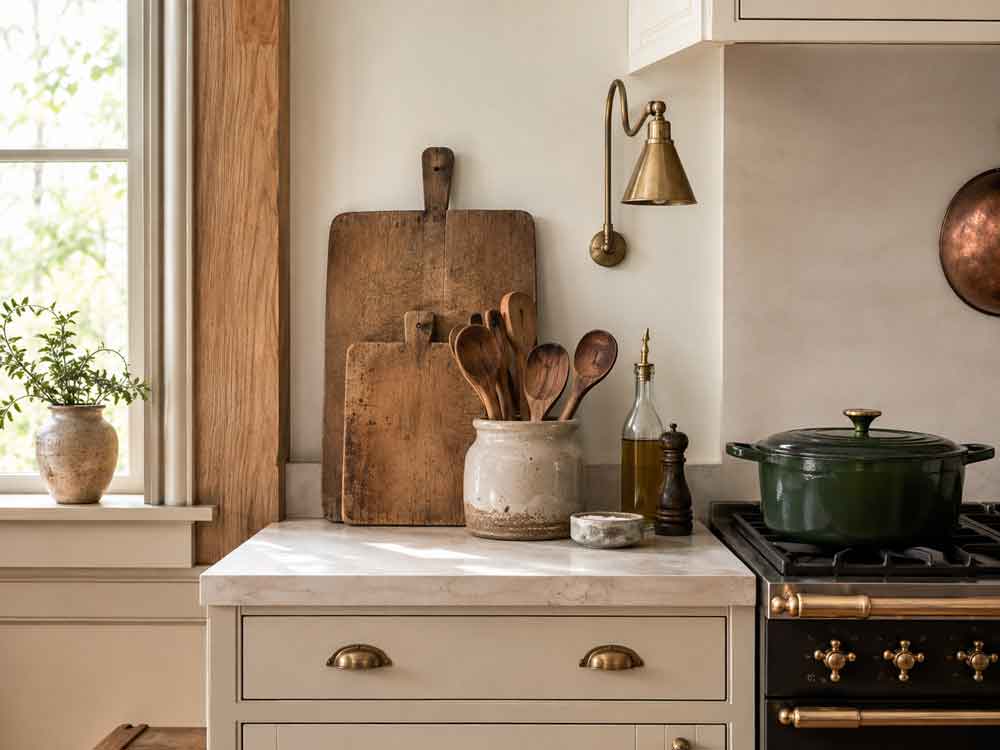
The easiest way to add character without creating clutter is to decorate with objects the kitchen already needs. A handmade utensil crock, a stack of wooden cutting boards, or a colorful Dutch oven can be both practical and beautiful.
Look for everyday essentials that bring texture, shape, or color to the room. A low ceramic bowl can hold fruit. A stoneware pitcher can organize cooking utensils. Linen towels can hang from a rail or oven handle, while attractive salt and pepper mills can remain beside the stove. A cake stand can be used for baked goods one day and to elevate a bowl or potted herb the next.
The key is to keep visible tools organized by function. Instead of scattering utensils, oils, spices, and cooking equipment along the entire counter, gather the items used at the stove into one compact zone. Place coffee supplies together near the coffeemaker and corral dishwashing necessities beside the sink. These small groupings make the kitchen more efficient while reducing the impression of random clutter.
Be selective about which practical objects earn a place on display. If six cutting boards are leaning against the backsplash but only two are regularly used, store the extras. If a countertop appliance is pulled out only once a month, it probably does not need to remain visible. Function can guide the decorating process, but it should also provide a reason to edit.
Mix Old and New

A kitchen filled entirely with new objects can sometimes feel flat, even when everything is beautiful. Introducing a few vintage or antique pieces adds patina, individuality, and a sense that the room has a story.
You do not need an extensive collection to make a difference. One old breadboard, a small oil painting, an ironstone pitcher, or a weathered wooden stool can soften a room filled with clean cabinetry and polished surfaces. Copper molds, stoneware crocks, transferware plates, vintage baskets, and framed recipe cards can also add age and texture.
The strongest combinations usually include contrast. Pair an antique pitcher with contemporary serving bowls or hang a vintage painting above a streamlined countertop. Set an old wooden board behind a modern marble utensil holder. When old pieces are surrounded by newer, simpler elements, they feel special rather than theatrical.
Avoid choosing vintage items solely because they fit a theme. A kitchen packed with reproduction signs, matching “farmhouse” accessories, or objects from the same era can begin to feel staged. The collected look is more convincing when pieces have different origins and were chosen because they are genuinely useful, beautiful, or meaningful.
Use care when putting older kitchenware into service. Vintage pottery, painted vessels, and metal pieces may not be food-safe. If you are uncertain, use them decoratively or line them before storing wrapped foods. Keep especially fragile or irreplaceable objects away from areas exposed to heat, grease, and frequent splashing.
Display Collections with Restraint

Whether you love pitchers, cookbooks, copper cookware, baskets, or blue-and-white plates, a collection can give a kitchen tremendous personality. The challenge is displaying enough to create impact without allowing it to take over the room.
Collections look most intentional when they are concentrated in a defined area. A group of platters arranged on one wall will make a stronger statement than the same pieces scattered throughout the kitchen. A row of pitchers along a single shelf feels purposeful, while individual pitchers tucked into every open space may simply look like storage overflow.
Begin with your favorite pieces and leave space between them. Repeating color, shape, or material will establish a rhythm, but varying the height and scale keeps the arrangement from feeling stiff. A stack of small bowls can balance a tall pitcher, while a few horizontally placed books can raise a shorter object and make the composition more dynamic.
You also do not need to display an entire collection at once. Store some pieces and rotate them a few times a year. This allows each object to be noticed and appreciated, and it keeps the kitchen feeling fresh without requiring new purchases. Seasonal rotation is particularly useful for collections that include holiday pieces or strong colors.
Style Open Shelves Without Overcrowding Them

Open shelves naturally draw attention, which makes them an ideal place to create a collected look. Because everything is visible, however, they can also become one of the fastest sources of visual clutter.
Start with the items you use most. Everyday plates, bowls, glasses, and mugs should be placed where they are easy to reach. Once those essentials are arranged, add a small number of decorative or less frequently used pieces, such as a framed painting, a vintage pitcher, or a small trailing plant.
Vary the height and shape of the objects so the shelves do not resemble store displays. Stack some plates, stand a platter vertically, and place a tall vessel beside a shorter bowl. A few pieces can overlap visually but avoid packing every inch. Empty space around an object helps define its shape and gives the entire arrangement a calmer appearance.
Repetition will keep the shelves cohesive. A similar glaze, wood tone, or accent color appearing in several places can connect an assortment of dishes and accessories. If the shelves still seem busy, remove the piece that has the strongest color or most complicated pattern and see whether the display feels more balanced.
Practicality matters, too. Objects near the stove will collect grease, while rarely used pieces on high shelves may gather dust. Display things you are willing to clean and can reach safely. A beautiful arrangement loses its appeal if maintaining it becomes a constant chore.
Add Character to the Walls

When counter space is limited, the walls offer an opportunity to introduce personality without interfering with food preparation. Artwork is especially effective because it brings color, mood, and a sense of the unexpected to a room dominated by hard surfaces and practical equipment.
Kitchen art does not have to feature food. Landscapes, portraits, abstracts, botanicals, travel sketches, and family photographs can all work beautifully. Choose pieces that you enjoy looking at rather than artwork selected only to match the cabinetry. An image with personal meaning will contribute more to the room than a generic print chosen to fill an empty spot.
Small paintings and framed pieces can be arranged in a compact gallery grouping, displayed on a picture ledge, or leaned against the backsplash in an area protected from splashes. Decorative plates, shallow baskets, and interesting trays can also become wall art. A peg rail provides both charm and utility, offering a place to hang aprons, baskets, tea towels, or frequently used tools.
Avoid filling every blank wall. Choose one or two areas for artwork and allow the remaining walls to provide visual relief. In hardworking zones, protect paper and fabric pieces behind glass, and keep valuable art away from direct heat, moisture, and grease.
Bring in Warmth Through Textiles

Kitchens contain an abundance of hard materials—wood, stone, metal, tile, and glass. Textiles soften those surfaces and make the room feel more comfortable without adding another collection of objects.
Café curtains or a fabric Roman shade can introduce color and pattern at a window. A washable runner can warm the floor, define a galley layout, or add softness between an island and a range. Linen towels, upholstered stools, seat cushions, and even a small fabric lampshade can contribute subtle layers.
If you want to mix patterns, keep the palette limited and vary the scale. A wide-striped shade might work with a small floral seat cushion if both share a similar color. Combining several tiny, detailed patterns can feel busy, while a mix of large and small motifs gives the eye more variety.
Choose fabrics suited to the demands of the room. Rugs should be washable or easy to spot-clean, window treatments should not interfere with the sink or cooking area, and stool fabrics should tolerate spills. Character should make the kitchen feel more inviting, not more precious.
Use Trays, Baskets, and Containers to Create Boundaries

Several small objects spread across a counter can look messy, even when each one is useful. Place those same objects on a tray, and they immediately read as a single, organized grouping.
A shallow tray beside the stove can hold olive oil, salt, and frequently used seasonings. A basket can keep produce contained, while a small dish can collect garlic or shallots. Near the sink, a tray can organize soap, hand lotion, and a brush. These boundaries make it clear that every object has a place and allow the entire grouping to be moved when it is time to clean.
Containers can also replace distracting packaging with materials that complement the kitchen. Tea bags might go into a lidded tin, wooden utensils into a ceramic crock, and frequently used dry goods into clear jars. Decanting, however, should improve the way the kitchen functions. There is no need to transfer every pantry ingredient into a matching container merely for appearance.
Always label ingredients that could be mistaken for one another and include expiration or cooking information when necessary. The best storage system is not the one that produces the most uniform photograph. It is the one that makes everyday routines simpler.
Look Beyond the Countertops

Countertops are not the only place to add interest. In many kitchens, the most effective details are incorporated into areas that would otherwise go unused.
A narrow wall can hold a vintage plate rack or peg rail. The end of an island might support a small shelf for cookbooks. A window ledge can accommodate a few herb pots, while the side of a cabinet can become a place for a framed recipe, calendar, or hanging basket. If there is room, a freestanding cupboard, slim worktable, or vintage cart can introduce the warmth and irregularity of furniture.
Small functional details can make just as much of an impact as decorative accessories. Replacing generic cabinet knobs, switch plates, or overhead lighting can bring age and personality into the room without taking up any space. Unlacquered brass, aged bronze, ceramic knobs, or woven pendants can change the mood of a kitchen while leaving the work surfaces untouched.
Even storage can contribute character. Hooks for aprons, an attractive paper-towel holder, or a wall-mounted rack for pans makes use of vertical space while keeping everyday items accessible.
Create Small Vignettes Instead of Decorating Everywhere

Rather than spreading accessories across the entire kitchen, create two or three small vignettes. These concentrated moments add personality while allowing the rest of the room to remain quiet and functional.
A simple vignette might include one useful object, one decorative object, and one natural element. For example, a wooden cutting board can serve as a backdrop for a ceramic utensil crock and a small pot of rosemary. On an island, a bowl of fruit might sit beside a small vase of flowers. A few cookbooks can support a vintage vessel or framed picture on an open shelf.
Vary the heights and textures within the grouping but resist adding pieces simply to fill gaps. Odd-numbered arrangements often feel relaxed, though this is a guideline rather than a rule. What matters most is that the objects relate to one another and do not interfere with how the space is used.
Step back and look at the vignette from across the room. If it appears busy, remove one item. Editing is often what transforms a cluster of accessories into a thoughtful arrangement.
Include Something Living

Natural elements keep a collected kitchen from feeling static. A bunch of herbs, a bowl of seasonal fruit, or a few clipped branches introduces color and changes subtly from week to week.
You do not need a large floral arrangement. A handful of garden flowers in a small pitcher can be just as effective, while a single leafy branch creates height without looking fussy. Potted basil, rosemary, thyme, or mint can add greenery and may also be useful for cooking.
Choose plants that suit the available light and the realities of the room. A plant struggling in a dark corner will not add much charm, and a large pot that constantly has to be moved will quickly become frustrating. Small, uncomplicated arrangements generally work best.
Produce can serve the same purpose. Lemons, apples, tomatoes, or onions placed in an attractive bowl bring natural color to the kitchen while remaining useful. Just avoid displaying more than your household can eat before it spoils.
Give Personal and Sentimental Pieces a Place

The objects that make a kitchen memorable are rarely the ones purchased solely to complete its décor. They are the things connected to a person, place, or experience: a handwritten recipe from a grandparent, a serving bowl brought home from a trip, a child’s drawing, or the cookbook that taught you how to make your first successful loaf of bread.
Choose one or two meaningful pieces and give them a prominent place. Frame a family recipe and hang it near the breakfast table. Use an inherited pitcher to hold flowers or display a special serving platter on a shelf when it is not in use. A travel souvenir can become a spoon rest or salt cellar, allowing a memory to become part of an everyday routine.
Personal objects do not have to coordinate perfectly with the room. Their significance is what allows them to stand apart. In fact, an unexpected color or unusual shape can keep a kitchen from looking too professionally styled.
Protect anything fragile or irreplaceable. Keep paper away from steam and splashes, use copies of delicate recipes when appropriate, and reserve valuable pottery for display if regular use could damage it.
Know When to Stop

A collected kitchen develops through addition, but it stays beautiful through subtraction. Knowing when to stop is what separates a layered room from an overcrowded one.
Pay attention to how the kitchen functions. If you have to move decorative objects every time you prepare a meal, there are too many things on the counter. If cabinet doors cannot open fully, shelves are difficult to dust, or the sink area takes too long to wipe down, the displays need editing. When every wall and surface is trying to be a focal point, none of them can succeed.
One helpful practice is to take a photograph of the room. Objects that have become visually invisible through familiarity often stand out in a photo. You may notice a cluster of small items, competing colors, or a corner that feels heavier than the rest of the room.
Try removing a few things and living with the edited version for several days. Store the pieces rather than immediately donating them. If you miss one, bring it back. If the room feels calmer and you forget what was removed, you have probably found the right balance.
A “one in, one out” approach can also keep visible collections from expanding indefinitely. When you bring home a new pitcher, basket, or piece of art, decide whether it will replace something already displayed. This encourages you to choose new additions carefully and preserve the open space you have created.
A Simple Editing Checklist
Once the room is arranged, evaluate it from both a practical and decorative perspective. A collected kitchen should feel warm and expressive, but it must still support the routines of daily life.
Ask yourself:
- Does each visible item serve a purpose, hold meaning, or add genuine beauty?
- Are the tools and ingredients used most often easy to reach?
- Is there enough uninterrupted counter space for preparing food?
- Do the displays share a common color, material, shape, or mood?
- Can the counters and shelves be cleaned without moving numerous objects?
- Is the eye drawn to a few intentional focal points?
- Are any fragile pieces too close to heat, grease, or water?
- Could some objects be stored and rotated into the room later?
You do not need to answer every question perfectly. The purpose of the checklist is to identify anything that makes the kitchen harder to use or prevents favorite pieces from being noticed.
Character Comes from Curating, Not Accumulating
Creating a collected kitchen is not about buying more décor. It is about noticing what you already have, deciding what deserves to be seen, and arranging those pieces in a way that supports both beauty and function.
Begin with useful objects. Add a vintage piece, a little artwork, a soft textile, or something gathered from nature. Include an object with a story, then leave enough space around it to let that story be noticed. Over time, you can change displays, rotate collections, and add new finds as your tastes and routines evolve.
The most inviting kitchens are rarely the most perfect. They carry signs of the people who cook, gather, and live in them. With careful editing and a willingness to leave some spaces empty, your kitchen can feel layered and personal without ever feeling crowded.



Leave a Reply