
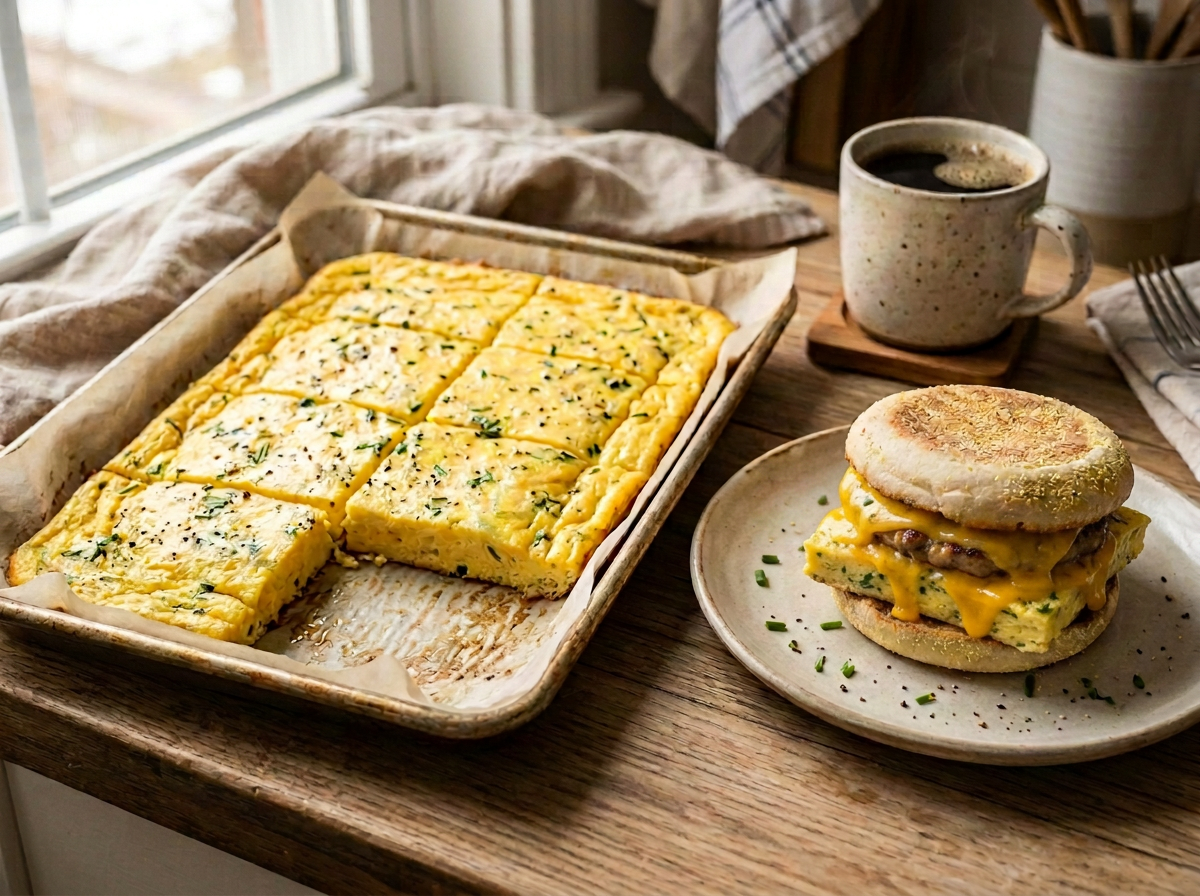
A warm breakfast sandwich sounds manageable until you are standing at the stove cooking eggs one at a time while everyone is trying to get out the door. Sheet pan breakfast sandwiches offer a much easier approach. The eggs bake together in one even layer, allowing you to prepare eight filling breakfasts without spending the morning flipping eggs or washing multiple pans.
These sandwiches are especially useful during busy back-to-school weeks, but they are just as convenient for workdays, road trips, and weekends when everyone wakes up at a different time. Assemble a batch in advance, store the sandwiches in the refrigerator or freezer, and reheat them whenever you need a quick breakfast.
The sausage-and-cheddar version below is a dependable place to start, but the basic method is endlessly adaptable. Change the meat, cheese, vegetables, or bread, and you can keep a freezer stocked with several different options.
Why Bake Eggs on a Sheet Pan?
Cooking eggs on a sheet pan turns a typically made-to-order breakfast into a simple batch-cooking project. Instead of preparing eight separate eggs, you whisk everything together, pour the mixture into a pan, and let the oven do the work.
The finished egg layer is easy to divide into equal portions, so every sandwich gets a generous filling. Squares are the quickest option and leave no scraps behind. Although they will extend slightly beyond the rounded edges of an English muffin, that is part of the appeal of a substantial homemade breakfast sandwich.
Oven-baked eggs also reheat well. When they are removed from the oven as soon as the center sets, they remain tender rather than becoming dry or rubbery. This matters when the sandwiches will be refrigerated, frozen, and warmed again later.
Choosing the Right Pan
A 9-by-13-inch baking pan works well for a batch of eight sandwiches and is something most home cooks already own. A rimmed quarter sheet pan of a similar size can also be used. Avoid pouring the mixture onto a large half sheet pan unless you increase the recipe quantities. Spreading the same amount of egg over a larger surface would produce a layer that is too thin.
Line the pan with parchment paper, leaving enough overhang on two sides to help lift out the cooked eggs. Lightly coat the parchment and any exposed areas of the pan with cooking spray. This makes the egg layer easier to remove and keeps the edges intact.
Toast the English Muffins First
Toasting the English muffins is a small step that makes a noticeable difference, particularly if the sandwiches are being prepared in advance. A lightly toasted surface is less likely to absorb moisture from the eggs as the sandwiches sit in the refrigerator or thaw from frozen.
The muffins do not need to become deeply browned or crisp. A few minutes in the oven is enough to dry the cut surfaces and give them a little structure. Let them cool before assembling sandwiches that will be stored.
Keep the Eggs Tender
Milk softens the egg mixture and helps create a tender, cohesive layer. Whisk the eggs thoroughly so the whites and yolks are completely combined, but do not worry about incorporating a great deal of air. The goal is a smooth mixture rather than a lofty texture.
Watch the eggs closely toward the end of the baking time. They are ready when the center is set and no longer looks wet. The eggs will continue to cook slightly from the heat of the pan, so leaving them in the oven until they are browned or firm can result in dry sandwiches after reheating.
Recipe: Sheet Pan Breakfast Sandwiches with Sausage & Cheddar
These classic breakfast sandwiches combine tender baked eggs, savory sausage, and melted cheddar on toasted English muffins. They can be served immediately or cooled, wrapped, and stored for quick breakfasts throughout the week.
Makes 8 sandwiches
Ingredients
- 8 English muffins, split
- 10 large eggs
- ½ cup whole milk
- ¾ teaspoon kosher salt
- ¼ teaspoon freshly ground black pepper
- ¼ teaspoon garlic powder, optional
- 8 cooked breakfast sausage patties
- 8 slices cheddar cheese
- Butter, hot sauce, or Dijon mustard, optional
- Nonstick cooking spray
Instructions
- Heat the oven to 350°F. Line a 9-by-13-inch baking pan with parchment paper and coat it lightly with cooking spray.
- Arrange the English muffins cut-side up on a separate sheet pan. Bake for 5 to 7 minutes, until lightly toasted. Transfer them to a rack to cool.
- Whisk the eggs, milk, salt, pepper, and garlic powder in a large bowl until evenly combined. Pour the mixture into the prepared baking pan.
- Bake for 14 to 18 minutes, until the center is just set. Let the eggs cool in the pan for 5 minutes.
- Lift the egg layer from the pan using the parchment. Cut it into eight equal portions.
- Place one egg portion, one sausage patty, and one slice of cheddar on the bottom half of each English muffin. Add butter, hot sauce, or Dijon, if desired, then cover with the muffin tops.
- Serve immediately, or cool completely before wrapping and storing.
Easy Breakfast Sandwich Variations
Once you know the basic method, it is easy to customize the sandwiches with ingredients your family enjoys. Keep the amount of filling reasonable so the sandwiches remain easy to wrap and reheat.
Bacon, Egg, and Swiss
Replace the sausage patties with two strips of crisp bacon per sandwich and use Swiss cheese in place of cheddar. Break or fold the bacon so it fits inside the English muffins. A light spread of Dijon mustard complements the bacon and Swiss without making the sandwiches overly moist.
Ham, Egg, and Cheddar
Layer each sandwich with thinly sliced ham and sharp cheddar. Because the ham is already cooked, it can be added during assembly without any additional preparation. Fold larger slices into compact layers so the edges do not hang too far beyond the muffin.
Spinach, Pepper, and Feta
For a meatless version, sauté 1 cup of chopped spinach and ½ cup of finely diced bell pepper until the vegetables are tender and any released liquid has evaporated. Let them cool slightly, then scatter them over the egg mixture before baking. Sprinkle ½ cup of crumbled feta over the vegetables and bake as directed.
Sausage, Pepper, and Pepper Jack
Sauté ½ cup each of diced bell pepper and onion until tender. Add the cooled vegetables to the egg mixture, then assemble the sandwiches with sausage patties and pepper Jack cheese. A few drops of hot sauce can add more heat, but it is best added after reheating if the sandwiches will be frozen.
Mushroom, Egg, and Provolone
Cook 8 ounces of finely chopped mushrooms in a lightly oiled skillet until they are browned and their moisture has evaporated. Scatter the cooled mushrooms over the eggs before baking, then pair the egg portions with provolone cheese. Thoroughly browning the mushrooms helps intensify their flavor while preventing watery sandwiches.
How to Prevent Soggy Breakfast Sandwiches
Moisture is the main challenge when preparing breakfast sandwiches in advance. Toasting the English muffins creates the first line of defense, but the other ingredients also need a little attention.
Cook vegetables before adding them to the eggs, particularly mushrooms, spinach, zucchini, peppers, and onions. Raw vegetables can release a surprising amount of water as they bake. Once cooked, drain or evaporate any excess liquid and allow the vegetables to cool before adding them to the egg mixture.
The egg layer and sausage patties should also be completely cool before the sandwiches are wrapped. Wrapping warm ingredients traps steam, which eventually settles into the bread. If time allows, place the components on a wire rack so air can circulate around them as they cool.
Positioning the cheese between the egg and the muffin can provide another light barrier against moisture. Save juicy toppings such as sliced tomatoes, salsa, and avocado for serving rather than adding them before storage.
Making the Sandwiches Ahead
These sandwiches can be assembled on the weekend and refrigerated for breakfasts over the next few days. Once the ingredients have cooled completely, wrap each sandwich individually in parchment paper, reusable food wrap, or foil. Place the wrapped sandwiches in an airtight container and refrigerate them for up to four days.
Individual wrapping makes the sandwiches easy to grab, but it also helps keep them from drying out. If you prepare more than one variety, label the wrappers so everyone can quickly find the combination they want.
For an even faster morning, portion fruit, yogurt, or another simple side at the same time. With the entire breakfast ready in the refrigerator, there is less temptation to skip the meal or rely on a drive-through.
How to Freeze Breakfast Sandwiches
To freeze the sandwiches, allow every component to cool completely before assembly. Wrap each sandwich tightly in parchment or plastic wrap, followed by a layer of foil for additional protection. Place the wrapped sandwiches in a freezer-safe bag or airtight container.
Label the package with the type of sandwich and the date. For the best flavor and texture, use frozen breakfast sandwiches within two months.
You can transfer a sandwich from the freezer to the refrigerator the night before you plan to eat it. This shortens the reheating time and helps the center warm more evenly. The sandwiches can also be reheated directly from frozen when needed.
The Best Ways to Reheat Breakfast Sandwiches
Before microwaving, remove any foil and loosely wrap the sandwich in a paper towel. A refrigerated sandwich generally needs 60 to 90 seconds, depending on the power of the microwave. Heat it in shorter intervals and check the center before serving.
For a frozen sandwich, microwave at 50 percent power for 2 to 3 minutes to thaw it gently. Turn the sandwich over, then continue heating at full power in 30-second intervals until the center is hot.
The microwave is the fastest option, but a toaster oven, conventional oven, or air fryer will produce a crisper English muffin. A refrigerated sandwich can be warmed in a 350°F oven or toaster oven for about 10 to 15 minutes. A frozen sandwich will take approximately 25 to 30 minutes and should remain loosely wrapped in foil for most of that time. Open the foil during the last few minutes to crisp the bread.
What to Serve with Breakfast Sandwiches
A breakfast sandwich is satisfying on its own, but a simple side can round out the meal. Fresh berries, grapes, orange slices, or a banana require no additional cooking and are easy to pack for the road. Yogurt, overnight oats, or a small smoothie can make breakfast feel more substantial.
For a relaxed weekend meal, serve the sandwiches with roasted breakfast potatoes or a fresh fruit salad. Put hot sauce, mustard, sliced avocado, and salsa on the table so everyone can add a finishing touch after the sandwiches are warm.
Sheet pan breakfast sandwiches provide the convenience of a packaged breakfast without limiting you to someone else’s choice of ingredients. One short meal-prep session can stock the refrigerator or freezer with warm, filling breakfasts that are ready when you are.
Start with sausage and cheddar, then experiment with different meats, cheeses, and cooked vegetables. Whether you make one familiar combination or several varieties in the same batch, having breakfast prepared in advance can make even the most hurried morning feel a little more manageable.



Leave a Reply