
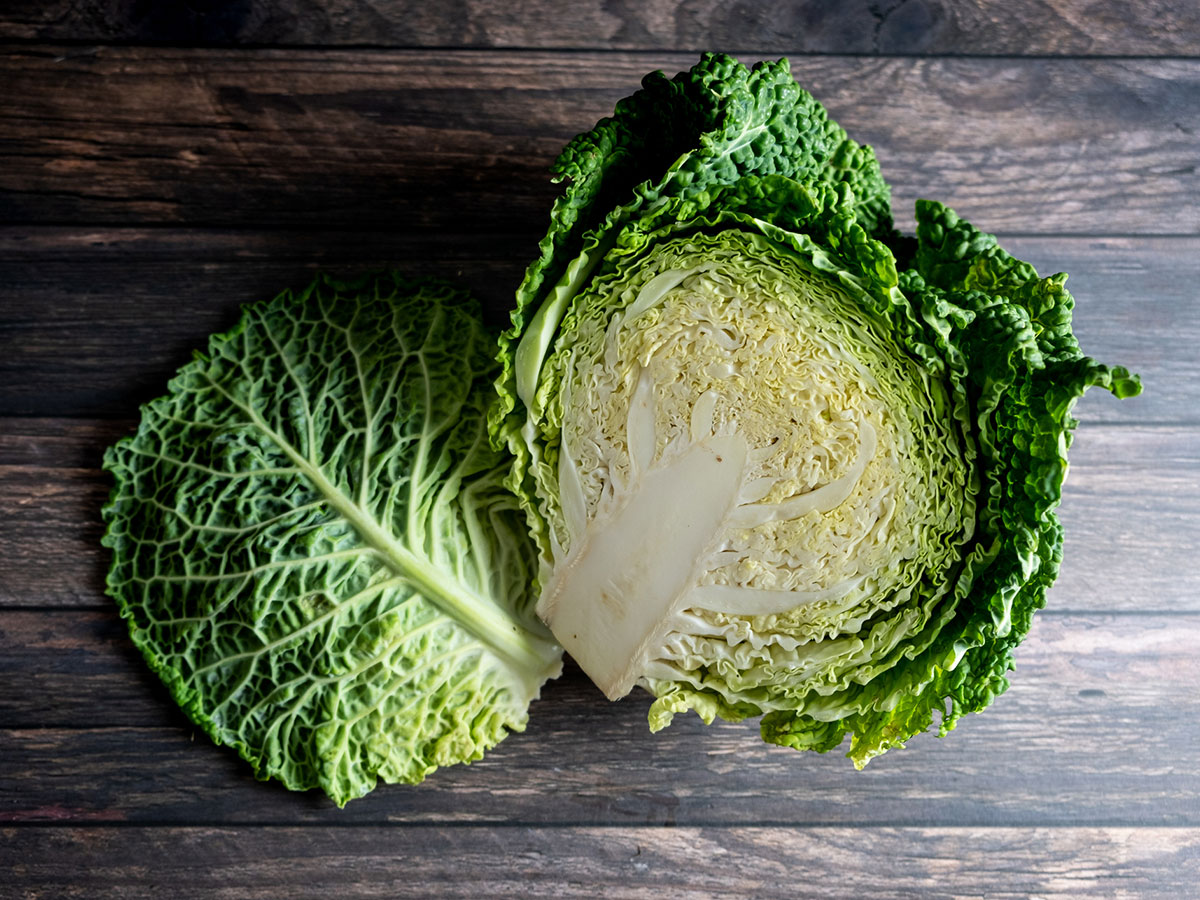
Savoy cabbage is one of winter’s most versatile and quietly elegant vegetables. Known for its deeply crinkled leaves and mild, slightly sweet flavor, it’s more tender than standard green cabbage yet sturdy enough for hearty cold-weather cooking. Savoy cabbage is grown in both “summer” and “winter” varieties, with winter Savoy offering a more pronounced flavor, curlier leaves, and greater cold tolerance. Thriving in frosty conditions, winter Savoy cabbage has long been a classic staple in seasonal European and American kitchens, where it brings comfort and substance to soups, braises, and simple sautéed dishes alike.
Buying & Storing Cheat Sheet
| DOs | DON’Ts |
| Choose heads that feel heavy for their size, which indicates freshness and good moisture content. | Don’t buy cabbage with yellowing, browning, or slimy leaves, which are signs of age or improper storage. |
| Look for deeply crinkled, vibrant green leaves, especially with winter Savoy varieties, which tend to have tighter curls and stronger flavor. | Don’t choose heads with loose or limp outer leaves, as they indicate dehydration. |
| Select smaller to medium heads for the most tender texture and balanced sweetness. | Don’t wash Savoy cabbage before storing, since excess moisture speeds spoilage. |
| Store whole, unwashed cabbage in the refrigerator crisper, loosely wrapped or in a produce bag to prevent moisture loss. | Don’t store cabbage at room temperature for extended periods, especially winter Savoy, which keeps best when chilled. |
| Use cut cabbage within 2–3 days, wrapping it tightly to keep the edges from drying out. | Don’t let cut cabbage sit uncovered in the fridge, as it will dry out quickly and lose flavor. |
General Uses
Savoy cabbage stands apart from other cabbages thanks to its tender leaves and subtle sweetness. Its ruffled texture softens quickly when cooked, making it ideal for both fast and slow preparations.
Because the leaves are pliable, Savoy cabbage works especially well for stuffed dishes, requiring little to no pre-blanching. It can be thinly sliced for raw salads and slaws, sautéed with butter or olive oil for a simple side, or slowly braised until silky and sweet. Savoy cabbage pairs naturally with garlic, onions, leeks, apples, mustard, cream, pork, sausage, and aged cheeses, making it a natural fit for winter meals that feel both comforting and balanced.
Recipes
Butter-Braised Savoy Cabbage with Garlic and Thyme

Makes 4 servings
Ingredients
- 2 tablespoons unsalted butter
- 1 tablespoon olive oil
- 2 cloves garlic, thinly sliced
- 1 small head Savoy cabbage, cored and sliced into ribbons
- ½ teaspoon kosher salt
- ¼ teaspoon black pepper
- 1 teaspoon fresh thyme leaves
- ¼ cup vegetable or chicken stock
Instructions
- Heat butter and olive oil in a large skillet over medium heat.
- Add garlic and cook until fragrant, about 30 seconds.
- Add cabbage, salt, and pepper, tossing to coat.
- Pour in stock, cover, and cook for 8–10 minutes, stirring occasionally, until cabbage is tender.
- Remove lid, stir in thyme, and cook uncovered for 2–3 minutes to reduce excess liquid. Serve warm.
Cabbage & Apple Slaw with Dijon Vinaigrette

Makes 4–6 servings
Ingredients
- 4 cups thinly sliced Savoy cabbage
- 1 crisp apple (such as Honeycrisp), julienned
- 2 tablespoons apple cider vinegar
- 1 teaspoon Dijon mustard
- 1 teaspoon honey
- 3 tablespoons olive oil
- Salt and black pepper, to taste
Instructions
- In a large bowl, combine cabbage and apple.
- In a small bowl, whisk vinegar, Dijon, honey, olive oil, salt, and pepper.
- Pour dressing over cabbage mixture and toss to coat.
- Let sit for 10 minutes before serving to soften slightly and develop flavor.
Stuffed Cabbage with Herbed Rice and Sausage

Makes 6 servings
Ingredients
- 1 large head Savoy cabbage
- ½ pound Italian sausage, casings removed
- 1 tablespoon olive oil
- 1 small onion, finely diced
- 2 cloves garlic, minced
- 1½ cups cooked rice
- 2 tablespoons chopped fresh parsley
- 1 teaspoon fresh thyme
- 1 cup tomato sauce
- Salt and black pepper, to taste
Instructions
- Preheat the oven to 375°F.
- Carefully separate 10–12 large outer cabbage leaves.
- In a skillet, heat olive oil and cook sausage until browned. Add onion and garlic; cook until softened.
- Remove from heat and stir in rice, parsley, thyme, salt, and pepper.
- Place a small mound of filling on each cabbage leaf, roll tightly, and place seam-side down in a baking dish.
- Pour tomato sauce over rolls, cover with foil, and bake for 35–40 minutes until heated through and tender.
Savoy Cabbage and White Bean Skillet with Parmesan

Makes 4 servings
Ingredients
- 2 tablespoons olive oil
- 1 small onion, sliced
- 3 cups chopped Savoy cabbage
- 1 (15-ounce) can white beans, drained and rinsed
- ½ teaspoon kosher salt
- ¼ teaspoon red pepper flakes
- ¼ cup grated Parmesan cheese
- Fresh lemon juice, to taste
Instructions
- Heat olive oil in a large skillet over medium heat.
- Add onion and cook until soft and lightly golden.
- Add cabbage, salt, and red pepper flakes; cook until cabbage wilts and becomes tender, about 6–8 minutes.
- Stir in white beans and cook until warmed through.
- Finish with Parmesan and a squeeze of lemon juice before serving.
Cabbage, Potato & Leek Soup

Makes 4-6 servings
Ingredients
- 2 tablespoons unsalted butter
- 2 leeks, white and light green parts only, sliced
- 2 cups chopped Savoy cabbage
- 2 medium potatoes, peeled and diced
- 4 cups vegetable or chicken stock
- ½ teaspoon kosher salt
- ¼ teaspoon black pepper
- ½ cup milk or cream
Instructions
- Melt butter in a large pot over medium heat.
- Add leeks and cook until soft, about 5 minutes.
- Add cabbage, potatoes, stock, salt, and pepper. Bring to a simmer.
- Cook for 20 minutes, until vegetables are tender.
- Blend partially for a chunky texture or fully for a smooth soup.
- Stir in milk or cream, adjust seasoning, and serve warm.
With its tender leaves, gentle sweetness, and ability to thrive in cold weather, Savoy cabbage earns its place as a winter kitchen staple. Whether served raw in a crisp slaw, slowly braised with butter, or folded into hearty soups and stuffed dishes, it offers both flexibility and comfort. If you’ve overlooked Savoy cabbage in favor of more familiar varieties, winter is the perfect time to bring it back into rotation.



Leave a Reply