
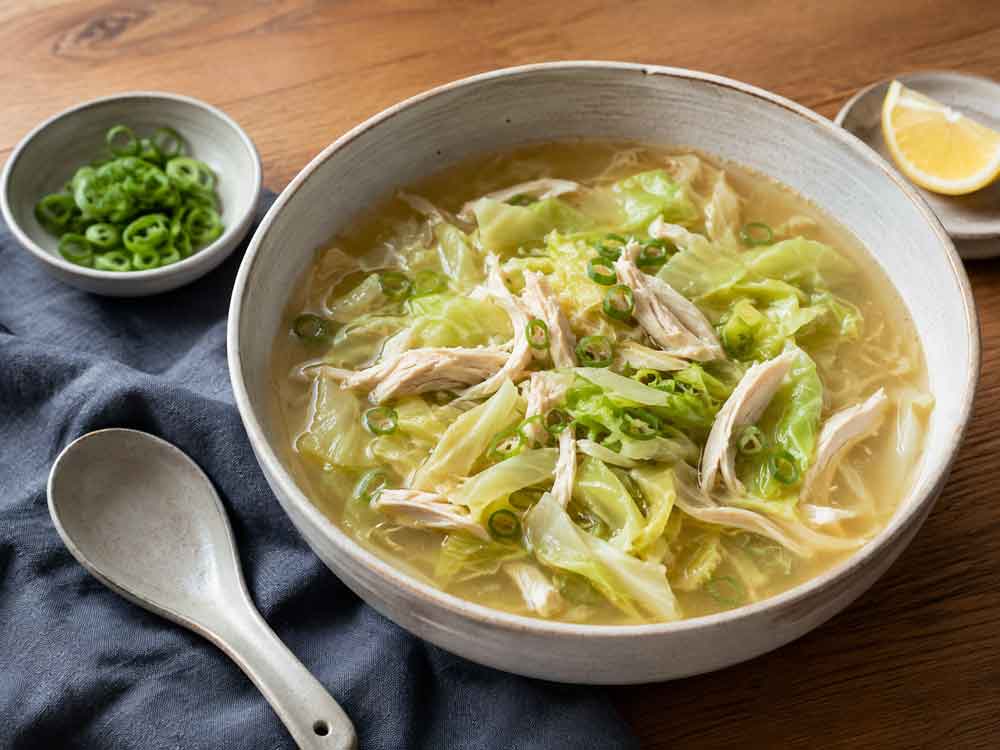
A pot of Chicken & Cabbage Soup offers the kind of gentle warmth that suits chilly evenings, low-key weekends, and days when dinner needs to be both nourishing and uncomplicated. Tender shredded chicken and ribbons of green cabbage simmer in a clear, aromatic broth flavored with fresh ginger, garlic, and onion. Scallions and a splash of lemon juice or rice vinegar provide a fresh finish that keeps the soup from tasting flat or overly restrained.
The recipe is made entirely in one pot with a relatively short list of ingredients. Although the soup is light and brothy, the generous amount of chicken and cabbage makes it substantial enough to serve as a complete meal. It also stores and reheats well, making it a practical option for meal prep or next-day lunches.
Why Chicken and Cabbage Work So Well Together
Chicken and cabbage are both mild ingredients, which allows them to absorb the flavors of the broth without competing with the fresh aromatics. Cooking the chicken directly in the soup contributes savory flavor to the broth while keeping the meat moist and tender. Once cooked, the chicken is shredded into bite-size pieces and returned to the pot so it is distributed throughout every bowl.
Green cabbage adds more than volume. As it simmers, its crisp leaves soften and become subtly sweet while retaining enough texture to give the soup some body. It makes the recipe feel satisfying without the need for potatoes, pasta, beans, or cream.
Because cabbage shrinks considerably during cooking, 4–5 cups may initially look like too much. Once it has simmered for several minutes, however, the leaves settle into the broth and create a balanced ratio of chicken, vegetables, and liquid.
Fresh Ginger Makes the Difference
Fresh ginger distinguishes this soup from a more traditional chicken-and-vegetable recipe. It lends warmth and fragrance to the broth along with a clean, gently peppery quality. The ginger is noticeable without being overpowering, allowing the soup to remain approachable and versatile.
Grating the ginger helps it disperse throughout the broth so there are no large, fibrous pieces. Add it to the softened onion along with the minced garlic, then cook the mixture for only about 30 seconds. This brief contact with the hot oil releases the aromatics’ flavor, but keeping the cooking time short prevents the garlic from browning or becoming bitter.
A little acidity at the end sharpens all those flavors. Lemon juice gives the soup a familiar citrusy freshness, while rice vinegar offers a cleaner, more neutral tang. Either one is optional, but a small amount can make the broth taste brighter and more complete. Add it gradually, tasting as you go.
Choosing and Cooking the Chicken
Boneless, skinless chicken thighs and breasts both work well in this soup, so the choice comes down to the texture and richness you prefer. Chicken thighs have a little more fat, which gives the broth extra flavor and helps the meat remain succulent. Chicken breasts create a leaner soup with a slightly firmer texture.
Whichever cut you choose, keep the broth at a gentle simmer rather than a vigorous boil. High heat can cause the meat to tighten and become dry. Covering the pot while the chicken cooks helps maintain a steady temperature and prevents too much broth from evaporating.
The exact cooking time will depend on the thickness of the pieces. Begin checking the chicken after about 15 minutes and remove it once the thickest part reaches 165°F. Let it cool just enough to handle, then shred or chop it into bite-size pieces before returning it to the broth.
How to Prepare the Cabbage
Choose a head of green cabbage that feels heavy for its size and has crisp, tightly packed leaves. Remove any damaged outer leaves, cut the cabbage into wedges, and slice away the firm central core. From there, the leaves can be thinly sliced or roughly shredded.
Try to keep the pieces short enough to fit comfortably on a spoon. Very long ribbons may look attractive in the pot, but they can make the soup awkward to eat. A rough, bite-size shred gives the soup a more rustic appearance and ensures the cabbage cooks evenly.
Add the cabbage only after the chicken has cooked and been shredded. It needs approximately 8–10 minutes to become tender while retaining a little structure. If you prefer very soft cabbage, allow it to simmer for a few additional minutes. For a fresher texture, begin checking it closer to the eight-minute mark.
Recipe: Chicken & Cabbage Soup
Makes 4–6 servings
Ingredients
- 1 tablespoon olive oil
- 1 small yellow onion, thinly sliced
- 3 cloves garlic, minced
- 1½ tablespoons fresh ginger, peeled and grated
- 1½ pounds boneless, skinless chicken thighs or breasts
- 6 cups low-sodium chicken broth
- ½ teaspoon kosher salt, plus more to taste
- ¼ teaspoon black pepper
- 4–5 cups shredded green cabbage (about ½ medium head)
- 2 scallions, thinly sliced
- Lemon wedges or rice vinegar, for finishing (optional)
Instructions
- Heat the olive oil in a large pot over medium heat.
- Add the onion and cook for 4–5 minutes, until softened but not browned.
- Stir in the garlic and ginger and cook for about 30 seconds, just until fragrant.
- Add the chicken, broth, salt, and pepper. Bring to a gentle simmer.
- Cover and cook for 15–18 minutes, until the chicken is cooked through.
- Remove the chicken from the pot and shred it into bite-size pieces.
- Return the chicken to the pot and add the cabbage.
- Simmer uncovered for 8–10 minutes, until the cabbage is tender but still has a little body.
- Taste and adjust seasoning as needed.
- Serve hot, finished with scallions and a squeeze of lemon or splash of rice vinegar if desired.
Recipe Notes
- Chicken thighs will produce a slightly richer soup, while chicken breasts offer a leaner option.
- Keep the broth at a gentle simmer so the chicken remains tender.
- Cut the cabbage into short, bite-size shreds that are easy to eat with a spoon.
- If using leftover cooked chicken, add approximately 3–4 cups of shredded meat with the cabbage.
- Add cooked rice or noodles to individual bowls rather than the full pot if you plan to store leftovers.
- Refrigerate the soup for up to four days or freeze it for up to three months.
Easy Ways to Adapt the Soup
The straightforward broth makes an excellent base for additional vegetables. Thinly sliced carrots, mushrooms, celery, or snow peas can add more color and texture. Firm vegetables such as carrots should be cooked with the onion, while quick-cooking additions can go into the pot with the cabbage.
For a more substantial meal, add cooked rice or noodles to individual bowls before ladling the soup over them. Keeping these ingredients separate prevents them from absorbing too much broth while the leftovers are stored. You can also add a dash of soy sauce or tamari for a deeper savory note, but taste the soup first and reduce the added salt if necessary.
Napa cabbage or baby bok choy can replace green cabbage when you want a more delicate texture. Because both cook more quickly, add them during the final few minutes. If you are starting with leftover cooked chicken, prepare the broth and aromatics first, then add the shredded meat with the cabbage so it warms without becoming overcooked.
A pinch of red pepper flakes, a few slices of fresh chile, or a spoonful of chili crisp can bring heat to the finished soup. Since spice preferences vary, offering chili crisp at the table is often the easiest option.
What to Serve with Chicken & Cabbage Soup
Although this soup can stand on its own, crusty bread or toasted sourdough makes a simple and welcome accompaniment. Crackers are another easy option, particularly for a quick lunch. If you want to make the meal more filling, serve the soup with a bowl of steamed rice or spoon it directly over rice.
A crisp cucumber salad complements the warm ginger broth without making the meal feel heavy. Roasted vegetables or a lightly dressed green salad can also round out dinner while maintaining the soup’s fresh, uncomplicated character.
Set out a few finishing ingredients so everyone can adjust their bowl. Sliced scallions add fresh onion flavor, while lemon wedges and rice vinegar contribute acidity. Chili crisp provides heat and richness, and a small sprinkle of sesame seeds offers subtle nuttiness and texture.
Make-Ahead, Storage, and Freezing Tips
Chicken & Cabbage Soup can be made several days in advance, although the cabbage will continue to soften as it sits in the broth. If you are preparing it specifically for later in the week and prefer cabbage with more texture, slightly reduce its initial cooking time.
Allow the soup to cool before transferring it to airtight containers. Refrigerate it for up to four days. Reheat individual portions in the microwave or warm a larger quantity in a covered pot over medium-low heat, stirring occasionally. Avoid boiling the soup for an extended period, which can overcook the chicken and cabbage.
The soup can also be frozen for up to three months. Divide it into appropriately sized freezer-safe containers, leaving a little room for expansion. Thaw it overnight in the refrigerator before reheating, or warm it from frozen over low heat. Add fresh scallions and the lemon juice or rice vinegar after reheating so those finishing flavors remain lively.
A Simple Soup Worth Keeping in Rotation
Chicken & Cabbage Soup proves that a comforting meal does not need to be rich, elaborate, or time-consuming. A handful of fresh aromatics transforms basic chicken broth, while tender cabbage gives the soup enough substance to feel complete.
Its simplicity also leaves plenty of room for adaptation. Keep it light with scallions and lemon, make it heartier with rice or noodles, or add heat with a spoonful of chili crisp. However you serve it, this is an easy, dependable soup for cool nights, quiet lunches, and busy weeks.



Leave a Reply