
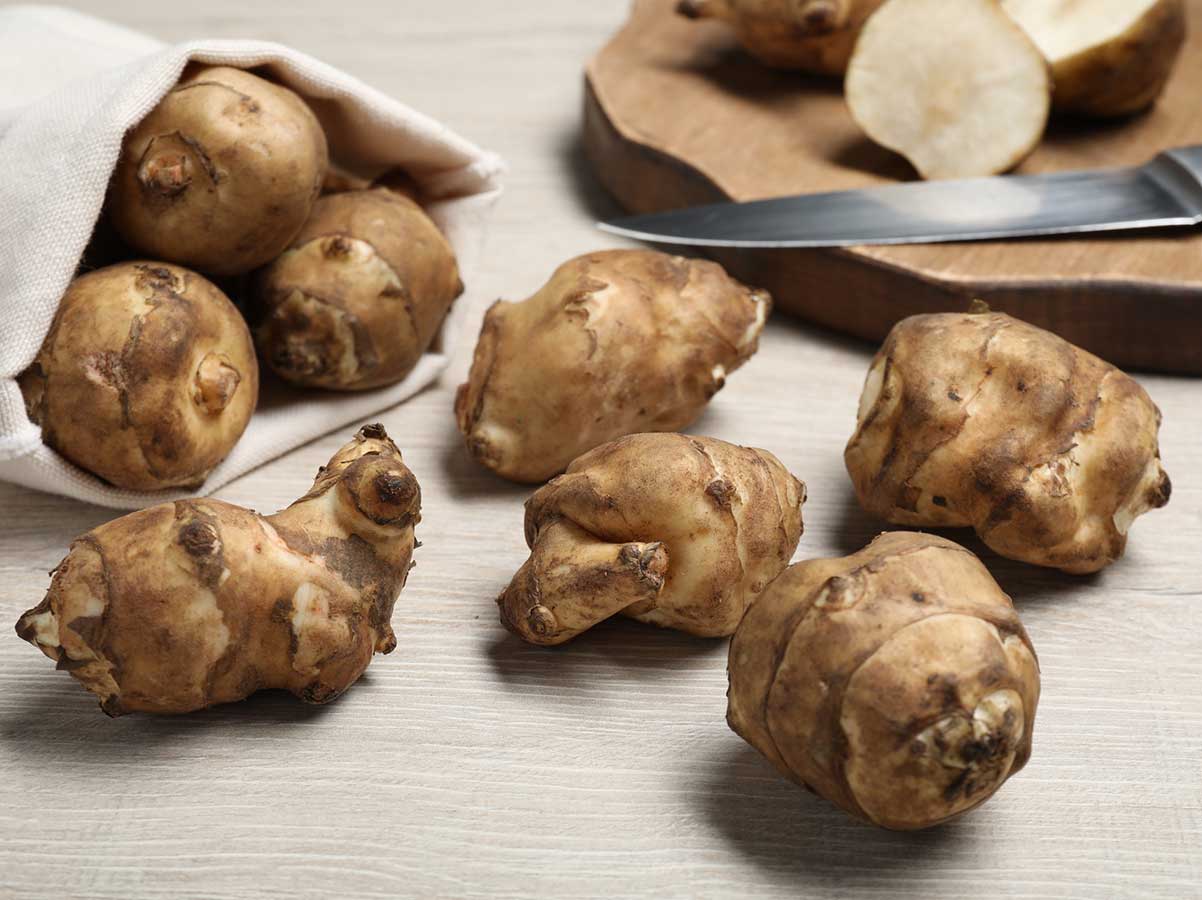
Sunchokes—also known as Jerusalem artichokes—are knobby, pale brown tubers that show up quietly in fall and winter produce displays. Despite the name, they aren’t related to artichokes at all. They’re actually a type of sunflower tuber, prized for their nutty, slightly sweet flavor and their ability to turn creamy when cooked.
If you like potatoes, parsnips, or celery root, sunchokes are an easy ingredient to love. They can be roasted, sautéed, puréed, or even shaved raw, and they add variety to winter cooking without requiring unfamiliar techniques. When they’re in season, they’re worth grabbing—especially if you’re looking to expand your cold-weather vegetable rotation.
Buying & Storing Cheat Sheet
| DOs | DON’Ts |
| Choose firm sunchokes with tight skin and no soft spots | Don’t buy shriveled or mushy tubers |
| Expect irregular, knobby shapes—this is normal | Don’t assume odd shapes mean poor quality |
| Select small to medium sunchokes for more even cooking | Don’t overlook size differences when planning recipes |
| Store unwashed in the refrigerator crisper | Don’t store at room temperature for extended periods |
| Keep loosely wrapped or in a paper bag to allow airflow | Don’t seal tightly in plastic where moisture can build |
| Wash and peel (if desired) just before using | Don’t wash ahead of time—it shortens shelf life |
For best flavor and texture, plan to use sunchokes within one to two weeks of purchase.
General Uses for Sunchokes
Sunchokes don’t require complicated prep, but a few tips make them easier to work with:
- Peeling: The skin is edible, but peeling is recommended for soups, purées, and mash-style dishes. For roasting or sautéing, well-scrubbed skins are fine.
- Preventing discoloration: Like potatoes, cut sunchokes can oxidize. If you’re not cooking them immediately, place them in a bowl of cold water with a squeeze of lemon.
- Cooking methods:
- Roasting brings out their natural sweetness and creates caramelized edges.
- Sautéing keeps them tender with crisp exteriors.
- Boiling or simmering is best for soups and purées.
- Portion note: Sunchokes are high in inulin, which some people find hard to digest in large amounts. If they’re new to you, start with modest portions and cook them thoroughly.
Recipes
Roasted Sunchokes with Garlic & Parmesan

Makes 4 servings
Ingredients
- 1½ pounds sunchokes, scrubbed and cut into 1-inch pieces
- 3 tablespoons olive oil
- 2 cloves garlic, finely minced
- ¾ teaspoon kosher salt
- ¼ teaspoon black pepper
- ½ cup finely grated Parmesan cheese
Instructions
- Preheat oven to 425°F.
- Toss the cut sunchokes with olive oil, minced garlic, salt, and pepper until evenly coated.
- Spread in a single layer on a rimmed baking sheet, making sure pieces are not crowded.
- Roast for 25 minutes, then remove from the oven and stir.
- Sprinkle Parmesan evenly over the sunchokes.
- Return to the oven and roast an additional 8–10 minutes, until the cheese is melted, lightly golden, and the sunchokes are tender with crisp edges.
- Transfer to a serving dish and serve hot..
Creamy Sunchoke Soup with Leeks & Lemon

Makes 4 servings
Ingredients
- 1½ pounds sunchokes, peeled and chopped
- 2 leeks, white and light green parts only, sliced and rinsed
- 2 tablespoons olive oil
- 1 teaspoon kosher salt
- 4 cups low-sodium vegetable or chicken broth
- Zest of 1 lemon
- 1–2 tablespoons fresh lemon juice
- Black pepper, to taste
Instructions
- Heat olive oil in a large pot over medium heat.
- Add leeks and salt; cook 6–8 minutes until soft but not browned.
- Add sunchokes and broth; bring to a simmer.
- Cook 20–25 minutes until sunchokes are very tender.
- Purée until smooth using an immersion blender.
- Stir in lemon zest and juice; season with pepper to taste.
Shaved Sunchoke Salad with Arugula & Parmesan

Makes 4 servings
Ingredients
- 10 ounces sunchokes, scrubbed
- 4 cups baby arugula
- ½ cup shaved Parmesan cheese
For the Lemon Vinaigrette
- 3 tablespoons olive oil
- 1½ tablespoons fresh lemon juice
- ½ teaspoon Dijon mustard
- ¼ teaspoon kosher salt
- Black pepper, to taste
Instructions
- Thinly shave sunchokes using a mandoline or sharp knife.
- Whisk vinaigrette ingredients in a large bowl.
- Add sunchokes and arugula; toss gently to coat.
- Finish with Parmesan and freshly ground pepper before serving.
Sautéed Sunchokes with Brown Butter & Sage

Makes 4 servings
Ingredients
- 1¼ pounds sunchokes, peeled and sliced
- 3 tablespoons unsalted butter
- 8 fresh sage leaves
- ¾ teaspoon kosher salt
- Black pepper, to taste
Instructions
- Melt butter in a large skillet over medium heat.
- Add sage and cook until fragrant and butter begins to brown.
- Add sunchokes in an even layer.
- Cook 12–15 minutes, stirring occasionally, until tender and lightly caramelized.
- Season with salt and pepper before serving.
Mashed Sunchokes with Olive Oil & Roasted Garlic

Makes 4 servings
Ingredients
- 1½ pounds sunchokes, peeled and chopped
- 1 head garlic
- 3 tablespoons olive oil, divided
- ¾ teaspoon kosher salt
- Black pepper, to taste
Instructions
- Preheat oven to 400°F.
- Slice the top off the garlic head, drizzle with 1 tablespoon olive oil, wrap in foil, and roast for 40 minutes.
- Meanwhile, boil sunchokes in salted water until very tender, about 20 minutes.
- Drain well, then mash or purée until smooth.
- Squeeze roasted garlic cloves into the mash, add remaining olive oil, salt, and pepper, and stir until creamy.
Why Sunchokes Deserve a Spot in Your Winter Kitchen
Sunchokes are one of those ingredients that feel special without being fussy. They work across a range of preparations, pair well with familiar flavors, and offer a welcome change from the usual winter vegetables. Try them roasted or in soup first, then branch out into salads and sides. Once you get comfortable cooking with them, they’re likely to become a seasonal staple rather than a novelty.



Leave a Reply