
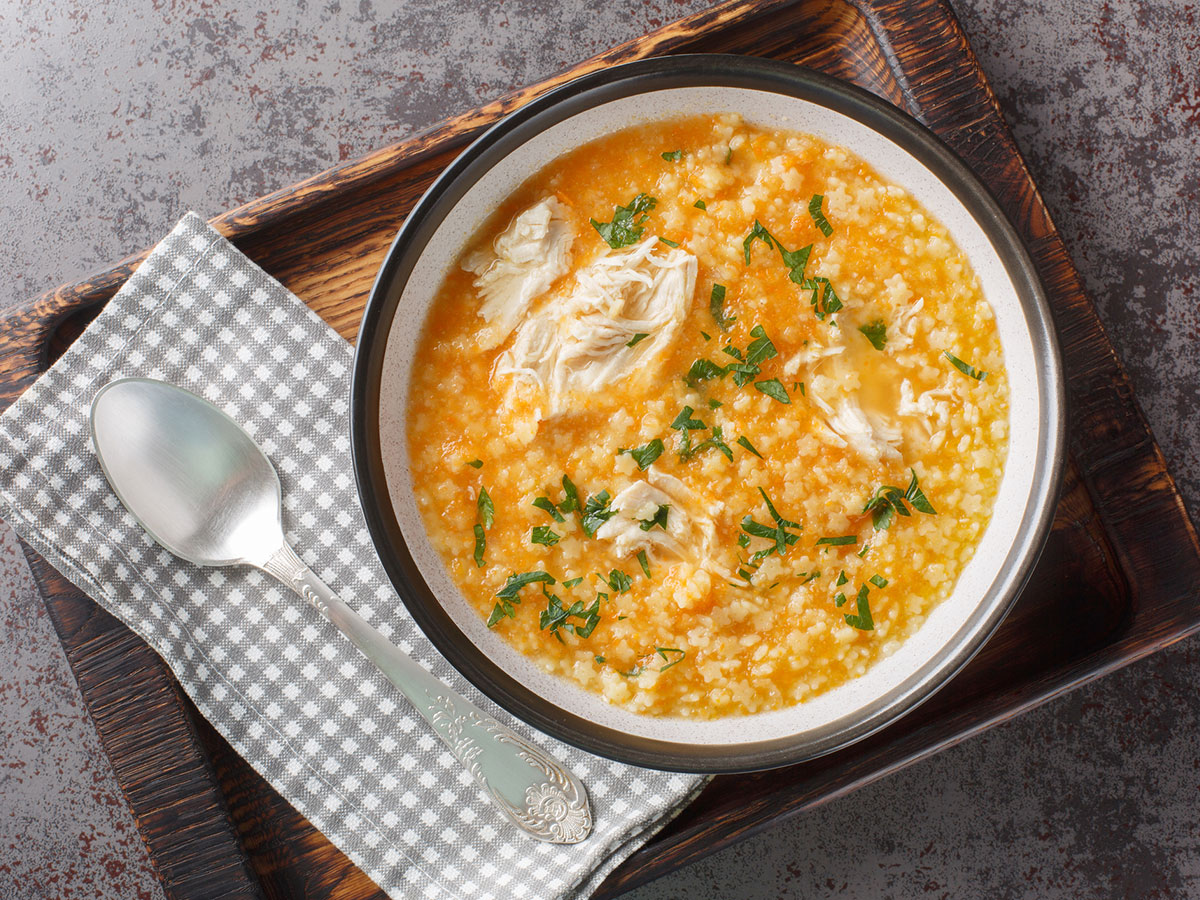
Chicken pastina soup goes by many affectionate names—Italian Penicillin Soup, Nonna’s Penicillin, or simply “the soup that fixes everything.” It’s the kind of meal people make when someone isn’t feeling well, when the weather turns cold, or when only the simplest, most nourishing food will do. The nickname isn’t a medical claim so much as kitchen shorthand: this is the soup you make to help someone feel better.
What sets chicken pastina soup apart is its texture. Rather than a thin, clear broth like traditional chicken noodle soup, this version starts with a blended base that becomes lightly creamy and spoon-coating without relying on dairy. It’s warm, gentle, and deeply soothing—easy to eat, easy to digest, and especially welcome when appetite is low.
What Is Chicken Pastina Soup?
Chicken pastina soup is built around pastina, the tiniest category of Italian pasta shapes—often stars, dots, or tiny grains. These small noodles cook quickly and melt into the soup, giving it body and comfort without heaviness.
The soup typically includes chicken, aromatics like onion, carrot, and celery, and a good-quality broth. What makes this version distinctive is that part (or all) of the vegetable base is blended before the pasta is added. That simple step transforms the soup into something slightly creamy and cohesive, rather than brothy and segmented.
The result is a soup that feels nurturing rather than filling—soft textures, mild flavors, and warmth in every bite.
Why It’s Called “Italian Penicillin”
The nickname comes from generations of home cooks who reached for this soup when someone had a cold, a stomach bug, or just needed rest and nourishment. It’s associated with care, recovery, and being looked after.
That reputation comes from a few simple qualities:
- Warm broth helps with hydration
- Soft textures are easy to eat when you’re tired or congested
- Mild flavors don’t overwhelm a sensitive palate
- Gentle ingredients are easy on the stomach
It’s not meant as a cure, but as a kind of edible reassurance—something steady, warm, and reliable when you’re feeling off.
How It Differs from Chicken Noodle Soup
While both soups share chicken and broth as a foundation, they deliver very different experiences.
- Texture: Chicken pastina soup is thicker and silkier due to the blended base
- Pasta: Pastina replaces long noodles, creating a softer, more uniform spoonful
- Consistency: The soup is cohesive rather than clear and segmented
- Mouthfeel: Gentle and creamy without cream, making it easier to digest
This makes chicken pastina soup especially appealing on sick days or cold evenings when something lighter yet satisfying feels just right.
Why It’s Easy to Digest
Chicken pastina soup is often recommended when you’re under the weather because of how gentle it is by design.
- The vegetables are fully cooked and blended, making them easier to digest
- The pasta is small and tender rather than chewy
- The chicken is finely shredded and soft
- The soup is warm, hydrating, and not overly rich
It delivers nourishment without heaviness, which is exactly what many people crave when they don’t feel their best.
Key Ingredients & Why They Matter
- Chicken: Provides protein and flavor. Bone-in chicken adds richness, but boneless works well for ease.
- Aromatics: Onion, carrot, and celery build flavor without sharpness.
- Chicken stock: Forms the backbone of the soup; homemade or low-sodium store-bought both work.
- Pastina: Thickens the soup naturally and creates its signature texture.
- Olive oil or butter: Adds a subtle richness and roundness.
- Parmesan rind or grated Parmesan (optional): Adds depth and savory warmth.
- Egg (optional): Can be stirred in at the end for extra richness and body.
How Chicken Pastina Soup Is Made
The process is simple and forgiving. Chicken and vegetables are simmered together to build flavor. The chicken is removed and shredded, while the vegetables and broth are blended into a smooth base. The chicken goes back into the pot, followed by the pastina, which cooks directly in the soup.
As the pastina cooks, it thickens the soup further, creating that comforting, slightly creamy consistency. A finishing touch of cheese, olive oil, or butter brings everything together.
Chicken Pastina Soup Recipe
Makes 4–6 servings
Ingredients
- 1 tablespoon olive oil or unsalted butter
- 1 small onion, diced
- 2 carrots, peeled and chopped
- 2 celery stalks, chopped
- 2 cloves garlic, smashed
- 1 pound chicken thighs or breasts
- 6 cups chicken stock
- 1 cup pastina
- Salt and black pepper, to taste
- ½ cup finely shredded cooked chicken (from the soup)
- Grated Parmesan, for serving (optional)
- Fresh chopped parsley, for serving (optional)
Instructions
- In a large pot, heat olive oil or butter over medium heat. Add onion, carrot, celery, and garlic and cook until softened, about 5–7 minutes.
- Add chicken and stock. Bring to a gentle simmer and cook for 20 minutes, until the chicken is tender.
- Remove the chicken and set aside to cool slightly.
- Blend the soup base until smooth using an immersion blender or countertop blender.
- Shred the chicken and return it to the pot.
- Stir in the pastina and cook until tender, about 5–7 minutes, stirring frequently.
- Season with salt and pepper. Serve hot with grated Parmesan and parsley if desired.
Variations & Adaptations
- Extra-rich version: Stir in a beaten egg at the end while stirring constantly.
- Vegetable-forward: Add zucchini or spinach after blending.
- Shortcut version: Use rotisserie chicken and good-quality broth.
- Dairy-free: Skip cheese and finish with olive oil instead of butter.
- Gluten-free: Substitute gluten-free pastina or tiny rice.
Storage, Reheating & Make-Ahead Tips
Pastina continues to absorb liquid as it sits, so the soup will thicken over time. When reheating, add extra broth or water to loosen it to your preferred consistency.
Store in the refrigerator for up to 3 days. For longer storage, freeze the soup without the pastina and add fresh pasta when reheating.
Serving Suggestions
Serve hot with:
- Extra grated Parmesan
- Freshly cracked black pepper
- A drizzle of olive oil
It’s especially welcome on cold days, sick days, or any time you want a meal that feels caring without being complicated.
Chicken pastina soup is less about tradition and more about intention. It’s the kind of food you make when warmth, nourishment, and ease matter most. With its soft textures, gentle flavors, and lightly creamy consistency, it’s a soup that meets you where you are—especially when you’re not feeling your best.



Leave a Reply