
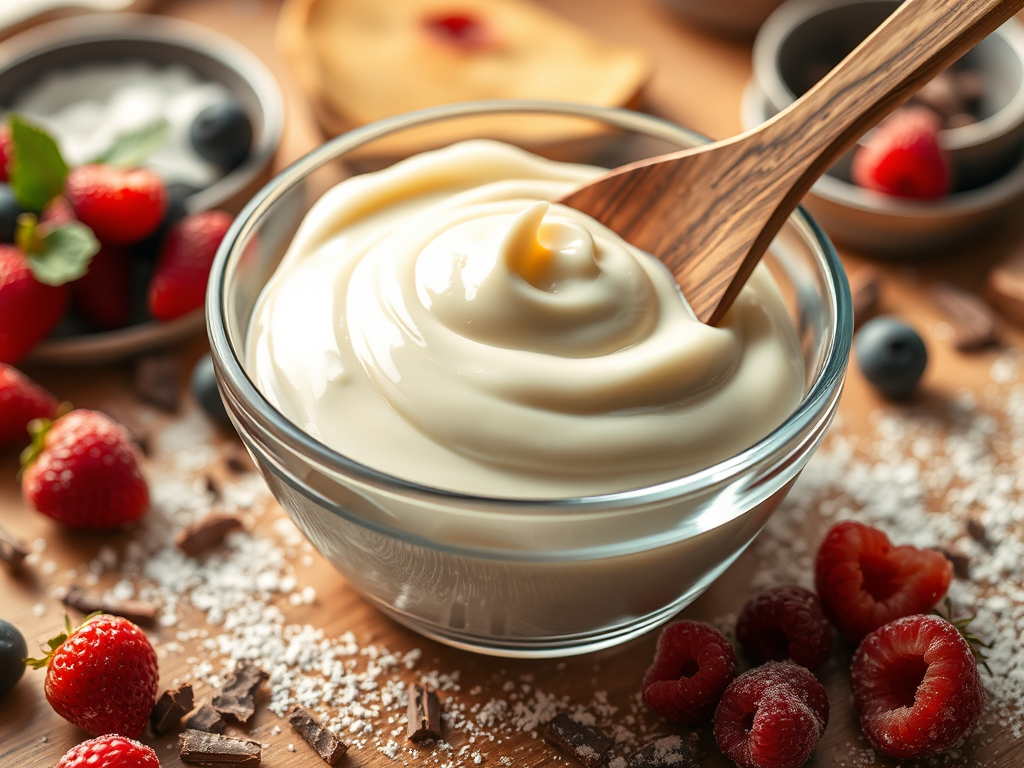
If there’s one foundational skill that quietly unlocks dozens of classic desserts, it’s pastry cream. Known in French as crème pâtissière, pastry cream is the rich, smooth custard filling behind éclairs, cream puffs, fruit tarts, and countless bakery-case favorites. Once you understand how it’s made—and how it can be adapted—you’ll find yourself returning to it again and again.
Pastry cream isn’t difficult, but it does reward attention. With just a handful of pantry ingredients and a little patience at the stove, you can create a versatile base that transforms simple pastries into something polished and special.
What Is Pastry Cream?
Pastry cream is a thick, spoonable custard made by gently cooking milk with egg yolks, sugar, and starch until it reaches a smooth, stable consistency. Unlike pourable custard sauces, pastry cream is designed to hold its shape. It’s firm enough to pipe, spread, or layer, yet still soft and creamy on the palate.
What sets pastry cream apart is its balance: it’s rich but not heavy, sweet but not cloying, and thick without being completely stiff like a cooked pudding or mousse.
Pastry cream is sturdy enough to support fruit, pastry, and cake layers, making it one of the most useful components in a baker’s repertoire.
What Is Pastry Cream Used For?
Pastry cream is primarily a filling, though it also plays a supporting role in many layered desserts. You’ll find it in:
- Éclairs and cream puffs
- Fruit tarts and tartlets
- Napoleons and mille-feuille
- Cake layers and rolled cakes
- Filled doughnuts and sweet buns
Because it’s cooked and thickened with starch, pastry cream is more stable than whipped cream and less delicate than custard sauces. It can be made ahead, piped cleanly, and paired with everything from flaky pastry to fresh fruit.
Key Ingredients in Pastry Cream
At its core, pastry cream is a balance of dairy, egg yolks, sugar, and starch. Small changes in those proportions—especially the ratio of milk to yolks—can dramatically affect richness, texture, and stability.
The Basic Ratio: Milk to Egg Yolks
Most classic pastry cream recipes use about 2 cups of milk to 4–6 egg yolks. This ratio creates a cream that’s rich but still clean-tasting and easy to pipe or spread.
- Fewer yolks result in a lighter, more neutral pastry cream
- More yolks produce a richer, silkier custard with deeper color and flavor
Professional pastry chefs often adjust yolk quantity depending on how the pastry cream will be used—leaner for fruit tarts, richer for éclairs or layered desserts.
Milk
Whole milk is the standard base for pastry cream, and for good reason.
- Why whole milk?
Whole milk provides enough fat for richness while still allowing the starch and eggs to do their thickening job effectively. It creates a custard that’s creamy without being heavy or greasy. - Can you use cream?
Yes—but with trade-offs.- Light cream or half-and-half: Produces a slightly richer pastry cream with a softer mouthfeel. Works well for dessert-focused fillings.
- Heavy cream: Creates a very rich custard, but it can dull flavors and reduce structure. Too much fat interferes with the starch thickening, sometimes resulting in a looser or heavier texture.
- Best practice:
If you want extra richness, replace up to half of the milk with cream rather than using cream exclusively.
Egg Yolks
Egg yolks are essential to pastry cream’s flavor, color, and structure.
- Why yolks instead of whole eggs?
Yolks contain fat and emulsifiers that create a smooth, rich custard. Egg whites, on the other hand, set more firmly and can create a rubbery or eggy texture when cooked. - What yolks contribute:
- Creaminess and body
- Natural thickening
- A pale yellow color associated with classic pastry cream
Using only yolks gives you control and consistency, especially important when the cream will be piped or layered.
Sugar
Sugar does more than sweeten a pastry cream. It balances richness and enhances the vanilla and dairy flavors. It also contributes to a smooth, glossy texture by preventing the egg yolks from over-solidifying during cooking.
The sugar is typically divided between the milk and yolks to prevent scorching and ensure even sweetness.
Starch (Cornstarch or Flour)
Starch is what gives pastry cream its signature stability. Cornstarch is the most common choice. It thickens quickly, creates a clean flavor, and produces a smooth, sliceable custard. Cornstarch also allows pastry cream to be boiled briefly without curdling—an important step for activating its full thickening power.
Flour is sometimes used in traditional recipes, resulting in a slightly softer texture and a more muted finish.
Butter
Butter is added to the mixture after cooking to add richness and sheen. It smooths the final texture of the pastry cream and enhances the flavor with being overpowering. While optional, butter gives pastry cream a polished, bakery-quality finish.
Vanilla
Vanilla is the classic flavoring for pastry cream. You can use any form of vanilla you like:
- Vanilla extract is convenient and reliable
- Vanilla bean adds depth and visual appeal
- Vanilla paste offers a balance of both
Once you understand the base, vanilla becomes just the starting point for countless flavor variations.
How Pastry Cream Is Made
While exact recipes vary, the basic process is consistent and predictable.
First, the milk is heated—sometimes with flavorings—to just below a boil. Meanwhile, egg yolks are whisked with sugar and starch until smooth. The hot milk is then slowly poured into the egg mixture to temper it, preventing curdling.
The mixture is returned to the heat and cooked while whisking until it thickens. Once thick, it’s removed from the heat, strained for smoothness, enriched with butter and vanilla, and then chilled properly to set the final texture.
It’s a straightforward method, but attention and steady whisking make all the difference.
Common Pastry Cream Problems (and How to Avoid Them)
Even experienced cooks occasionally run into issues. Most pastry cream problems are easy to prevent once you know what to watch for.
- Lumps: Usually caused by uneven heat or insufficient whisking. Straining helps fix this.
- Scrambled eggs: Happens when the eggs are overheated or not tempered properly. Keep the heat moderate.
- Too thin: Often the result of undercooking. Pastry cream should bubble gently for a few seconds to fully activate the starch.
- Skin forming: Prevent by pressing plastic wrap directly onto the surface while chilling.
- Grainy texture: Can occur if the pastry cream boils too aggressively or is overcooked.
Classic Vanilla Pastry Cream Recipe
Makes about 2½ cups
Ingredients
- 2 cups whole milk
- ½ cup granulated sugar, divided
- 4 large egg yolks
- 3 tablespoons cornstarch
- 2 tablespoons unsalted butter
- 2 teaspoons vanilla extract
- Pinch of salt
Instructions
- In a medium saucepan, heat the milk and half of the sugar over medium heat until steaming but not boiling.
- In a bowl, whisk the egg yolks with the remaining sugar until pale. Whisk in the cornstarch and salt until smooth.
- Slowly pour the hot milk into the egg mixture while whisking constantly.
- Return the mixture to the saucepan and cook over medium heat, whisking continuously, until thickened and gently bubbling, about 2–3 minutes.
- Remove from heat and strain through a fine-mesh sieve into a clean bowl.
- Stir in the butter and vanilla until fully incorporated.
- Press plastic wrap directly onto the surface and refrigerate until fully chilled.
Flavoring & Variation Guide
Infusing the Milk or Cream
Infusing the milk is the easiest way to customize pastry cream without changing the base recipe. Add your flavoring to the milk, heat gently, then let it steep before straining and continuing.
Popular infusion options include:
- Vanilla bean (split and scraped)
- Citrus zest (lemon or orange)
- Coffee beans
- Cinnamon sticks or cardamom pods
- Fresh herbs like mint or basil
Infuse for 15–30 minutes, then strain thoroughly.
Chocolate Pastry Cream
Chocolate pastry cream is rich and deeply flavored, perfect for tarts and éclairs.
To make it:
- Add 4–6 ounces finely chopped bittersweet chocolate to the hot pastry cream after cooking
- Stir until fully melted and smooth
Alternatively, replace 2 tablespoons of cornstarch with cocoa powder for a lighter chocolate flavor.
Crème Légère
Crème légère is pastry cream lightened with whipped cream.
- Fold softly whipped cream into chilled pastry cream
- Creates a lighter, airier texture
- Best for fruit tarts and cream puffs
It’s less stable than plain pastry cream, so it’s best used shortly before serving.
Crème Mousseline
Crème mousseline enriches pastry cream with butter.
- Softened butter is beaten into cooled pastry cream
- Results in a silky, pipeable filling
- More luxurious and structured than crème légère
Ideal for layered pastries and desserts that need clean definition.
Diplomat Cream
Diplomat cream combines pastry cream, whipped cream, and gelatin.
- Gelatin stabilizes the mixture
- Produces a light but structured filling
- Excellent for entremets, molded desserts, and advanced pastry work
This is the most stable of the pastry cream variations.
Storage, Make-Ahead & Food Safety
Pastry cream can be made up to three days ahead and stored in the refrigerator with plastic wrap pressed directly on the surface. Always keep it well chilled and discard if it develops an off smell or watery separation.
Freezing is not recommended, as the texture can break once thawed.
Pastry cream is one of those techniques that quietly elevates everything it touches. Once you’re comfortable with the basic method, an entire family of fillings opens up—from light and airy to rich and decadent. Whether you’re filling a simple tart or tackling a classic éclair, mastering pastry cream gives you a foundation you’ll use for years to come.



Leave a Reply