
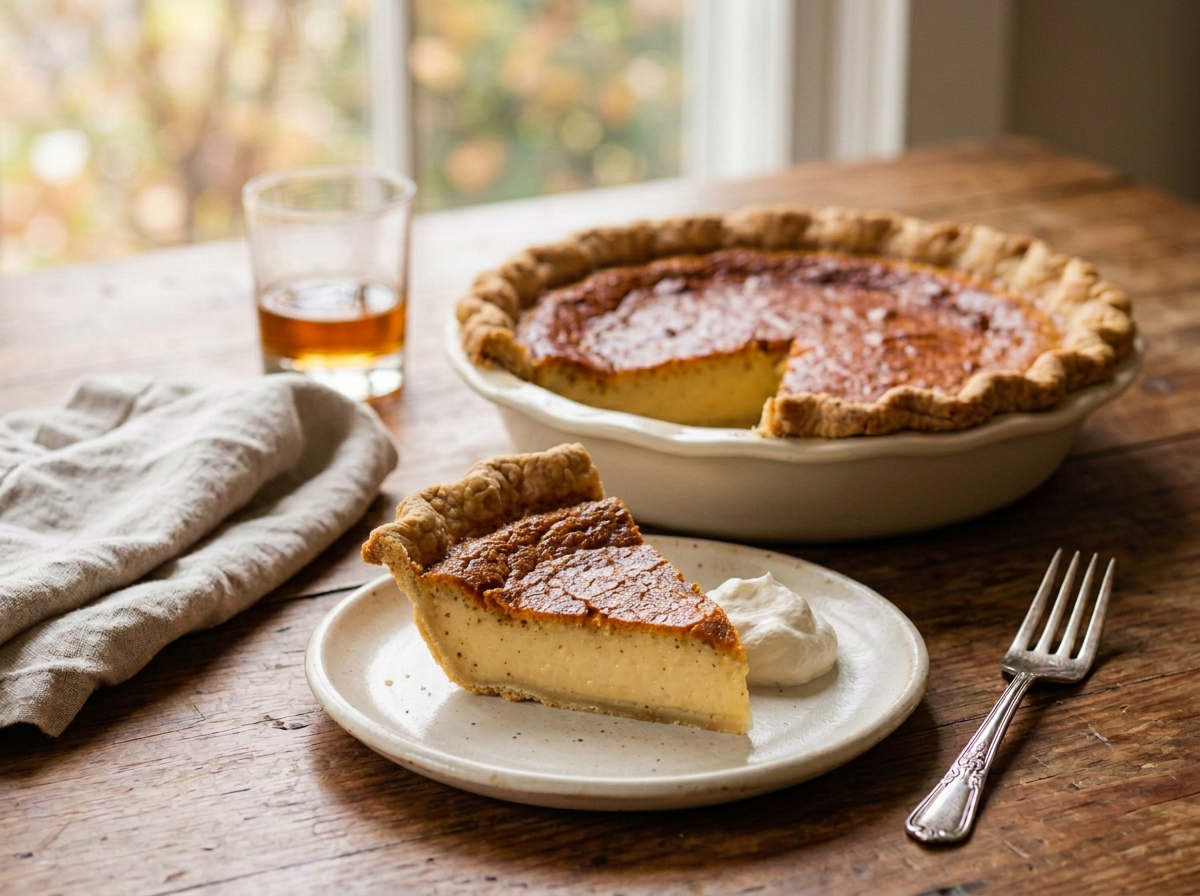
Brown butter and a splash of bourbon give classic chess pie a deeper, toastier flavor without losing the simplicity that makes it so appealing. Beneath a thin golden top, the filling is rich and tender, with hints of caramel, vanilla, and toasted butter. A flaky pastry crust provides just enough contrast to the sweet custard.
This is a lovely pie for Thanksgiving, especially when you want another option alongside pumpkin and apple. It needs no elaborate topping, and making it a day ahead gives the filling plenty of time to set. Add a spoonful of softly whipped cream when serving or let the brown butter and bourbon stand on their own.
What Is Chess Pie?
Chess pie is a traditional Southern dessert built around a filling of sugar, eggs, and butter, usually with a small amount of cornmeal and an acidic ingredient such as vinegar. As it bakes, the filling develops a delicate top over a dense, tender custard. The cornmeal contributes a subtle texture, but there is far too little of it to make the filling resemble cornbread.
In this version, browning the butter brings out the toasted flavor of its milk solids. Bourbon adds vanilla and oak notes, while a little apple cider vinegar keeps the sweetness from tasting flat. The result is still unmistakably chess pie, with a few extra layers of flavor in every bite.
The Ingredients That Make It Special
Unsalted butter is the starting point for the filling. Browning it changes both its aroma and its flavor, so be sure to include the brown flecks from the bottom of the pan. Those milk solids hold much of the flavor you worked to develop. This recipe uses the entire browned yield from one stick of butter; there is no need to top it up after cooking.
Granulated sugar gives the pie its classic sweetness and helps create its delicate surface. Eggs set the filling, while a modest amount of heavy cream softens the texture. Fine yellow cornmeal blends into the custard more pleasantly than coarse cornmeal or grits, which can leave noticeably gritty pieces.
Choose a bourbon you enjoy but save the expensive bottle for sipping. Two tablespoons give the filling a gentle whiskey flavor without overwhelming the butter. Vanilla, salt, and vinegar round out the mixture. Homemade pastry is wonderful here, but a refrigerated crust makes this pie especially manageable during a busy holiday week.
How to Brown Butter for the Filling
Use a light-colored saucepan or skillet so you can see the milk solids changing color. Melt the butter over medium heat, then continue cooking, stirring and scraping the bottom frequently. The butter will foam and sputter as its water cooks off. Eventually, small golden flecks will appear beneath the foam, and the aroma will become nutty and toasted.
Once those flecks turn golden brown, immediately pour the butter into a heatproof bowl, scraping in the browned bits. Leaving it in the hot pan can carry it from browned to burned surprisingly quickly. If the solids turn black and smell acrid, start again; burnt butter will give the entire filling a bitter taste.
Let the browned butter cool until it is just warm and still liquid before adding it to the filling. Hot butter can begin cooking the eggs, while fully chilled butter will be harder to incorporate evenly. Stir the butter before pouring it in so the browned solids do not remain behind in the bowl.
Preparing the Crust
A partially blind-baked crust gives the bottom pastry a head start before the liquid filling goes in. Fit the dough into a standard 9-inch pie plate, taking care to ease it into the corners rather than stretching it. Stretching can cause the dough to shrink as it bakes. Crimp the edge, then chill the shaped shell until firm.
Line the chilled shell with parchment and fill it with pie weights or dried beans, bringing the weights up the sides to help support the pastry. Bake until the edge looks set, then remove the parchment and weights and bake briefly again. The bottom should look dry, but the shell should still be pale enough to finish baking with the custard.
Set the pie plate on a rimmed baking sheet for easier handling. If you use a glass plate, follow the manufacturer’s temperature and handling guidance and avoid sudden temperature changes. Once the filling is added, a crust shield or loose strips of foil will protect the crimped edge if it begins to brown too quickly.
Recipe: Brown Butter Bourbon Chess Pie
Make one 9-inch pie; 8 servings
Ingredients
For the crust:
- 1 unbaked single pie crust, homemade or refrigerated, sized for a standard 9-inch pie plate
- All-purpose flour, for rolling if needed
For the filling:
- ½ cup (113 g) unsalted butter, cut into pieces
- 1½ cups (300 g) granulated sugar
- 1 tablespoon fine yellow cornmeal
- ¼ teaspoon fine salt
- 4 large eggs, at room temperature
- ¼ cup heavy cream, at room temperature
- 2 tablespoons bourbon
- 2 teaspoons vanilla extract
- 1 teaspoon apple cider vinegar
For serving, optional:
- Lightly sweetened whipped cream
Instructions
- Roll out the pie dough if needed and fit it into a standard 9-inch pie plate. Trim and crimp the edge. Refrigerate for 30 minutes. Position a rack in the lower third of the oven and preheat to 375°F.
- Line the crust with parchment paper and fill with pie weights or dried beans. Place on a rimmed baking sheet and bake for 18–20 minutes, until the edge is set. Carefully remove the parchment and weights, then bake for 5–8 minutes more, until the bottom looks dry. Set aside and reduce the oven temperature to 325°F.
- Meanwhile, melt the butter in a light-colored saucepan over medium heat. Cook, stirring frequently, until the milk solids turn golden brown and smell nutty, about 5–8 minutes total. Immediately transfer to a heatproof bowl, including the browned bits. Cool until just warm but still liquid, about 15 minutes.
- Whisk the sugar, cornmeal, and salt together in a large bowl. Add the eggs and whisk gently until smooth, without beating the mixture until foamy.
- Whisk in the cream, bourbon, vanilla, and vinegar. Slowly whisk in all of the cooled brown butter, scraping in the browned milk solids.
- Pour the filling into the partially baked crust. Bake on the baking sheet at 325°F for 45–60 minutes, checking near the end. Cover the crust edge with foil or a pie shield as needed. The pie is ready when the edges are set, the top is golden, and the center has a gentle, cohesive wobble rather than a liquid ripple. If the filling still sloshes, continue baking in 5-minute increments.
- Transfer to a wire rack and cool for about 2 hours, then refrigerate for at least 2 hours, or overnight, before slicing. Once cold, cover the pie. Serve chilled, or let individual slices stand for 20–30 minutes to take off the chill. Add whipped cream if desired.
Recipe Notes
- Use fine cornmeal, not coarse cornmeal, polenta, or grits.
- For a version without bourbon, replace the 2 tablespoons bourbon with 2 tablespoons additional heavy cream. Keep the vanilla at 2 teaspoons.
- Baking does not necessarily remove all of the alcohol. Use the bourbon-free option when avoiding alcohol.
- The recipe uses all of the butter remaining after browning one stick; do not measure out another ½ cup of browned butter or replace the evaporated water.
- This filling is intended for a standard 9-inch pie shell. If your plate is shallow, leave any excess filling out rather than filling above the pastry edge.
How to Tell When Chess Pie Is Done
The center is the most useful place to watch. Gently nudge the baking sheet: the outer filling should look set, while a small area in the middle should tremble together, a little like set gelatin. A rolling wave or slosh across the center means the filling needs more time. The surface should be golden, although the precise color will vary with your oven and pie plate.
Avoid waiting for the entire filling to become perfectly motionless in the oven. The custard firms further as it cools, and baking until it is rigid can leave it dry or grainy. A slight puff around the edges is normal, and it will settle afterward. Small cracks do not spoil the pie, but a dramatically puffed filling and deep cracks can be signs that it baked too long.
Tips for Clean Slices and a Tender Custard
Whisk only as much as necessary to combine the ingredients. You want a smooth mixture rather than a bowl of foam, since excess air can encourage the filling to puff and then collapse. Room-temperature eggs and cream also make it easier to incorporate the liquid butter evenly.
Cooling is part of setting the filling, so give the pie the full cooling and chilling time before cutting. A warm chess pie can taste wonderful but will not hold a tidy wedge as reliably. For cleaner slices, use a sharp knife and wipe the blade between cuts. The filling should be tender and dense, rather than fluffy or stiff like cheesecake.
A slightly uneven top, a few tiny cracks, or little flecks of toasted milk solids are all part of the pie’s homemade appearance. There is no need to hide them under a heavy topping. Protecting the pastry edge during baking and letting the custard set properly will do more for the finished pie than elaborate decoration.
Serving Suggestions
Because chess pie is rich and sweet, a modest wedge is usually enough, especially after a Thanksgiving dinner. Lightly sweetened whipped cream offers a soft, cool contrast without competing with the brown butter. Keep the topping simple so the toasted butter, vanilla, and bourbon remain easy to taste.
Serve the pie chilled for a firmer texture or let individual slices sit briefly before serving for a softer bite. Coffee or unsweetened black tea pairs nicely with the sweetness. If you are adding this pie to a larger dessert spread, it offers a different texture alongside fruit tarts and cakes without requiring another sauce or garnish.
Make-Ahead and Storage
This pie fits comfortably into a holiday baking schedule because it can be made the day before serving. Bake it, let it cool for about 2 hours, and refrigerate it; avoid leaving it on the counter overnight. Once thoroughly chilled, cover it to protect the surface and keep it from absorbing refrigerator odors. Store refrigerated for up to 3–4 days.
For longer storage, freeze the fully cooled and chilled pie, tightly wrapped, for up to 2 months. Individual slices are convenient if you want to thaw only what you need. Thaw overnight in the refrigerator and unwrap carefully so condensation does not collect against the surface. The pastry may soften somewhat after freezing, so baking a day ahead and refrigerating is the better choice when a crisp crust is your priority.
Variations and Substitutions
For a bourbon-free version, use an equal amount of additional heavy cream in place of the bourbon. The pie will still have plenty of flavor from the brown butter and vanilla, with a slightly creamier profile. If avoiding alcohol entirely, choose an alcohol-free vanilla flavoring as well.
Another whiskey can replace the bourbon in the same quantity. Rye will bring a spicier edge, while a milder whiskey will keep the flavor more subdued. Keep the amount at 2 tablespoons; adding extra changes the balance of liquid in the custard as well as the intensity of the flavor.
A refrigerated crust is a useful shortcut, especially when you are preparing several holiday dishes. Fit it into your own pie plate and follow the chilling and blind-baking steps. If using a frozen shell instead, check its size and follow the package’s instructions for prebaking, since ready-shaped shells vary in depth and handling requirements.
Brown butter bourbon chess pie turns a short list of familiar ingredients into a dessert with a distinct, toasted flavor. Its appeal is in the contrast between flaky pastry, tender custard, and that thin golden top. A little care with browning the butter and checking the center is enough to make those simple ingredients shine.
Bake it the day before your gathering, give it time to chill, and bring it out when dessert is ready. With a bowl of whipped cream alongside, it is an easy addition to a Thanksgiving table—and a pie worth making again long after the holiday dishes are put away.



Leave a Reply