
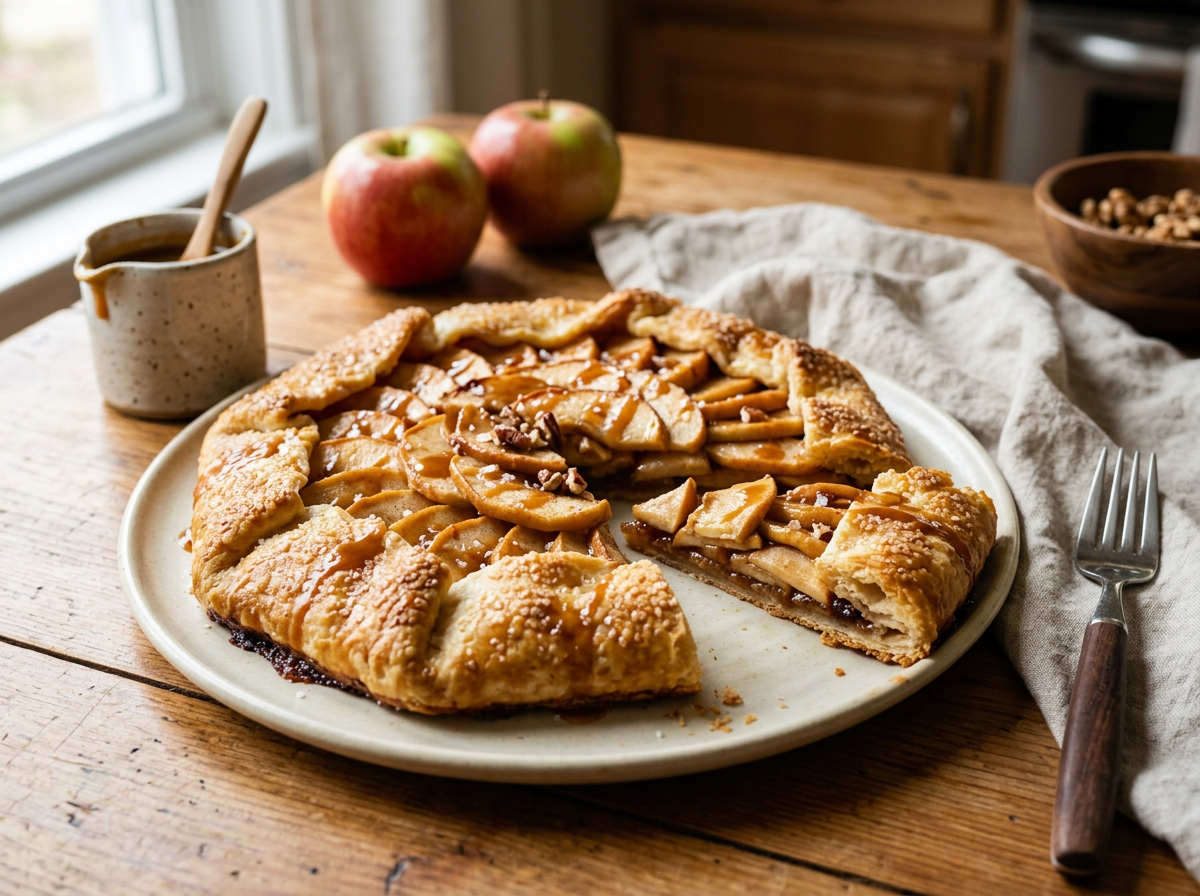
A golden, folded crust filled with cinnamon-spiced apples and finished with salted caramel makes this apple galette a beautiful fall dessert without requiring a pie plate or carefully crimped edges. This salted caramel apple galette has all the familiar comforts of apple pie, with a thinner layer of fruit and plenty of crisp, buttery pastry in every slice.
The apples bake uncovered in the center, allowing their edges to take on a little color while the pastry turns deeply golden. Caramel goes on after baking, so its buttery flavor stays distinct, and the crust has a chance to crisp before being drizzled. Serve it slightly warm with vanilla ice cream for a weekend dessert or give it a place beside the pumpkin pie at Thanksgiving.
What Makes This Galette So Good
A galette is a free-form tart: you roll out the pastry, pile the filling in the middle, and fold the border over the fruit. The overlapping edges create a rustic rim that holds everything together. An imperfect circle and uneven folds are part of its appeal, making it especially welcoming if shaping a traditional pie feels intimidating.
Here, the apples are lightly sweetened rather than buried in sugar. Cinnamon adds warmth, lemon juice brightens the filling, and salted caramel supplies a richer finish. Keeping the caramel separate until serving also lets you control the sweetness of each slice. A modest drizzle brings the flavors together; extra sauce can go around the table.
Choosing the Best Apples
Firm apples that hold their shape during baking work best. Granny Smith gives the filling a tart backbone, while Honeycrisp adds sweetness and a juicy bite. Braeburn is another good option. Using two varieties adds interest without complicating the recipe—try half Granny Smith and half Honeycrisp.
Peel the apples for a tender filling, then slice them about ⅛ inch thick. Even slices matter more than an elaborate arrangement because they help the fruit cook at the same rate. This galette has a relatively shallow filling, so resist the temptation to add extra apples. A tall mound can leave the center undercooked while the pastry edges are already browned.
A Few Simple Ingredients, Used Well
The pastry relies on cold butter for its flaky texture. Small pieces of butter remain in the dough, releasing steam as the galette bakes and helping separate the layers. Ice water brings the mixture together, but the exact amount depends on your flour and kitchen conditions. Stop adding water as soon as a squeezed handful holds together.
The filling needs only brown sugar, cinnamon, lemon juice, and a little flour to bind the apple juices. The salted caramel is a separate, small-batch sauce made with sugar, water, butter, cream, and salt. You will have enough for a drizzle over the galette and extra for serving. Refrigerated pie dough and prepared salted caramel are useful shortcuts when time is tight.
Recipe: Salted Caramel Apple Galette
Makes about 6 servings
Ingredients
For the pastry:
- 1¼ cups (150 g) all-purpose flour, plus more for rolling
- 1 tablespoon granulated sugar
- ½ teaspoon fine sea salt
- ½ cup (113 g) cold unsalted butter, cut into ½-inch cubes
- 3–5 tablespoons ice water
For the apple filling:
- 3 medium firm baking apples, about 1¼ pounds before peeling and coring
- ¼ cup packed light brown sugar
- 1 tablespoon all-purpose flour
- 1 teaspoon ground cinnamon
- 1 tablespoon lemon juice
- 1 teaspoon vanilla extract
- 1 tablespoon unsalted butter, cut into small pieces
For the crust finish:
- 1 large egg
- 1 teaspoon water
- 1 tablespoon coarse sugar, such as turbinado
For the salted caramel:
- ½ cup granulated sugar
- 2 tablespoons water
- 3 tablespoons unsalted butter, cut into pieces, at room temperature
- ⅓ cup heavy cream, at room temperature
- ¼ teaspoon fine sea salt, plus more to taste
- ½ teaspoon vanilla extract
For serving, optional:
- Vanilla ice cream or softly whipped cream
- A small pinch of flaky sea salt
Instructions
- Whisk the flour, sugar, and salt together in a large bowl. Add the cold butter and work it into the flour with a pastry blender or your fingertips until the mixture is crumbly, with some pea-size pieces of butter remaining.
- Sprinkle in 3 tablespoons of ice water and toss with a fork. Add more water, 1 teaspoon at a time, just until a handful of dough holds together when squeezed. Gather into a disk without kneading, wrap tightly, and refrigerate for at least 1 hour.
- While the dough chills, combine the caramel sugar and 2 tablespoons water in a small, heavy-bottomed saucepan. Stir gently to moisten all the sugar. Cook over medium heat until dissolved and bubbling, then stop stirring. Continue cooking, gently swirling the pan as needed, until the syrup turns a rich amber color, about 6–10 minutes total.
- Remove the pan from the heat. Carefully whisk in the room-temperature butter, then slowly whisk in the cream; the mixture will bubble vigorously and release hot steam. If hardened caramel remains, return to low heat and stir until smooth. Stir in the salt and vanilla. Transfer to a heatproof container and let cool until warm and pourable.
- Heat the oven to 400°F with a rack in the lower third. Peel and core the apples, then cut into slices about ⅛ inch thick. Toss with the brown sugar, flour, cinnamon, lemon juice, and vanilla just before assembling.
- Roll the chilled dough on a lightly floured piece of parchment into a rough 13-inch circle, about ⅛ inch thick. Slide the parchment and dough onto a large, rimmed baking sheet.
- Arrange the apples in overlapping layers in the center, leaving a 2-inch border. Leave any pooled liquid in the bowl. Dot the apples with the tablespoon of butter. Fold the dough border up over the fruit, overlapping and gently pressing the folds to secure them. Pinch together any cracks that could let juices escape.
- Beat the egg with 1 teaspoon water. Brush the exposed pastry with the egg wash and sprinkle it with coarse sugar. Refrigerate the assembled galette for 15 minutes.
- Bake for 40–50 minutes, until the pastry is deeply golden on top and underneath, the filling is bubbling, and a small knife slides easily into an apple slice. If the edges brown before the apples are tender, cover the pastry rim loosely with strips of foil and continue baking.
- Let the galette cool on the baking sheet for 20 minutes. Drizzle with about ¼ cup of the salted caramel, adding a little more if desired. Finish with a small pinch of flaky salt, if using. Slice and serve with ice cream or whipped cream and the remaining caramel on the side.
Recipe Notes
- Pie dough shortcut: Substitute one refrigerated pie crust for the homemade pastry. Follow the package directions for softening before rolling. If it is smaller than 13 inches, reduce the filling as needed to maintain a 2-inch border and a shallow layer of apples.
- Caramel shortcut: Use prepared salted caramel sauce in place of the homemade sauce.
- Caramel consistency: The sauce thickens as it cools. Warm gently before drizzling; stir in a teaspoon or two of cream if needed.
- Salt: The measured salt is fine sea salt. Coarse salts measure differently, so add those gradually to taste.
Tips for Flaky Pastry and a Crisp Bottom
Keep the dough cool throughout assembly. If it starts to feel sticky or the butter looks greasy, transfer it to the refrigerator before continuing. The final chill gives the butter time to firm up again and helps the folded rim retain its shape in the oven. Dust the rolling surface lightly rather than working lots of additional flour into the pastry, which can make it tough.
A shallow filling and a fully heated oven are just as helpful. Toss the apples shortly before assembling, leave pooled juices behind, and bake in the lower third of the oven so the bottom receives enough heat. Look for a well-browned crust rather than relying only on the timer. A pale galette may look delicate, but a deeper golden finish gives it better flavor and a sturdier base.
Getting the Salted Caramel Just Right
Watch the sugar closely once it begins changing color. It can move from pale gold to dark amber quickly, particularly in a small saucepan. A light-colored pan makes the change easier to see. Aim for the warm brown of amber rather than a pale-yellow syrup, which will taste mostly sweet, or a very dark brown, which can become bitter.
Have the butter and cream measured before you start. Their addition causes vigorous bubbling, so use a saucepan with plenty of headroom and pour the cream slowly while keeping your hands clear of the steam. Let the finished sauce cool before tasting and adjusting the salt. It should have a noticeable salty finish that balances the sweetness without overwhelming the apples.
Easy Shortcuts and Variations
Refrigerated pie dough makes this an especially convenient dessert for a busy holiday week. You still get the folded pastry, visible fruit, and warm caramel finish with less hands-on preparation. Prepared caramel works well too; choose a thick, pourable dessert sauce and taste it before adding any extra salt.
For a little variation, add ⅛ teaspoon ground nutmeg to the filling or scatter a few tablespoons of toasted chopped pecans over the finished galette. Keep additions modest so the apples remain the focus. The same principle applies to the caramel: start with a light drizzle, then offer more with each serving.
How to Serve It
Letting the galette rest after baking helps the juices settle and makes cleaner slices possible. It should still be pleasantly warm when served, with pastry firm enough to lift onto a plate. A scoop of vanilla ice cream melts into the apples and caramel, while softly whipped, barely sweetened cream gives a lighter finish.
For a Thanksgiving table, serve the galette on a simple platter or wooden board once it is cool enough to transfer safely. Bring the extra caramel in a small pitcher and let guests help themselves. The golden folds and exposed apples provide plenty of decoration without additional garnishes.
Make-Ahead and Storage Tips
The dough can be refrigerated for up to 2 days or frozen, tightly wrapped, for up to 2 months. Thaw frozen dough overnight in the refrigerator and let refrigerated dough stand briefly at room temperature if it is too firm to roll. Make the caramel up to a week ahead, refrigerate it in a covered container, and warm gently when needed.
For the best texture, bake the galette on the day you plan to serve it. If making it several hours ahead, let it cool and add the caramel shortly before serving. Refrigerate covered leftovers for up to 3 days. Reheat slices in a 350°F oven for about 10–15 minutes, until warmed through; the oven helps refresh the pastry more effectively than the microwave. Store leftover caramel separately.
This salted caramel apple galette makes the most of a few familiar ingredients: crisp apples, buttery pastry, cinnamon, and a generous spoonful of caramel. Its folded shape is forgiving, its presentation feels special, and each slice offers a satisfying balance of tender fruit and crisp crust. Whether it follows a quiet Sunday supper or a full Thanksgiving meal, it is a dessert that invites everyone to linger a little longer.



Leave a Reply