
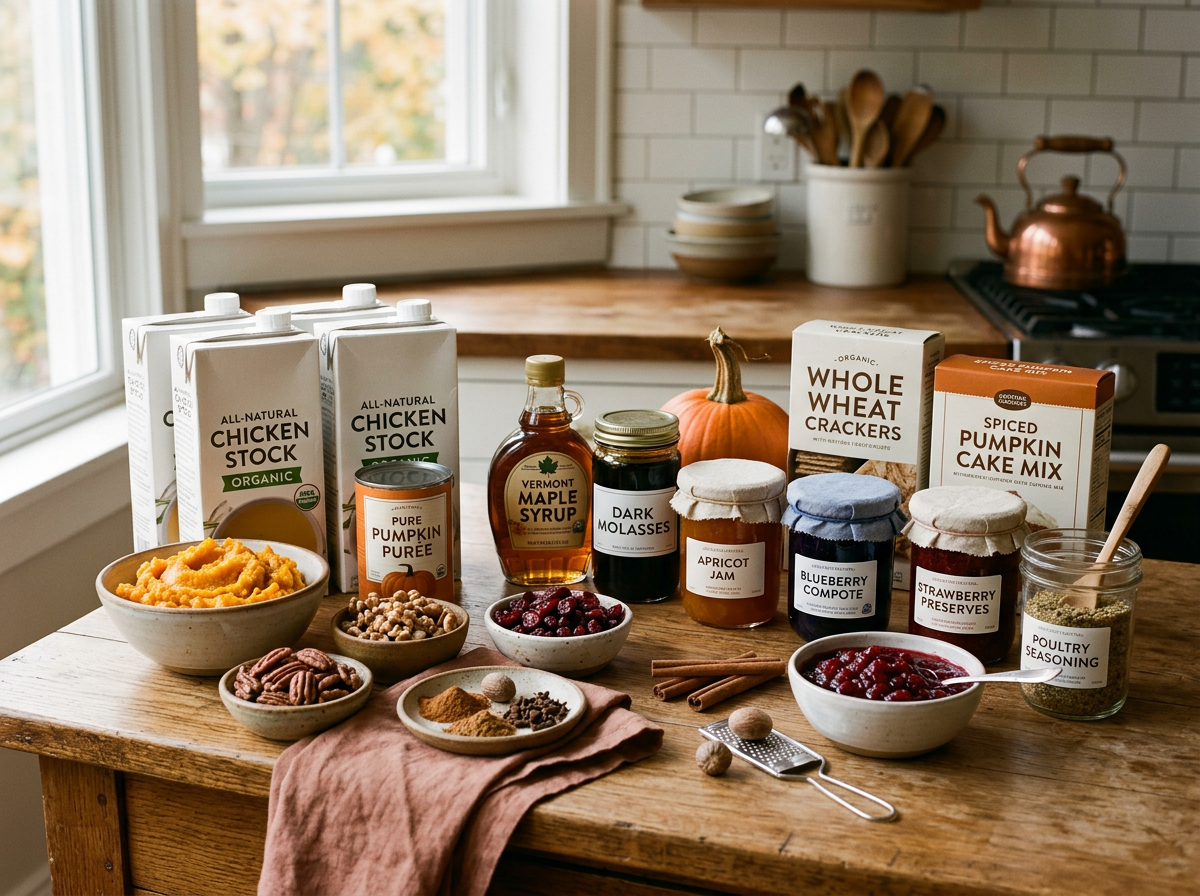
A pot of squash soup, a batch of pumpkin muffins, or a roast chicken dinner comes together more easily when a few fall pantry staples are already waiting in the cupboard. The same goes for the less planned moments: a last-minute dessert request, friends stopping by, or an afternoon that suddenly feels right for baking gingerbread.
You probably already keep flour, sugar, grains, and other everyday essentials on hand. This list builds on those basics with ingredients that are especially useful for fall recipes and the approaching holiday season. You don’t need every item, but stocking the ones you reach for most can save an extra shopping trip and make seasonal cooking feel a little more spontaneous.
Fall Pantry Staples
1. Chicken or Vegetable Stock
Stock earns its shelf space quickly once soup season arrives. A few cartons or cans provide the starting point for butternut squash soup, chicken soup, hearty stews, and risotto. They’re also useful in smaller amounts for loosening a pan sauce, adding moisture to stuffing, or making gravy for a roast dinner.
Choose a stock whose flavor you enjoy, since it can have a noticeable effect on a simple soup or sauce. Lower-sodium varieties give you more control over the finished seasoning, particularly when the liquid will simmer down. Keep a combination of larger cartons for soups and smaller containers for recipes that need only a splash. Once opened, follow the package’s refrigeration instructions, or freeze leftover stock in small portions.
2. Poultry Seasoning
Roast chicken, turkey, stuffing, and gravy often call for a familiar collection of herbs. Poultry seasoning puts those flavors into one jar, making it easier to season dinner without measuring several ingredients or discovering that the sage container is empty halfway through cooking.
Blends vary, but sage, thyme, rosemary, and marjoram make a useful foundation. Buy a prepared blend or combine your own dried herbs, crushing the rosemary finely so it distributes evenly. Check whether a purchased blend contains salt before seasoning the rest of the dish. Despite its name, poultry seasoning is also delicious with roasted potatoes, mushroom gravy, and vegetable stuffing.
3. Canned or Jarred Gravy
A jar or can of gravy can help turn leftover roast chicken and mashed potatoes into an easy dinner. It’s also a practical backup during holiday cooking, when the turkey may produce fewer drippings than expected or the gravy boat needs refilling before everyone has been served.
Choose a variety that suits the meals you make most often, whether that’s turkey, chicken, beef, or mushroom. Warm it gently and taste before adding anything. A spoonful of flavorful pan drippings, some sautéed mushrooms, or a small pinch of poultry seasoning can help it fit the rest of the meal. Add salty drippings gradually, especially if the gravy is already well seasoned.
4. Warm Baking Spices
Cinnamon, ginger, nutmeg, cloves, and allspice bring familiar fall flavor to everything from apple crisp to pumpkin bread. Keeping a small selection ready means you can bake a spice cake, stir together a crumble topping, or season a batch of baked oatmeal without another trip to the store.
You don’t need large jars of every spice. Cinnamon and ginger may get frequent use, while cloves and allspice usually go into recipes in much smaller quantities. Pumpkin pie spice is a convenient option if you prefer a blend, although individual spices offer more control. Before the baking season gets busy, give your existing spices a quick smell check. If the aroma is faint, replacing them will make a noticeable difference.
5. Canned Pumpkin Purée
Canned pumpkin makes seasonal baking especially approachable. There’s no roasting, peeling, or draining required: simply open the can and measure what you need for muffins, quick bread, pancakes, or pie. It also works in savory recipes, adding body to soups and creamy sauces.
Look for plain pumpkin purée rather than pumpkin pie filling, which already contains sweeteners and seasonings. Keeping the plain version on hand gives you flexibility to use it in both sweet and savory dishes. When a recipe leaves you with part of a can, transfer the remainder to a covered container and refrigerate according to the package instructions, or freeze it in measured portions for another recipe.
6. Pure Maple Syrup
Pure maple syrup is useful well beyond the breakfast table. Its flavor pairs naturally with roasted squash, sweet potatoes, carrots, apples, and pears, making it an easy addition to fall side dishes and desserts. A modest drizzle can round out a mustard glaze for pork or chicken, while a spoonful adds sweetness to a vinaigrette for a seasonal salad.
For baking, maple syrup works best in recipes written to use it. It contributes liquid as well as sweetness, so swapping it directly for granulated sugar can change the result. Choose pure maple syrup for its distinct flavor and refrigerate it after opening as directed on the bottle.
7. Molasses
Molasses is the ingredient to keep ready when you want chewy spice cookies, gingerbread, or a richly flavored fall cake. Its deep sweetness brings a slightly bitter edge that balances ginger, cinnamon, and cloves. Even a small amount can give baked goods a flavor that brown sugar alone won’t quite provide.
For most baking recipes, regular unsulphured molasses is the useful choice. Blackstrap molasses has a much stronger, more bitter flavor and shouldn’t be substituted unless the recipe specifically calls for it. Molasses can also find its way into savory cooking, especially baked beans, barbecue sauces, and glazes.
8. Evaporated Milk and Sweetened Condensed Milk
These two canned milks are helpful to have before holiday baking begins, but they serve different purposes. Evaporated milk is concentrated, unsweetened milk that appears in many pumpkin pie recipes and can add richness to creamy dishes. Sweetened condensed milk contains added sugar and is commonly used in fudge, dessert bars, and other sweets.
Because the cans can look similar, check the label carefully when shopping and again before opening one. They aren’t interchangeable, and using the wrong one can substantially change a recipe’s sweetness and texture. Keeping a can or two of each is useful if they feature in your favorite seasonal desserts.
9. Boxed Cake Mix
A boxed cake mix is a welcome shortcut when you need a dessert with little notice. A spice, vanilla, or chocolate mix can become an easy snack cake, a tray of cupcakes, or the starting point for a seasonal dessert. It’s especially handy during busy fall weekends, when baking from scratch may not fit the schedule.
Watch for preholiday promotions if you’re planning to replenish your supply. Before using a mix in a recipe that calls for extra ingredients, check the package weight: different brands and package sizes can affect the outcome. Use a recipe developed for those additions rather than assuming that pumpkin purée, apples, or extra liquid can be stirred into any mix without adjustments.
10. Pecans and Walnuts
Pecans and walnuts add crunch and richness to apple crisps, pumpkin bread, cookies, and pies. They’re equally useful in savory fall dishes, from stuffing and roasted Brussels sprouts to salads with apples, pears, or roasted squash. Having one favorite variety available is often enough to cover several recipes.
Buy halves if you want the flexibility to leave them whole for garnishing or chop them for baking. Toasting brings out their flavor but let them cool before adding them to mixtures that could be affected by the heat. Although they’re often treated as pantry staples, nuts stay fresh longer in an airtight container in the refrigerator or freezer.
11. Dried Cranberries and Dried Cherries
Dried cranberries and cherries offer a sweet-tart contrast to rich fall foods. Scatter them into stuffing, stir them through a wild rice dish, or add a handful to a salad with roasted squash and toasted nuts. They also work well in oatmeal cookies, scones, and quick breads.
Either fruit is useful on its own, so choose according to your favorite recipes rather than feeling you need both. Check the label for added sweeteners, since sweetness varies. If the fruit seems a little firm for the dish you’re making, briefly soak it in warm water or juice, then drain well before using.
12. Jams and Preserves
Jams and preserves can do more than fill a morning biscuit. As fall baking gives way to holiday baking, they become useful fillings for thumbprint cookies, sandwich cookies, and layer cakes. Apricot preserves can form the base of a glaze, while raspberry or cherry preserves pair beautifully with chocolate desserts.
A couple of contrasting flavors will cover plenty of uses. Fig preserves are particularly nice with cheese, while apricot offers flexibility in both sweet and savory recipes. For an easy appetizer, serve a small dish of preserves beside a wedge of cheese and good crackers. Refrigerate opened jars according to their labels.
13. High-Quality Crackers
A box of good crackers makes casual entertaining easier. Add cheese and a spoonful of preserves, and you have something ready for unexpected guests. They’re also convenient when you’re invited somewhere and want to bring a simple contribution that requires very little preparation.
Choose crackers sturdy enough to support cheese and spreads, with a flavor that complements several toppings. A mild, crisp variety is versatile; a seeded or fruit-and-nut cracker adds another option for a seasonal board. Keep an unopened box in reserve and check it before entertaining so you aren’t relying on crackers that have lost their crunch.
14. Whole-Berry Cranberry Sauce
Whole-berry cranberry sauce deserves a place in the cupboard before Thanksgiving arrives. Its tart fruit flavor works well with roast poultry, but it can also become a topping for baked Brie, a spread for turkey sandwiches, or the base of a glaze for pork or chicken.
For a quick sauce, warm a little cranberry sauce with mustard and a splash of stock, adjusting the proportions to suit the dish. The berries give it texture, while the sweetness balances sharper ingredients. Keeping a can available makes it easy to add a seasonal touch without cooking a separate batch of cranberry sauce.
A useful fall pantry reflects what you enjoy making. If soups and roast dinners are part of your weekly routine, stock and poultry seasoning may be your first priorities. If you look forward to baking, pumpkin, warm spices, molasses, and nuts will likely see more use.
Check your cupboards before shopping, replace ingredients that have lost their flavor, and choose a manageable selection. With a few seasonal favorites ready to go, it’s easier to turn fresh fall produce—or an unexpected free afternoon—into something delicious.



Leave a Reply