
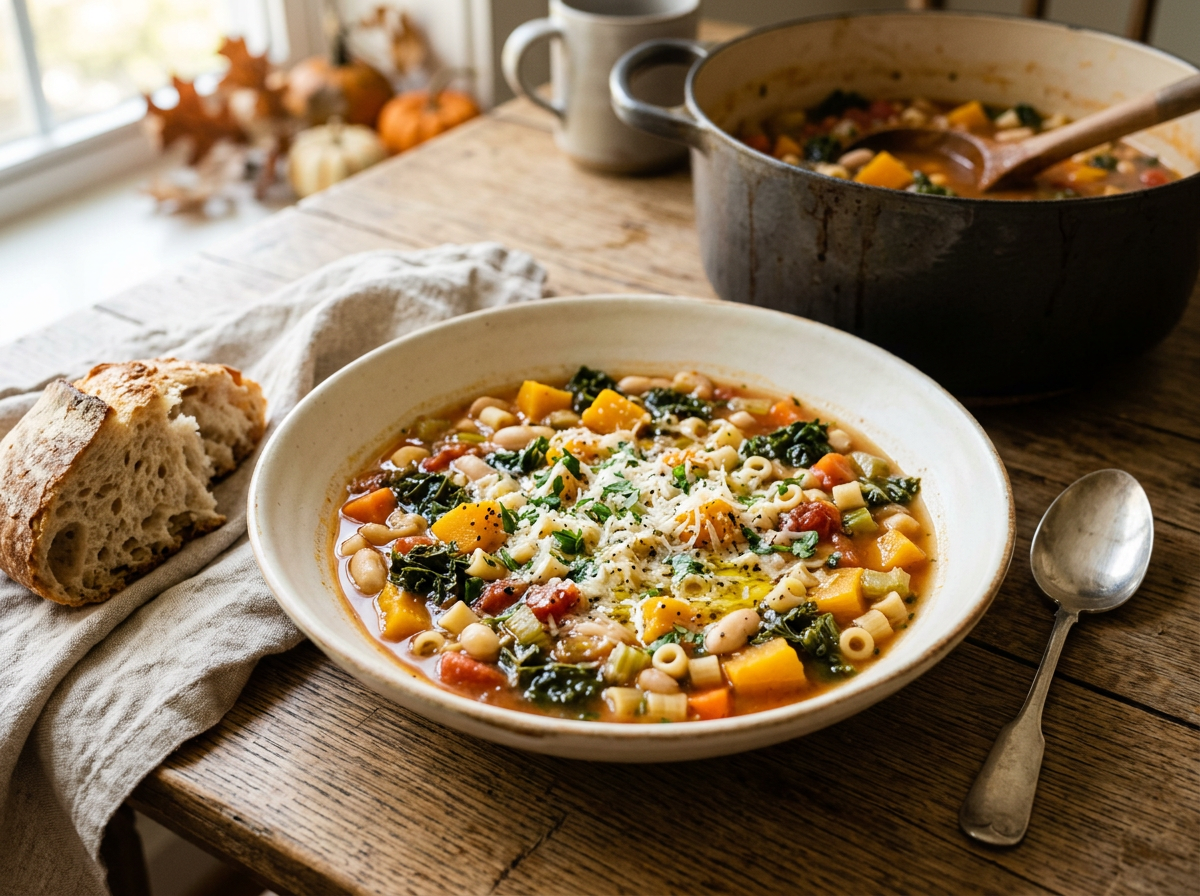
When the days become cooler, a pot of minestrone is one of the most satisfying ways to turn seasonal vegetables into dinner. This autumn version combines sweet butternut squash, creamy cannellini beans, tender greens, tomatoes, and small pasta in a savory, herb-scented broth. It is colorful, comforting, and substantial enough to serve as a complete meal, especially with thick slices of crusty bread alongside.
Minestrone has always been a flexible soup rather than a rigid formula, which makes it especially useful at the change of seasons. The butternut squash can be swapped for another winter squash, the kale can give way to Swiss chard, and a handful of green beans or chopped cabbage can join the pot if they need to be used. The result is a practical fall dinner that feels generous, nourishing, and a little different each time you make it.
Why You’ll Love This Autumn Minestrone
This soup strikes a lovely balance between hearty and fresh. The squash becomes tender and adds gentle sweetness, while tomatoes, herbs, Parmesan, and a final splash of lemon keep the broth from tasting heavy. Beans and pasta give every bowl enough substance to satisfy, but vegetables remain the heart of the recipe.
It is also an excellent make-ahead meal. Like many soups, the flavor becomes even more cohesive after a night in the refrigerator. A pot made on Sunday can provide an easy dinner that evening and convenient lunches for the next several days. If you plan to store it, simply keep a little extra broth on hand, since the pasta will continue to absorb liquid as the soup sits.
Choosing the Squash and Greens
Butternut squash is the most convenient choice for this minestrone. Its mild sweetness complements the tomatoes and herbs, and its firm flesh becomes creamy without falling apart too quickly. You can purchase a whole squash and peel and cube it yourself or use pre-cut squash to shorten the prep time. Aim for pieces about 1/2 to 3/4 inch wide so they cook evenly and fit comfortably on a soup spoon.
Other winter squash work well, too. Delicata squash does not need to be peeled, although its thinner slices may cook more quickly. Peeled acorn squash or kabocha will give the soup a slightly earthier flavor and a denser texture. Sweet potato is another easy substitute when winter squash is not available.
For the greens, choose kale, Swiss chard, or collard greens if you want leaves that hold their shape in the broth. Remove any thick stems and chop the leaves into bite-size pieces before adding them. Baby spinach can also be used, but because it wilts quickly, stir it in during the final minute or two rather than simmering it with the pasta.
Recipe: Autumn Minestrone with Squash and Greens
This one-pot minestrone begins with the classic combination of onion, carrots, and celery. Garlic, Italian seasoning, rosemary, and optional red pepper flakes build an aromatic base, while a Parmesan rind adds slow-simmered richness with almost no extra work. The pasta cooks directly in the broth, releasing a little starch and giving the soup a comforting body.
Makes 6 servings
Ingredients
- 2 tablespoons olive oil
- 1 medium yellow onion, diced
- 2 medium carrots, diced
- 2 celery stalks, diced
- 3 garlic cloves, minced
- 1 teaspoon dried Italian seasoning
- 1/2 teaspoon dried rosemary
- 1/4 teaspoon crushed red pepper flakes, optional
- 4 cups peeled and cubed butternut squash, cut into 1/2- to 3/4-inch pieces
- 1 (14.5-ounce) can diced tomatoes, with juices
- 6 cups low-sodium vegetable broth, plus more as needed
- 1 Parmesan rind, optional
- 1 teaspoon kosher salt, plus more to taste
- 1/2 teaspoon freshly ground black pepper
- 1 (15-ounce) can cannellini beans, drained and rinsed
- 3/4 cup ditalini or other small pasta
- 4 packed cups chopped kale or Swiss chard, thick stems removed
- 1 tablespoon fresh lemon juice, plus more to taste
- 1/4 cup finely grated Parmesan cheese, plus more for serving
- Chopped fresh parsley or basil, for serving
- Extra-virgin olive oil, for serving, optional
Instructions
- Heat the olive oil in a large Dutch oven or heavy-bottomed soup pot over medium heat. Add the onion, carrots, and celery. Cook for 7 to 8 minutes, stirring occasionally, until the onion is translucent and the vegetables are beginning to soften.
- Add the garlic, Italian seasoning, rosemary, and red pepper flakes. Cook for about 30 seconds, stirring constantly, until fragrant.
- Stir in the butternut squash, diced tomatoes with their juices, vegetable broth, Parmesan rind, salt, and black pepper. Increase the heat and bring the soup to a gentle boil. Reduce the heat to medium-low, partially cover the pot, and simmer for 12 to 15 minutes, until the squash is almost tender but still holds its shape.
- Add the cannellini beans and pasta. Simmer uncovered according to the pasta package directions, usually 8 to 10 minutes, stirring frequently so the pasta does not stick to the bottom of the pot. Add a splash of broth or water if the soup becomes thicker than you prefer.
- Stir in the kale or Swiss chard during the final 5 minutes of cooking. Continue simmering until the pasta is al dente, the greens are tender, and the squash can be easily pierced with a fork.
- Remove the pot from the heat and discard the Parmesan rind. Stir in the lemon juice and grated Parmesan. Taste and add more salt, pepper, or lemon juice as needed.
- Ladle the minestrone into bowls. Finish each serving with fresh parsley or basil, additional Parmesan, and a drizzle of olive oil, if desired.
Tips for the Best Minestrone
Cutting the vegetables into similarly sized pieces is worth the few extra minutes it requires. Uniform pieces cook at roughly the same rate and make the finished soup easier to eat. Take particular care with the squash: very small cubes may dissolve before the pasta is ready, while large chunks can remain firm in the center.
Keep the soup at a gentle simmer rather than a vigorous boil. A hard boil can cause the squash to break apart and may make the pasta cook unevenly. Stir the pot more frequently after adding the pasta, since it can settle against the bottom as it releases starch.
A Parmesan rind is optional, but it gives a simple vegetable broth an impressive amount of savory depth. Save rinds in a resealable bag in the freezer, then add one directly to the pot whenever you make soup. Remove it before serving just as you would a bay leaf.
Finally, do not skip the lemon juice. The soup does not need to taste distinctly lemony; the small amount simply brightens the tomatoes, squash, and greens and brings the other flavors into focus. Add it after removing the pot from the heat, taste, and use another squeeze if the broth still seems flat.
Easy Variations
The adaptable nature of minestrone means there is plenty of room to work with what you have. Sweet potato can replace the squash, and chickpeas or kidney beans can stand in for cannellini beans. Chopped cabbage, green beans, zucchini, or parsnips can also be added, provided you adjust the cooking time so each vegetable becomes tender without turning mushy.
For a heartier soup, brown crumbled Italian sausage in the pot before cooking the vegetables. Transfer the sausage to a plate once cooked, leave a tablespoon or two of fat in the pot, and return the meat when you add the beans. Shredded rotisserie chicken or leftover turkey can be stirred in during the final few minutes instead.
To make the recipe vegan, use vegetable broth and omit the Parmesan rind and grated cheese. A spoonful of nutritional yeast or a small amount of white miso stirred into the finished soup can restore some of that savory flavor. Be sure to dissolve miso in a little warm broth before adding it, and avoid boiling the soup afterward.
For a gluten-free version, use a small gluten-free pasta and check it frequently because cooking times vary. Cooked rice or quinoa can also replace the pasta. Add cooked grains near the end of the recipe so they warm through without absorbing too much broth.
What to Serve with Autumn Minestrone
Because this soup contains vegetables, beans, and pasta, it can easily stand on its own. A loaf of crusty bread, warm focaccia, or garlic toast makes the simplest accompaniment and is ideal for soaking up the tomato-rich broth. For a cozier dinner, serve the soup with grilled cheese sandwiches or toasted bread layered with pesto and mozzarella.
A crisp salad provides a fresh contrast to the tender vegetables. Try mixed greens with sliced apples, toasted walnuts, and a sharp cider vinaigrette, or keep things simple with arugula dressed in lemon juice and olive oil. If you are serving the minestrone to guests, place grated Parmesan, chopped herbs, red pepper flakes, and olive oil on the table so everyone can finish a bowl to taste.
Make-Ahead and Storage Tips
Autumn minestrone can be refrigerated in an airtight container for up to four days. The pasta will continue to absorb broth, so the soup will become noticeably thicker as it rests. Stir in additional broth or water while reheating it gently on the stovetop or in the microwave. Taste again before serving, since a little extra salt or lemon juice may help revive the flavors.
If you are intentionally making the soup ahead, consider cooking the pasta separately. Toss the drained pasta with a small amount of olive oil, refrigerate it in its own container, and add a portion to each bowl when reheating the soup. This keeps the pasta from becoming overly soft and allows the broth to retain its original consistency.
The soup can also be frozen for up to three months, but it freezes best without the pasta. Prepare the recipe through the first simmer, add the beans and greens, and omit the pasta. Cool the soup completely before transferring it to freezer-safe containers, leaving a little room for expansion. After thawing, bring the soup to a simmer and cook a fresh batch of pasta directly in the broth, adding more liquid as necessary.
A Cozy, Flexible Fall Dinner
Autumn minestrone is exactly the kind of recipe that earns a regular place in the cool-weather dinner rotation. It fills the kitchen with the aroma of garlic and herbs, makes generous use of seasonal produce, and delivers plenty of comfort without requiring a complicated cooking process.
Think of the recipe as a dependable framework rather than a strict set of rules. Change the squash, use the greens already in your refrigerator, or add another vegetable from the farmers’ market. However you adapt it, the combination of a savory broth, creamy beans, tender vegetables, and pasta will produce a welcoming bowl of soup made for crisp autumn evenings.



Leave a Reply