
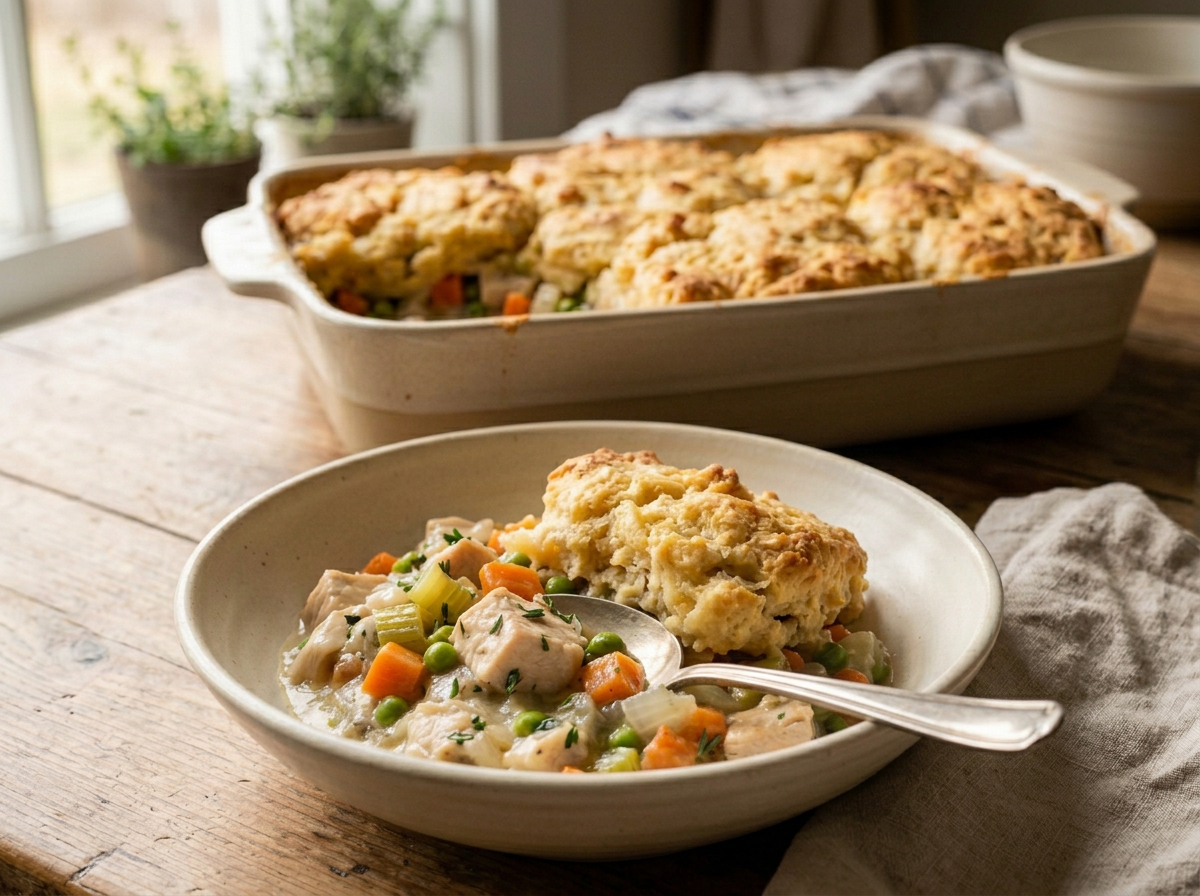
Chicken pot pie is the kind of dinner that makes an ordinary evening feel a little cozier. This casserole keeps everything people love about the classic dish, including tender chicken, colorful vegetables, a creamy herb-seasoned sauce, and a golden topping, but skips the work of rolling and crimping pie dough. Instead, an easy homemade drop-biscuit dough is spooned over the filling before the whole dish goes into the oven.
The result is hearty without feeling overly complicated. It is also an excellent way to give leftover chicken a completely different second life. Use meat from a rotisserie chicken when time is short, or tuck away cooked chicken from another meal specifically for this casserole. Once the filling is simmering and the biscuits are mixed, the oven does the rest of the work.
Why You’ll Love This Chicken Pot Pie Casserole
This recipe lands squarely in comfort-food territory, but it is practical enough for a weeknight. The filling is made from scratch with butter, flour, broth, and milk, so it tastes rich and savory without depending on canned condensed soup. Carrots, celery, onion, and peas give it the familiar flavor of classic pot pie, while thyme and poultry seasoning add warmth and depth.
The biscuit topping is intentionally simple. Because it is dropped over the filling rather than rolled and cut, there is no need for a floured counter or special equipment. The craggy tops turn crisp and golden in the oven while the undersides soak up just enough of the creamy sauce. Together, the two layers make a satisfying one-dish dinner that only needs a fresh salad or green vegetable alongside it.
Choosing the Right Chicken
You will need about three cups of cooked chicken for this casserole. A store-bought rotisserie chicken is the easiest option and usually provides a useful mix of white and dark meat. That combination gives the filling good flavor while keeping it moist. Remove the skin and bones, then shred or cut the meat into bite-size pieces.
Leftover roasted, baked, poached, or grilled chicken will work just as well. Avoid chopping the chicken too finely, since larger pieces are less likely to disappear into the sauce. If the meat is already heavily seasoned, taste the finished filling before adding more salt. The recipe is also forgiving if you have slightly more or less than three cups, so there is no need to supplement a nearly full measure with another package of chicken.
Recipe: Chicken Pot Pie Casserole
This casserole starts on the stovetop, where the vegetables are softened and the creamy sauce is built in the same skillet. The finished filling should be thick enough to coat a spoon but still look a little looser than you want it on the plate. It will continue to thicken as the casserole bakes and rests.
Makes 6 servings
Ingredients
For the Chicken Filling:
- 4 tablespoons unsalted butter
- 1 small yellow onion, diced
- 2 medium carrots, peeled and diced
- 2 celery stalks, diced
- 2 cloves garlic, minced
- 1/3 cup all-purpose flour
- 2 cups low-sodium chicken broth
- 1 cup whole milk
- 1/2 teaspoon dried thyme
- 1/2 teaspoon poultry seasoning
- 3/4 teaspoon kosher salt, plus more to taste
- 1/4 teaspoon freshly ground black pepper
- 3 cups cooked chicken, shredded or diced
- 1 cup frozen peas
- 1 tablespoon chopped fresh parsley, plus more for garnish
For the Biscuit Topping:
- 2 cups all-purpose flour
- 1 tablespoon baking powder
- 1/2 teaspoon kosher salt
- 6 tablespoons cold unsalted butter, cut into small cubes
- 3/4 cup cold buttermilk, plus 1 to 2 tablespoons if needed
- 1 tablespoon unsalted butter, melted
Instructions
- Preheat the oven to 400°F. Lightly grease a 9-by-13-inch baking dish.
- Melt the butter in a large skillet over medium heat. Add the onion, carrots, and celery. Cook for 6 to 8 minutes, stirring occasionally, until the vegetables begin to soften.
- Add the garlic and cook for 30 seconds. Sprinkle the flour over the vegetables and cook, stirring constantly, for 1 minute.
- Gradually stir in the chicken broth, followed by the milk. Add the thyme, poultry seasoning, salt, and pepper. Bring the mixture to a gentle simmer and cook for 3 to 5 minutes, stirring frequently, until the sauce is thick enough to coat the back of a spoon.
- Fold in the chicken, frozen peas, and parsley. Taste and adjust the seasoning. Transfer the hot filling to the prepared baking dish and spread it into an even layer.
- Make the biscuit topping. Whisk the flour, baking powder, and salt together in a medium bowl. Cut in the cold butter with a pastry blender or your fingertips until the mixture resembles coarse crumbs with a few pea-size pieces of butter remaining.
- Stir in 3/4 cup buttermilk just until a shaggy dough forms. If dry flour remains at the bottom of the bowl, add more buttermilk 1 tablespoon at a time. Do not overmix.
- Drop approximately 1/4-cup portions of dough evenly over the warm filling, leaving a little space between them. Brush the biscuit tops with melted butter.
- Bake for 25 to 30 minutes, until the filling is bubbling around the edges and the biscuits are deeply golden and cooked through. If the tops brown before the centers are done, loosely cover the dish with foil for the remaining baking time.
- Let the casserole rest for 10 minutes. Garnish with additional parsley and serve warm.
How to Make the Creamiest Filling
The creamy filling is essentially a vegetable-studded gravy, and a few small details help it turn out smooth. After the vegetables have softened, sprinkle the flour evenly across the skillet rather than adding it in one mound. Stir it into the butter and vegetables and let it cook for a full minute. This brief cooking time removes the raw flour flavor and creates a sturdy base for the sauce.
Add the broth gradually while stirring, taking time to smooth out the mixture before pouring in more. Once the broth is incorporated, stir in the milk and let the sauce come to a gentle simmer. Avoid a hard boil, which can cause dairy-based sauces to separate. The sauce is ready when it coats the back of a spoon but still flows easily through the skillet. If it becomes extremely thick before baking, stir in an extra splash of broth or milk.
It is also important to put the filling into the baking dish while it is hot. The heat helps the biscuit dough begin cooking from underneath as soon as the casserole enters the oven. Starting with cold filling can leave the bottoms of the center biscuits doughy even when their tops appear nicely browned.
Tips for Light, Fluffy Biscuits
Cold ingredients are the key to tender biscuits. Keep the butter and buttermilk refrigerated until you are ready to use them. Small pieces of cold butter release steam as they melt in the oven, creating light pockets within the dough. If the kitchen is warm and the cubed butter begins to soften, place it in the refrigerator for a few minutes before mixing.
Stir the dough only until no large pockets of dry flour remain. It should look rough and a little uneven rather than perfectly smooth. Overmixing develops the flour’s gluten and can make the biscuits tough. When arranging the dough over the casserole, leave narrow spaces between the portions. Those gaps allow steam to escape, help the biscuit edges brown, and give the filling room to bubble.
Before removing the casserole from the oven, gently lift or separate one of the thickest center biscuits with a fork. The interior should look fluffy rather than wet or gummy. If necessary, cover the golden tops loosely with foil and continue baking for another 3 to 5 minutes.
Easy Variations
The basic chicken filling can support several different toppings. For an especially fast dinner, arrange refrigerated biscuits over the hot filling and bake until they are browned and fully cooked. Check the package for its suggested baking time but be prepared to add a few minutes because the biscuits are sitting over a moist filling rather than directly on a baking sheet.
Puff pastry creates a lighter, crisp-topped variation. Transfer the filling to a baking dish, allow it to cool for about 10 minutes, and cover it with a thawed sheet of puff pastry. Trim or tuck the edges as needed, cut several vents in the top, and bake until the pastry is puffed and deeply golden.
The vegetables are flexible, too. Corn, cut green beans, mushrooms, pearl onions, or small diced potatoes can all be added or substituted. Firm vegetables should be cooked until nearly tender before the casserole goes into the oven. To make use of holiday leftovers, replace the chicken with the same amount of cooked turkey. Fresh rosemary, sage, chives, or extra parsley can also be stirred into the sauce to shift the flavor while keeping the casserole familiar.
Make-Ahead Instructions
For the best biscuit texture, prepare the components in stages rather than assembling the entire casserole in advance. The chicken filling can be cooked up to two days ahead, cooled, and stored in an airtight container in the refrigerator. When it is time to bake, warm the filling gently on the stovetop, adding a splash of broth or milk if it has become very thick. Transfer it to the baking dish only after it is hot.
Mix the biscuit dough immediately before baking. Baking powder begins reacting as soon as it is combined with the buttermilk, so dough that sits in the refrigerator on top of the casserole may not rise as high. Preparing the topping at the last minute takes only a few minutes and gives noticeably lighter results.
If you would like to freeze part of the meal, freeze the cooked filling without the biscuit topping. Let it cool completely, transfer it to a freezer-safe container, and freeze it for up to three months. Thaw it overnight in the refrigerator, reheat it until steaming, and finish the casserole with freshly mixed biscuit dough.
Storing and Reheating Leftovers
Cover the baking dish or transfer leftovers to an airtight container and refrigerate them for up to three days. The filling will thicken as it chills, but it should loosen again as it warms. If it looks unusually thick, add a small splash of chicken broth before reheating.
Individual servings can be reheated in the microwave, although the biscuits will soften. For a crisper topping, place the casserole in a 350°F oven, cover it loosely with foil, and warm it until the filling is hot. Remove the foil during the final few minutes to refresh the biscuit tops. A toaster oven works well for single portions and provides a better balance of speed and texture than the microwave.
What to Serve with Chicken Pot Pie Casserole
Because the casserole already contains chicken, vegetables, sauce, and biscuits, it can stand on its own as a complete meal. A simple green salad dressed with a sharp vinaigrette is an ideal partner because the fresh acidity balances the creamy filling. Sautéed green beans, roasted broccoli, or Brussels sprouts are also easy choices when you would like another vegetable on the table.
For a slightly sweet contrast, serve cranberry sauce or crisp sliced apples alongside the casserole. There is no need for another bread or starch, so keep the accompaniments light and uncomplicated. That allows the bubbling pot pie filling and buttery biscuits to remain the focus of the meal.
Frequently Asked Questions
Can I use frozen mixed vegetables?
Yes. A frozen peas-and-carrots blend is a convenient substitute for the fresh carrots and frozen peas. Use about 2 cups and stir the vegetables into the thickened sauce along with the chicken. There is usually no need to thaw them first. If the blend contains larger pieces of green beans, check that they are tender before serving.
Can I use canned biscuits?
Canned refrigerated biscuits work well when you need a shortcut. Place them over the hot filling with a little room between each one. Because large biscuits can brown before their centers cook, consider separating very thick biscuits into two thinner layers. Bake until the center biscuits are no longer doughy.
Why are my biscuits undercooked on the bottom?
This usually happens when the filling is cold, the biscuits are crowded together, or the dough portions are too large. Begin with hot filling and leave small spaces between the biscuits so heat and steam can circulate. If the tops are already brown, cover them loosely with foil and continue baking until the centers are cooked.
Can I make this casserole without buttermilk?
Yes. Stir 2 teaspoons of lemon juice or white vinegar into 3/4 cup of whole milk and let it stand for 5 minutes before using. The homemade substitute provides the acidity needed to support the biscuits’ flavor and rise, although the dough may be slightly softer than one made with cultured buttermilk.
Can chicken pot pie casserole be frozen?
The filling freezes well, but baked biscuits tend to soften after thawing. For the best texture, freeze only the cooked filling and add fresh biscuit dough after it has been thawed and reheated. If you freeze a fully baked casserole, thaw it overnight in the refrigerator and reheat it in the oven rather than the microwave.
Chicken pot pie casserole delivers everything comforting about the traditional dish in a format that is easier to assemble and serve. The creamy filling makes good use of cooked chicken, while the homemade biscuit topping turns simple ingredients into something that feels special enough for a relaxed Sunday dinner.
Once you have made the basic version, it is easy to adapt the casserole to what is already in the refrigerator or freezer. Change the vegetables, add a favorite herb, or take a shortcut with the topping when the evening is busy. However you customize it, this is the kind of warm, dependable dinner that earns a regular place in the cool-weather rotation.



Leave a Reply