
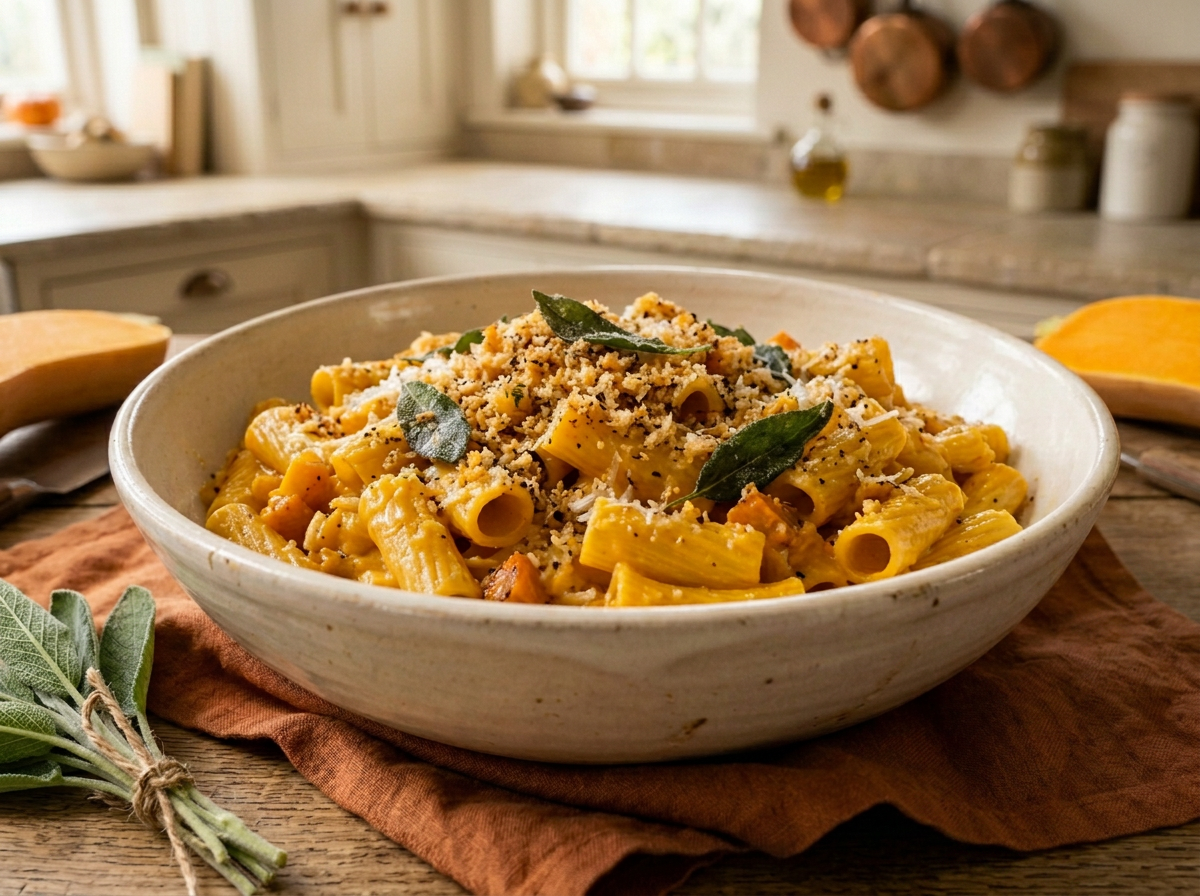
Roasted butternut squash makes an exceptionally silky pasta sauce without relying on a large amount of cream or butter. Once blended with sautéed shallot, garlic, broth, and Parmesan, the caramelized squash becomes smooth, savory, and just rich enough to coat every curve of the pasta.
The finishing touch is a generous layer of crispy garlic-Parmesan breadcrumbs. They break up the softness of the sauce, adding a savory crunch to each bite. Fresh sage, black pepper, and a squeeze of lemon keep the squash’s natural sweetness in check, creating a cozy pasta that feels perfectly suited to the first cool evenings of fall.
Why Roasting the Squash Makes a Better Sauce
Butternut squash can be steamed or simmered, but roasting develops considerably more flavor. The oven draws out excess moisture while caramelizing the squash around the edges, concentrating its sweetness and giving the finished sauce a deeper, more savory character.
Let the squash roast until it is completely tender and browned in spots. Those darker edges may not look as uniform as lightly cooked squash, but they bring valuable complexity to the sauce. If the cubes are still firm in the center, they will also be more difficult to blend into a truly smooth purée.
Pre-cut butternut squash is a convenient shortcut, especially for a weeknight meal. Look for pieces that appear firm and brightly colored rather than dry or translucent. If the cubes vary significantly in size, cut the largest ones down so everything cooks at roughly the same rate.
The Crispy Breadcrumb Topping
The breadcrumb topping is more than a garnish. Creamy squash sauce and tender pasta are both soft, so the dish needs something crisp to create contrast. Panko breadcrumbs work especially well because their larger, irregular flakes toast evenly while maintaining a light, crunchy texture.
Garlic, Parmesan, and fresh sage echo the flavors in the sauce without making the topping overly complicated. Toast the breadcrumbs slowly and stir them often; they can go from pale to overdone quickly once they begin to brown. Remove them from the skillet when they are golden and transfer them to a bowl so the residual heat does not continue cooking them.
The topping can be prepared a day or two ahead and stored in an airtight container at room temperature. If it loses some of its crunch, toast it briefly in a dry skillet before serving.
Tips for a Smooth, Flavorful Squash Sauce
For the smoothest sauce, blend the roasted squash with the cooked aromatics and warm broth before combining it with the pasta. A countertop blender creates an especially silky consistency, although an immersion blender will also work. If using a countertop blender, remove the center cap from the lid and cover the opening loosely with a folded kitchen towel so steam can escape.
Pasta water is equally important. Its starch helps the squash purée coat the noodles while allowing you to thin the sauce without making it watery. Reserve more than you think you will need before draining the pasta, then add it gradually until the sauce looks loose and glossy. It will continue to thicken as it sits.
Parmesan provides saltiness and depth, while lemon juice adds just enough acidity to balance the sweet squash. Stir both into the sauce over low heat. High heat can cause the cheese to clump rather than melt smoothly.
Choosing the Right Pasta
Short, sturdy pasta shapes are the best match for this thick sauce. Rigatoni, shells, orecchiette, and cavatappi all have ridges, curves, or hollow centers that capture the squash purée and bits of crispy breadcrumb.
Avoid cooking the pasta until completely soft. Draining it while it is still al dente allows it to finish in the skillet, where it can absorb some of the sauce without becoming mushy. Whole-wheat pasta is also a good option because its nutty flavor complements the roasted squash and sage.
Recipe: Roasted Squash Pasta with Crispy Breadcrumbs
This autumn pasta pairs caramelized butternut squash with Parmesan, sage, and a crisp garlic breadcrumb topping. The sauce is creamy without being heavy, making the dish comforting enough for a cool evening while still feeling balanced.
Makes: 4–6 servings
Ingredients
For the roasted squash:
- 1½ pounds peeled and seeded butternut squash, cut into 1-inch cubes
- 2 tablespoons olive oil
- ½ teaspoon kosher salt
- ¼ teaspoon freshly ground black pepper
- ½ teaspoon dried sage or 1 tablespoon chopped fresh sage
For the crispy breadcrumbs:
- 1 tablespoon olive oil
- 1 tablespoon unsalted butter
- 1 cup panko breadcrumbs
- 1 garlic clove, minced
- ¼ teaspoon kosher salt
- ¼ cup finely grated Parmesan
- 1 tablespoon chopped fresh sage or parsley
For the pasta and sauce:
- 1 pound short pasta, such as rigatoni, shells, or cavatappi
- 1 tablespoon olive oil
- 1 large shallot, finely chopped
- 2 garlic cloves, minced
- 1½ cups low-sodium vegetable or chicken broth, plus more as needed
- ½ cup finely grated Parmesan
- 1 tablespoon fresh lemon juice
- ½ teaspoon kosher salt, plus more for the pasta water
- ¼ teaspoon freshly ground black pepper
- Pinch of red pepper flakes, optional
Instructions
- Heat the oven to 425°F. Line a large, rimmed baking sheet with parchment paper.
- Toss the squash with the olive oil, salt, pepper, and sage. Spread it in a single layer and roast for 25–30 minutes, turning once, until tender and caramelized.
- Meanwhile, heat the olive oil and butter for the breadcrumbs in a skillet over medium-low heat. Add the panko and cook for 3–5 minutes, stirring frequently, until golden.
- Add the garlic and salt; cook for 30 seconds. Remove from the heat and stir in the Parmesan and herbs. Transfer to a bowl.
- Bring a large pot of generously salted water to a boil. Cook the pasta until al dente. Reserve 1½ cups pasta water, then drain.
- Heat 1 tablespoon olive oil in a large skillet over medium heat. Add the shallot and cook for 3–4 minutes, until softened. Add the garlic and cook for 30 seconds.
- Blend the roasted squash, shallot mixture, and broth until smooth. Return the sauce to the skillet and warm over low heat.
- Stir in the Parmesan, lemon juice, salt, pepper, and red pepper flakes, if using. Add the pasta and toss, adding reserved pasta water a little at a time until the sauce is silky and coats the pasta.
- Divide among bowls and top generously with the crispy breadcrumbs. Serve immediately.
Make-Ahead and Storage Tips
Several parts of this recipe can be prepared in advance. Roast and purée the squash up to three days before serving, then refrigerate the sauce in an airtight container. It will thicken as it chills, so plan to add broth or pasta water when reheating it.
Store the breadcrumbs separately at room temperature rather than sprinkling them over the leftover pasta. Refrigeration and contact with the sauce will soften them. Keeping the two components apart preserves the textural contrast that makes the finished dish so satisfying.
Leftover pasta can be refrigerated for up to four days. Reheat it gently on the stovetop or in the microwave, adding a splash of broth, water, or milk to restore the sauce’s creamy consistency. Finish each reheated portion with breadcrumbs just before eating.
Easy Variations
The basic squash sauce is flexible enough to accommodate a range of additions. For extra greens, stir several handfuls of baby spinach into the skillet with the hot pasta. Chopped kale also works well, though it should be sautéed until tender before the sauce is added.
Browned Italian sausage, crisp pancetta, or shredded roasted chicken can turn the pasta into a heartier meal. For a vegetarian variation with extra texture, add sautéed mushrooms or fold toasted walnuts into the breadcrumb topping.
You can also increase the sage flavor by frying whole leaves in butter until crisp and using them as a garnish. A spoonful of ricotta, mascarpone, or heavy cream will make the sauce richer, but add it sparingly so it does not overwhelm the roasted squash.
Other winter squash varieties can replace butternut. Honeynut squash has a deeper sweetness, while kabocha creates a thicker, earthier sauce. Delicata squash is flavorful but more difficult to separate from its skin after roasting, so it is less convenient for this particular preparation.
What to Serve with Roasted Squash Pasta
Because the pasta is rich and softly textured, it pairs best with something crisp and bright. A simple salad of arugula or mixed greens with lemon vinaigrette provides a refreshing contrast. Bitter greens such as radicchio are especially good against the sweetness of the squash.
For a warm side, try roasted broccoli, Brussels sprouts, or green beans seasoned simply with olive oil, salt, and pepper. Garlic bread can make the meal more substantial, although it may not be necessary when the pasta already has its crunchy breadcrumb finish.
A dry white wine, sparkling apple cider, or lemony seltzer will also help balance the creamy sauce. Keep the rest of the meal straightforward and allow the caramelized squash, sage, and toasted breadcrumbs to remain the focus.
A Cozy Pasta for Squash Season
Roasting turns an everyday butternut squash into a sauce that tastes far richer and more complex than its short ingredient list suggests. Parmesan and sage give it a savory backbone, while lemon prevents the natural sweetness from becoming too pronounced.
The crispy breadcrumbs bring everything together, adding garlicky flavor and a welcome crunch to the creamy pasta. It is a simple finishing step, but one that transforms this seasonal dish into a fall dinner worth returning to throughout the colder months.



Leave a Reply