
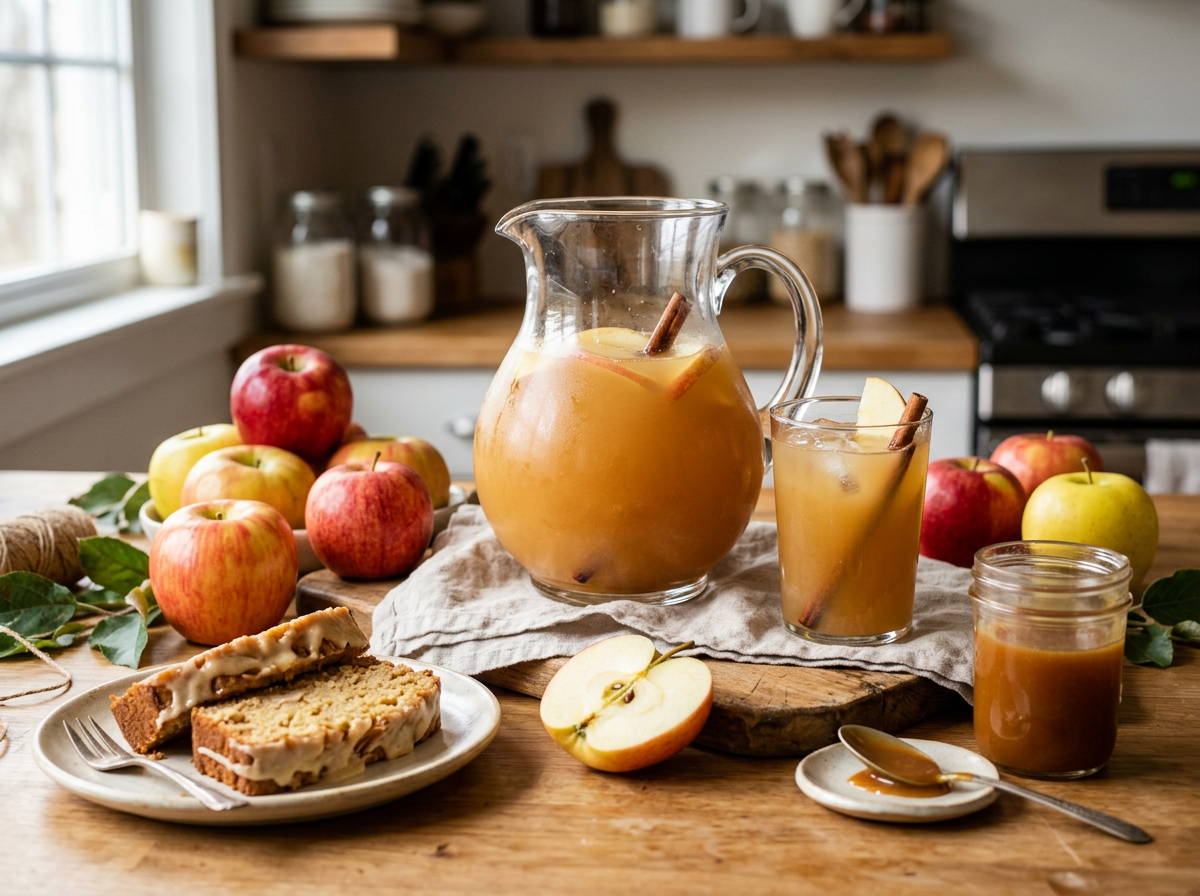
Apple cider is one of fall’s simplest pleasures, but there’s more to do with a jug than pour it into a mug. Its rounded apple flavor works beautifully in savory sauces, cozy soups, seasonal side dishes, and homemade desserts. Depending on how you use it, cider can add a gentle sweetness or become the concentrated flavor that makes a recipe stand out.
These five apple cider recipes take cider in different directions: a glossy glaze for salmon, a creamy cheddar soup, tender braised red cabbage, a warmly spiced loaf cake, and an apple-infused caramel sauce. Together, they offer plenty of ways to use that extra cider in your refrigerator without making the same kind of dish twice.
Start with the Right Cider
For these recipes, use plain, nonalcoholic apple cider with no added spices. In the United States, this is typically the cloudy apple drink sold in refrigerated jugs during fall. Hard cider and apple cider vinegar are different ingredients and should not replace it here. A mulled cider may also contain sweeteners or spices that change the balance of the finished dish.
Taste your cider before you begin. Some varieties are particularly sweet, while others have a noticeable tartness. That difference is part of cider’s appeal, and the savory recipes below include mustard or vinegar to help balance it. For the cake and caramel, reducing the cider concentrates its flavor so the apple comes through even alongside butter, sugar, and spice.
Apple Cider Recipes
Apple Cider–Glazed Salmon

Salmon may not be the first thing that comes to mind when you think of apple cider, but the combination makes a lovely fall dinner. The fish’s richness gives the sweet-tart glaze something to balance, while Dijon mustard and thyme keep the sauce firmly in savory territory. As the cider reduces, it develops enough body to coat the salmon without requiring a heavy sauce.
The glaze goes on near the end of roasting, giving it time to cling to the fish without spending the entire cooking time in a hot oven. Serve the salmon with wild rice and roasted Brussels sprouts or keep things simple with mashed potatoes and green beans. A little extra sauce spooned over each portion ties the plate together.
Makes 4 servings
Ingredients
- 1 cup apple cider
- 1 tablespoon Dijon mustard
- 1 tablespoon apple cider vinegar
- 1 teaspoon fresh thyme leaves, plus more for serving
- 1 tablespoon unsalted butter
- 4 salmon fillets, about 6 ounces each
- 1 tablespoon olive oil
- 1/2 teaspoon kosher salt, or to taste
- 1/4 teaspoon freshly ground black pepper
Instructions
- Heat the oven to 400°F. Line a rimmed baking sheet with parchment.
- Simmer the cider in a small saucepan over medium heat until reduced to 1/4 cup, about 12–18 minutes.
- Whisk in the mustard, vinegar, and thyme. Simmer for 1 minute, remove from the heat, and whisk in the butter. Reserve half the glaze in a separate bowl for serving.
- Place the salmon skin-side down on the baking sheet. Rub with olive oil and season with salt and pepper. Roast for 8 minutes.
- Brush with the remaining glaze and roast for another 4–7 minutes, depending on thickness, until the center reaches 145°F.
- Spoon the reserved glaze over the salmon and sprinkle with additional thyme.
Creamy Apple Cider and Cheddar Soup

Apple and cheddar are a familiar pairing, and this soup brings that combination into a warm, spoonable dinner. The cider adds fruitiness to a base of softened onions and broth, while sharp cheddar gives the soup its savory character. A modest amount of cream rounds out the texture without overwhelming the apple flavor.
Choose a sharp cheddar that you enjoy eating on its own, and grate it from a block so it melts more smoothly. The most useful part of the method is also the simplest: let the soup stop bubbling before adding the cheese. Gentle heat helps keep the texture smooth. Serve it in small bowls as a starter or make it a meal with crusty bread and a crisp green salad.
Makes 4 servings
Ingredients
- 3 tablespoons unsalted butter
- 1 medium yellow onion, finely diced
- 2 garlic cloves, minced
- 3 tablespoons all-purpose flour
- 1/2 teaspoon dry mustard
- 1 cup apple cider
- 3 cups low-sodium vegetable or chicken broth
- 1/2 cup heavy cream
- 8 ounces sharp cheddar cheese, freshly grated
- 1–2 teaspoons apple cider vinegar, to taste
- Salt and freshly ground black pepper, to taste
- Chopped chives, for serving (optional)
Instructions
- Melt the butter in a large saucepan over medium heat. Add the onion and cook for 8–10 minutes, until soft. Add the garlic and cook for 30 seconds.
- Stir in the flour and dry mustard; cook for 1 minute. Gradually whisk in the cider, followed by the broth.
- Bring to a gentle simmer and cook for 10 minutes, stirring occasionally. For a smoother soup, blend the base with an immersion blender before adding the cream.
- Stir in the cream and heat gently. Remove from the heat and let the bubbling stop.
- Add the cheddar a handful at a time, stirring until each addition melts. If needed, return to very low heat briefly; do not boil.
- Stir in 1 teaspoon vinegar, then taste and add more if desired. Season with salt and pepper and serve with chives.
Apple Cider–Braised Red Cabbage

Red cabbage is a useful ingredient when you want a side dish with color, substance, and plenty of flavor. Here, a slow braise softens its crisp ribbons while cider and sliced apple lend sweetness. A generous splash of cider vinegar keeps the dish lively, creating a sweet-tart accompaniment that works especially well with pork, sausages, or hearty lentils.
This is also an easy dish to fit around the rest of dinner. Once the ingredients are in the pot, the cabbage mostly needs an occasional stir and a check that there is still enough liquid. It tastes good freshly cooked and reheats well, making it a practical choice when you want to prepare a side in advance. Caraway seeds are optional, but they add an earthy note that complements the apple and cabbage.
Makes 6 servings
Ingredients
- 2 tablespoons olive oil or unsalted butter
- 1 medium yellow onion, thinly sliced
- 1 small head red cabbage, about 2 pounds, cored and thinly sliced
- 1 large firm apple, such as Granny Smith or Braeburn, cored and thinly sliced
- 1 cup apple cider
- 3 tablespoons apple cider vinegar, divided
- 3/4 teaspoon kosher salt, or to taste
- 1/4 teaspoon freshly ground black pepper
- 1/2 teaspoon caraway seeds (optional)
- Water, as needed
Instructions
- Heat the oil or butter in a Dutch oven over medium heat. Add the onion and cook for 5–7 minutes, until softened.
- Add the cabbage, apple, cider, 2 tablespoons vinegar, salt, pepper, and caraway seeds, if using. Toss well and bring to a simmer.
- Cover and cook over low heat for 35–45 minutes, stirring occasionally, until the cabbage is tender. Add a splash of water if the pot becomes dry.
- Uncover and simmer for 5–10 minutes to reduce excess liquid.
- Stir in the remaining tablespoon vinegar, taste, and adjust the seasoning before serving.
Apple Cider Loaf Cake

A loaf cake is an inviting way to turn cider into something you can slice and share. This version has a buttery crumb, gentle cinnamon and nutmeg, and a cider glaze that adds another layer of apple flavor. Sour cream keeps the cake tender, while brown sugar brings a warm sweetness that suits the season.
Reducing the cider before mixing the batter is worth the extra step. It lets you add more apple flavor without introducing too much liquid, and the same reduction supplies the glaze. Keep the spices restrained so they support the cider. The finished loaf needs little decoration beyond its glaze and looks right at home on a cake stand or a simple wooden board.
Make 1 loaf, about 10 slices
Ingredients
For the cake:
- 1 1/2 cups apple cider
- 1 3/4 cups all-purpose flour, spooned and leveled
- 1 1/2 teaspoons baking powder
- 1/4 teaspoon baking soda
- 1 teaspoon ground cinnamon
- 1/4 teaspoon ground nutmeg
- 1/2 teaspoon fine salt
- 1/2 cup unsalted butter, softened
- 3/4 cup packed light brown sugar
- 2 large eggs, at room temperature
- 1 teaspoon vanilla extract
- 1/2 cup sour cream, at room temperature
For the glaze:
- 3/4 cup powdered sugar
- 1–2 tablespoons reserved cider reduction
Instructions
- Simmer the cider in a saucepan until reduced to 1/2 cup, about 15–25 minutes. Measure the reduction; if it reduces too far, add a little cider to reach 1/2 cup. Cool completely. Reserve 2 tablespoons for the glaze, leaving 6 tablespoons for the cake.
- Heat the oven to 350°F. Grease a 9-by-5-inch loaf pan and line with parchment, leaving an overhang along the long sides.
- Whisk together the flour, baking powder, baking soda, cinnamon, nutmeg, and salt.
- Beat the butter and brown sugar until light and fluffy, about 3 minutes. Beat in the eggs one at a time, then the vanilla.
- Whisk the sour cream with the 6 tablespoons cooled cider reduction. Add the flour mixture to the butter mixture in three additions, alternating with the sour cream mixture. Mix just until combined.
- Spread in the prepared pan. Bake for 50–60 minutes, until a toothpick inserted in the center comes out clean or with a few moist crumbs. Loosely tent with foil if the top browns too quickly.
- Cool in the pan for 15 minutes, then lift onto a rack to cool completely.
- Whisk the powdered sugar with 1 tablespoon reserved reduction, adding more as needed for a thick, pourable glaze. Drizzle over the cake and let set before slicing.
Apple Cider Caramel Sauce

Apple cider caramel takes a familiar dessert topping and gives it a distinct fall flavor. The cider’s tartness cuts through the richness of butter and cream, while its concentrated apple notes make the sauce especially good with vanilla ice cream, baked apples, and plain cheesecake. A small amount of salt brings the flavors into focus.
Making the cider reduction separately keeps the caramel process easier to manage. Once the sugar turns amber, warm cream stops the cooking, and the reduction is stirred in at the end. The sauce thickens as it cools, so don’t judge its final texture while it is still hot. A jar in the refrigerator offers an easy way to dress up a simple dessert or add a special finishing touch to pancakes.
Makes about 1 1/4 cups
Ingredients
- 1 cup apple cider
- 1 cup granulated sugar
- 1/4 cup water
- 1/2 cup heavy cream
- 3 tablespoons unsalted butter, cut into pieces
- 1/4 teaspoon fine salt, plus more to taste
Instructions
- Simmer the cider in a small saucepan until reduced to 1/4 cup, about 12–18 minutes. Set aside.
- Warm the cream gently in a separate small saucepan or the microwave; do not boil.
- Combine the sugar and water in a medium, heavy-bottomed saucepan. Stir over medium heat until the sugar dissolves.
- Bring to a boil and stop stirring. Cook until the syrup turns a rich amber color, about 7–12 minutes, gently swirling the pan if needed.
- Remove from the heat. Slowly whisk in the warm cream; the mixture will bubble vigorously and release hot steam.
- Whisk in the cider reduction, butter, and salt. If any hardened caramel remains, return to low heat and stir until smooth.
- Let cool before serving. Transfer cooled sauce to a covered jar and refrigerate for up to 1 week. Warm gently to loosen before using.
Tips for Cooking and Baking with Apple Cider
Cider reductions are best guided by volume rather than the clock. A wide saucepan will reduce liquid faster than a narrow one, and the strength of your simmer matters too. When a recipe calls for reducing cider to a specific amount, pour it into a heatproof measuring cup to check. Return it to the pan if it needs more time, or add a little cider if you have gone past the target. Watch closely near the end, when the concentrated sugars can catch on the bottom of the pan.
Temperature matters when that reduction goes into a cake. Give it time to cool completely so it does not melt the softened butter or warm the batter. You can make the cake’s reduction ahead and refrigerate it in a covered container, then bring it to room temperature before baking. In savory dishes, taste the finished sauce or soup before adjusting the seasoning; cider’s sweetness often benefits from a little acid, but the right amount depends on the jug you started with.
If you still have cider left, freeze it in measured portions so it is easy to use in another recipe. Leave room in the container for expansion and label it with the quantity. Smaller portions work well for a glaze or sauce, while a larger portion can be thawed for another loaf cake. It is a simple way to keep fall’s apple flavor available after the open jug is gone.
Put That Extra Cider to Work
A jug of apple cider can become much more than a seasonal drink. Its flavor can brighten a savory dinner, give a side dish a sweet-tart balance, or bring an unmistakable apple note to a homemade cake. Start with the recipe that fits your plans, whether that means a quick salmon dinner or a loaf to share, and save a little cider for the next idea. With a few thoughtful pairings, this familiar fall ingredient earns a place throughout the menu.



Leave a Reply