

Last night’s dishes are still in the sink, crumbs cover the counter, and the pan you need for breakfast is waiting to be washed. Before the day has even really begun, you already feel behind.
An evening kitchen reset changes that, not by asking you to deep-clean the room every night, but by giving you a short, repeatable routine that restores a sense of order. In just 20 minutes, you can take the kitchen from visibly lived-in to clean enough, calm enough, and ready for whatever tomorrow brings.
The emphasis here is on reset, not perfection. You are not scrubbing grout, reorganizing cabinets, or polishing every appliance. You are simply closing out the day: taking care of the mess that matters, returning the room to a functional baseline, and making your morning self very glad that you did.
Why an Evening Kitchen Reset Is Worth It
A tidy kitchen does more than look nice. Because the kitchen is often one of the first rooms we use in the morning, its condition can set the tone for the day. When the counters are clear and the sink is empty, making coffee, packing lunches, and preparing breakfast all feel easier. There is no leftover work standing between you and the first thing you need to do.
Cleaning up promptly also prevents small messes from becoming stubborn ones. Fresh splatters usually wipe away in seconds; by morning, they may need soaking and scrubbing. Crumbs and food residue can attract pests, while uncovered leftovers and dirty dishes can leave lingering odors. A quick nightly kitchen reset handles those problems before they have time to grow.
Perhaps most importantly, a 20-minute limit makes the routine feel manageable. “Clean the kitchen” is vague and potentially endless. “Reset the kitchen for 20 minutes” has a clear beginning and end. You are less likely to procrastinate when you know the job will not take over your evening. And you’re more likely to repeat it often enough that the mess never becomes overwhelming.
Before You Begin: Set Yourself Up for Success
The routine moves much faster when basic cleaning supplies are easy to reach. Keep dish soap, dishwasher detergent, an all-purpose cleaner, a sponge or dish brush, and clean cloths together under the sink or in another convenient spot. A small broom, handheld vacuum, or full-size vacuum should also be nearby enough that sweeping does not feel like a separate production.
Before you start, set a timer for 20 minutes. The timer is not meant to add pressure; it creates a boundary. Work at a comfortable but purposeful pace and resist the temptation to wander into another room or begin an unrelated organizing project. If you find something that belongs elsewhere, place it in a small basket and deal with it after the reset—or the following day.
This routine does not need to be one person’s job, either. Ask everyone to bring their dishes to the kitchen after dinner, put away what they used, or take responsibility for a consistent task. Even young children can carry napkins to the trash, place unbreakable dishes near the sink, or wipe the table. A few minutes of shared effort can make the entire reset noticeably lighter.
The 20-Minute Kitchen Reset
The suggested timing below is a guide rather than a rigid rule. Some nights the dishes will take longer, and the floor will need only a quick pass; other nights, the dishwasher will already be loaded, and you can spend an extra minute on the stovetop. Follow the same general order, adjust as needed, and stop when the timer ends.
Minutes 0–3: Clear the Clutter

Start by removing anything that does not belong on the counters or table. Put leftovers into containers and return milk, condiments, produce, and other ingredients to the refrigerator or pantry. Throw away food scraps, packaging, and obvious trash, and move recycling to the appropriate bin.
Next, gather non-kitchen items—mail, school papers, charging cords, toys, or whatever else drifted into the room. If returning each item will pull you away from the task, place everything in a basket to sort later. The goal is to create open surfaces quickly, not to organize the rest of the house.
Clearing first gives you room to work and creates immediate visual progress. It also prevents you from wiping around objects, which is slower and rarely gets a surface fully clean.
Minutes 3–8: Take Care of the Dishes

Scrape plates, load the dishwasher, and start it if it is full enough to run. If the dishwasher is clean, emptying it earlier in the day will make this part much faster; if that did not happen, unload only what you need to create space and finish the rest in the morning.
Hand-wash knives, wooden utensils, delicate glassware, and any other items that cannot go in the dishwasher. For a pot or pan with baked-on food, add warm, soapy water and let it soak. The nightly kitchen reset is not the time to lose ten minutes battling one casserole dish. Soaking it is still progress and will make the eventual cleanup easier.
Once the dishes are handled, rinse food particles from the sink and clear the drain. A quick wipe around the basin and faucet makes the whole kitchen look cleaner, even if a soaking pan remains neatly off to one side.
Minutes 8–12: Reset the Cooking Zone

Turn your attention to the stove and the area surrounding it. Return oils, spices, utensils, and cookware to their usual places. Wipe up fresh grease and food splatters from the stovetop, backsplash, nearby counter, and microwave handle. If your stove has removable grates or burner parts, leave a thorough cleaning for another day unless something spilled badly enough to interfere with cooking.
This step is about making the cooking zone usable again. You should be able to walk in tomorrow and set a pan on the stove without first moving last night’s tools or wiping away sauce. A fast pass while spills are fresh is usually all it takes.
Avoid expanding the job as you work. You may notice fingerprints on the range hood or crumbs behind an appliance, but those details can wait for a deeper cleaning session. Stay focused on the surfaces you used and the mess you can see.
Minutes 12–16: Wipe the Main Surfaces
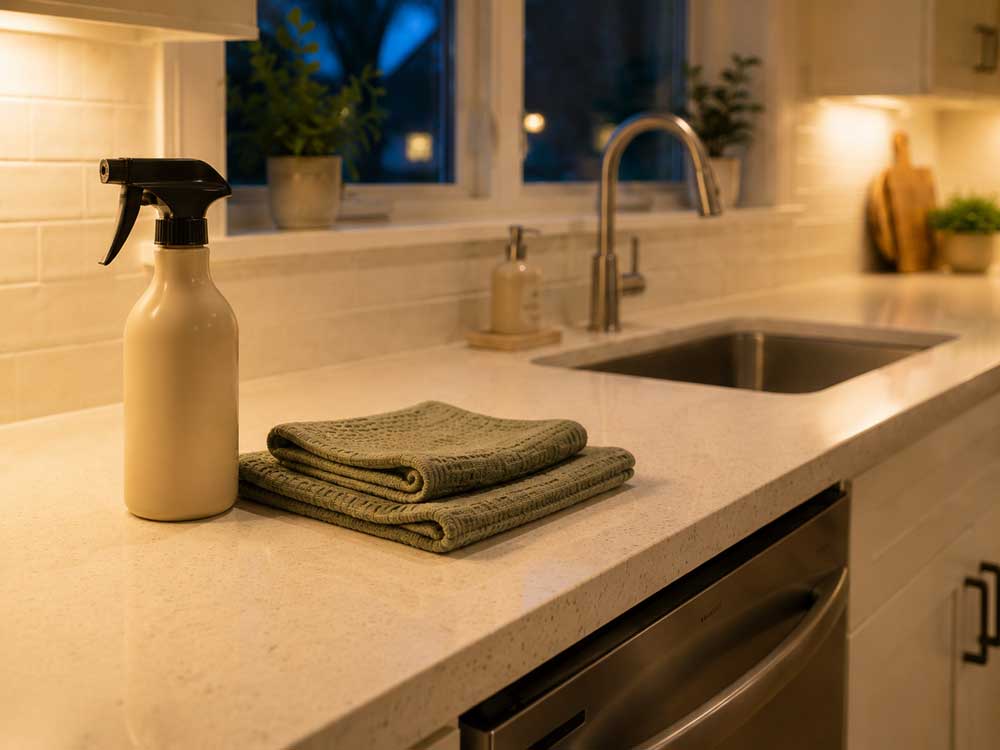
With the counters and table already cleared, wipe them from one end to the other using a cleaner that is appropriate for the material. Pay extra attention to areas where raw ingredients were prepared, and follow any required disinfecting directions, including the product’s stated contact time.
Then address the high-touch spots that need it most: the refrigerator handle, faucet controls, cabinet pulls, and light switches. These do not necessarily require a full cleaning every single night, but a quick wipe when they look or feel grimy helps keep buildup under control.
Shake crumbs from placemats, straighten chairs, and replace any visibly soiled kitchen linens. Work from cleaner areas toward messier ones and use a fresh cloth when necessary, so that you are lifting grime rather than spreading it around.
Minutes 16–19: Sweep the Floor

You do not need to move every chair and sweep every corner each evening. Concentrate on the places where crumbs and debris collect: beneath the table, in front of the stove, around the island, and near the sink and food-preparation area. A targeted sweep or quick vacuum is usually enough to make the floor feel clean underfoot.
Wipe up spills and sticky patches as soon as you see them. Besides becoming more difficult to remove later, moisture and grease can make the floor slippery. Save a full mopping for your regular cleaning schedule unless dinner created a larger-than-usual mess.
Minute 19–20: Prepare for Tomorrow

Use the final minute to do one or two small favors for your future self. Hang a clean dish towel, refill the coffee maker, set out a lunch container, or place the pan you will need for breakfast on the stove. Choose only what genuinely makes the next morning run more smoothly; this is not an invitation to begin another long list of chores.
Take one last look around, put your cleaning supplies away, and turn off the lights. That small moment of closure is part of what makes the routine satisfying. The kitchen is finished for the night, and so are you.
The “Good Enough” Kitchen Reset for Exhausting Nights
Some evenings, 20 minutes will feel completely reasonable. On others, even that may be more energy than you have. A sustainable routine needs room for those nights. Instead of abandoning the kitchen reset altogether, do a five-minute “good enough” version.
Start by refrigerating perishable food and throwing away scraps. Load dishes into the dishwasher or at least stack them neatly and fill dirty pots with soapy water. Wipe the main food-preparation counter and clear anything that could smell, stain, or attract pests overnight. If you have a few seconds left, sweep the most obvious crumbs into a dustpan.
This shortened version will not leave the kitchen fully reset, but it protects the room from the worst of the overnight mess and gives you an easier starting point tomorrow. Consistency is not about doing the maximum every night. It is about knowing the minimum that keeps life moving when your capacity is low.
How to Make the Kitchen Reset Routine Stick
The easiest way to establish a kitchen reset is to attach it to something that already happens every night. Begin as soon as dinner ends, start the timer when you turn on the dishwasher, or make the reset the final task before you relax for the evening. A consistent cue reduces the amount of motivation required because you no longer have to decide when to begin.
Following the same sequence helps, too. When you always clear, load, wipe, sweep, and prepare, the routine gradually becomes automatic. You spend less time looking around and deciding what to do next. A favorite playlist or short podcast can make the time more enjoyable, provided it does not distract you from the 20-minute boundary.
If you share your home, divide the work clearly. One person might load the dishwasher while another clears the table and sweeps. Rotating tasks is fine, but specific assignments tend to work better than asking everyone to “help,” which can leave people unsure of where to start.
Finally, adapt the routine to the way your household actually lives. A family that packs several lunches may need more time for tomorrow’s preparation. Someone in a small apartment may finish the floor in one minute and use the extra time for dishes. The best routine is not the one that follows the clock perfectly; it is the one you can repeat without resentment.
What Does Not Belong in a Nightly Kitchen Reset
An effective kitchen reset depends as much on what you leave out as what you include. Cleaning the oven, reorganizing the pantry, washing every cabinet front, scrubbing grout, clearing out the refrigerator, and mopping the entire floor are worthwhile tasks—but they are not nightly tasks.
When you add deep cleaning to the kitchen reset, the finish line starts to move. A routine that was supposed to take 20 minutes stretches to 40, then begins to feel too burdensome to start. Keep a separate weekly or monthly cleaning list for those larger jobs so you can address them deliberately without derailing the simple habit that keeps the kitchen functional each day.
If you notice a task during the kitchen reset, make a quick note and continue. Knowing that it has a place on another list makes it easier to leave it for the appropriate time.
Try One Small Weekly Add-On
On a night when the basic kitchen reset takes less than 20 minutes, or when you happen to have a little extra energy, choose one small maintenance task. Wipe the front of one appliance, clean the sink drain, wash the trash can lid, straighten one drawer, or check a single refrigerator shelf for food that needs to be used.
Keep the add-on to five minutes or less and tackle only one. Over the course of a month, these tiny efforts can prevent grime and clutter from building up without requiring a marathon cleaning day. If the core reset already took all the time or energy you had, skip the add-on without guilt. It is a bonus, not part of the nightly standard.
A Calmer Ending and an Easier Beginning
The 20-minute evening kitchen reset is not really about maintaining a picture-perfect room. It is about creating a dependable transition from one day to the next. By putting away food, handling the dishes, wiping the surfaces, and clearing the floor, you close out today’s work and prepare the space for tomorrow’s needs.
Some nights the kitchen will look nearly spotless when the timer rings. Other nights, a pan will still be soaking, and a basket of misplaced belongings will wait for morning. Both outcomes count. The value comes from returning the kitchen to a comfortable, workable baseline—and from knowing that a small amount of focused effort tonight can make the entire next morning feel lighter.



Leave a Reply