
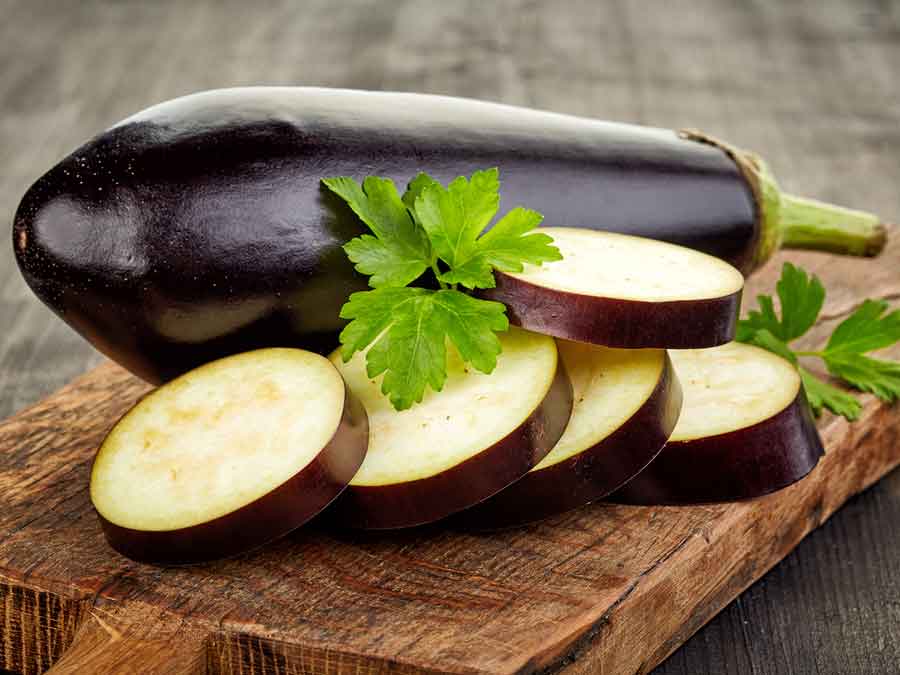
Eggplant is one of late summer’s most versatile vegetables, even if it doesn’t always get the same attention as juicy tomatoes, sweet corn, or crisp green beans. Beneath its glossy purple skin is a mild, porous flesh that readily takes on the flavors around it. Roast it with garlic and herbs, brush it with a savory glaze, layer it with ripe tomatoes, or pair it with bright Mediterranean ingredients, and eggplant becomes anything but ordinary.
Although the familiar deep-purple globe eggplant is the variety most commonly found in supermarkets, it is only one option. Italian eggplants look similar but tend to be smaller, while long, slender Japanese and Chinese eggplants have thin skins and particularly tender flesh. Tiny fairy-tale eggplants are ideal for grilling or roasting whole or halved. Farmers’ markets are often the best place to explore these less common varieties during peak season.
Eggplant is generally at its best from midsummer into early fall. When freshly harvested and cooked properly, it becomes silky and creamy rather than spongy or tough. The key is to begin with a firm, fresh eggplant and give it enough time and enough heat to cook completely.
A Buying & Storing Cheat Sheet
| DOs | DON’Ts |
| Choose eggplants that feel firm and heavy for their size. | Don’t buy eggplants with wrinkled skin, soft spots, bruises, cracks, or brown patches. |
| Look for smooth, taut, glossy skin with rich, even coloring. | Don’t assume the largest eggplant is the best choice. Very large globe eggplants may contain more developed seeds. |
| Check that the stem and cap look green and fresh. | Don’t choose an eggplant with a dry, shriveled, or moldy stem. |
| Gently press the skin with one finger. It should give slightly and spring back. | Don’t repeatedly squeeze eggplant while shopping; its delicate flesh bruises easily. |
| Store eggplant whole and unwashed until you are ready to use it. | Don’t wash or cut eggplant before storing it, since excess moisture and exposed flesh can accelerate deterioration. |
| Keep eggplant in a cool, dark place if you plan to use it within a day. For longer storage, refrigerate it loosely wrapped or in a perforated produce bag. | Don’t seal eggplant tightly in plastic, which can trap moisture. |
| Use refrigerated eggplant within three to five days for the best flavor and texture. | Don’t leave it in the refrigerator for a week and expect it to retain its fresh texture. |
| Store eggplant away from apples, bananas, and other ethylene-producing fruits when possible. | Don’t place it in the coldest part of the refrigerator, where chilling may damage its flesh. |
Eggplant is more delicate than its sturdy appearance suggests. It prefers cool conditions but is sensitive to very cold temperatures, so a refrigerator is not an ideal long-term environment. If your kitchen is warm or you won’t be cooking the eggplant right away, refrigerate it in the produce drawer and plan to use it within a few days.
Once cut, eggplant’s pale flesh begins to discolor when exposed to air. This browning is harmless, but it is best to cut eggplant shortly before cooking. If you need to prepare it slightly in advance, brush the cut surfaces with lemon juice or oil and keep them covered in the refrigerator.
General Uses for Eggplant
Eggplant has a mild flavor of its own, making it an excellent base for assertive sauces, fragrant spices, fresh herbs, and salty cheeses. Its porous flesh absorbs surrounding flavors exceptionally well, while thorough cooking transforms its initially firm, springy texture into something rich and tender.
Roast It
Roasting is one of the easiest and most reliable ways to cook eggplant. Cut it into cubes, wedges, thick rounds, or lengthwise halves, toss or brush it with oil, and roast it at a high temperature until well browned and completely tender.
Roasted eggplant can be folded into pasta, spooned over grains, added to salads, tucked into wraps, or served as a simple side dish. Don’t remove it from the oven as soon as the exterior begins to color. Eggplant is at its best when the center is soft and creamy, not pale and spongy.
Grill It
Eggplant’s dense flesh stands up well to the grill and takes on smoky flavor beautifully. Globe eggplants can be cut into thick rounds or long planks, while smaller varieties can be halved lengthwise.
Brush the pieces with oil rather than pouring oil directly over them. This distributes the oil more evenly and prevents the eggplant from soaking up an excessive amount in one area. Grilled eggplant can be served warm, at room temperature, or chilled, making it a useful ingredient for summer entertaining.
Sauté or Stir-Fry It
Japanese and Chinese eggplants are especially well suited to sautéing and stir-frying because their slender shape makes them easy to cut into evenly sized pieces. Their skin is thin, their flesh cooks quickly, and they typically contain fewer noticeable seeds than a large globe eggplant.
Pair sautéed eggplant with garlic, ginger, scallions, soy sauce, miso, sesame oil, chili crisp, or fresh chiles. Keep the pieces moving and add a splash of water if needed to help the centers soften without adding more oil.
Bake It
Eggplant can be layered into casseroles, gratins, lasagna-style dishes, and eggplant Parmesan. It can also be roasted in halves, hollowed slightly, and filled with grains, vegetables, cheese, meat, or legumes.
When using eggplant in a layered dish, cooking it before assembling the casserole helps remove excess moisture and ensures that every layer becomes tender. Roasting is generally less messy and requires less oil than frying.
Purée It
When roasted or charred until collapsing, eggplant can be scooped from its skin and mashed into a velvety dip. Baba ganoush is the best-known example, combining eggplant with tahini, lemon, garlic, and olive oil.
Purée can also be stirred into tomato sauce, soup, or a pasta sauce to add body without an obvious eggplant texture. Charring the skin first gives the flesh a deeper, smokier flavor.
Add It to Stews and Sauces
Eggplant works especially well in dishes that give it time to absorb a flavorful sauce. Add it to ratatouille, caponata, curry, tomato sauce, or a Mediterranean-style braise. As it cooks, the eggplant softens and helps give the finished dish a rich, substantial consistency.
Add it early if you want the pieces to melt into the sauce. Add it later—or roast it separately and stir it in near the end—if you prefer more distinct pieces.
Preserve It
A large supply of eggplant can be turned into pickles, relishes, spreads, or caponata. You can also roast eggplant and freeze the cooked flesh for future dips, soups, and sauces.
Raw eggplant does not freeze particularly well because its cellular structure breaks down as it thaws. Cooking or blanching it first produces much better results.
Eggplant Recipes
Crispy Baked Eggplant Fries with Garlic-Herb Yogurt Dip

These eggplant fries have a crisp, Parmesan-flecked exterior surrounding a soft, tender center. Baking them on a preheated sheet pan helps the bottoms begin browning as soon as they enter the oven, while a light coating of cooking spray encourages the breadcrumbs to turn golden without deep-frying.
The garlic-herb yogurt dip is cool and tangy, with enough lemon to balance the richness of the coating. Serve the fries as an appetizer, a game-day snack, or an unexpected vegetable side dish.
Makes 4 servings
Ingredients
For the eggplant fries:
- 1 medium globe eggplant, about 1 pound
- 1 teaspoon kosher salt, divided
- ½ cup all-purpose flour
- 2 large eggs
- 1 tablespoon water
- 1 cup panko breadcrumbs
- ½ cup finely grated Parmesan cheese
- 1 teaspoon garlic powder
- 1 teaspoon Italian seasoning
- ½ teaspoon smoked paprika
- ¼ teaspoon black pepper
- Olive oil cooking spray
For the garlic-herb yogurt dip:
- ¾ cup plain Greek yogurt
- 1 small garlic clove, finely grated or minced
- 1 tablespoon fresh lemon juice
- 1 tablespoon chopped fresh parsley
- 1 tablespoon chopped fresh chives or basil
- ¼ teaspoon kosher salt
- ⅛ teaspoon black pepper
Instructions
- Cut the stem from the eggplant. Slice the eggplant crosswise into ½-inch-thick rounds, then cut each round into sticks approximately ½ inch wide.
- Arrange the eggplant sticks on a paper towel-lined tray and sprinkle them with ½ teaspoon of the salt. Let them stand for 15 minutes. Pat them thoroughly dry with clean paper towels.
- While the eggplant rests, place a large, rimmed sheet pan in the oven and preheat the oven to 425°F.
- Place the flour in a shallow bowl. Whisk the eggs and water together in a second shallow bowl. In a third bowl, combine the panko, Parmesan, garlic powder, Italian seasoning, smoked paprika, black pepper, and remaining ½ teaspoon salt.
- Working with a few pieces at a time, coat the eggplant in flour and shake off the excess. Dip it into the egg mixture, allowing the excess to drip away, and then press it into the breadcrumb mixture until evenly coated.
- Carefully remove the hot sheet pan from the oven and coat it with cooking spray. Arrange the eggplant fries in a single layer, leaving a little space between each one. Lightly spray the tops with cooking spray.
- Bake for 10 minutes. Turn the fries and continue baking for 8 to 10 minutes, or until the coating is golden and the eggplant is tender.
- While the fries bake, stir together the yogurt, garlic, lemon juice, parsley, chives or basil, salt, and pepper in a small bowl.
- Serve the eggplant fries hot with the garlic-herb yogurt dip.
Recipe Notes
Salting is not always necessary with modern eggplant varieties, but here it helps draw surface moisture from the cut pieces, so the coating adheres and crisps more effectively.
For the most even cooking, keep the fries close to the same size. If they are cut too thin, the coating may brown before the interior becomes creamy. These fries are crispiest immediately after baking, but leftovers can be reheated in a 400°F oven or air fryer.
Grilled Eggplant, Tomato, and Burrata Salad

This salad brings together some of late summer’s best ingredients. Grilled eggplant provides a smoky, savory base for ripe tomatoes, creamy burrata, and fresh basil. A simple balsamic dressing adds acidity and sweetness without masking the vegetables.
Use tomatoes in several colors and sizes if they are available. The salad is especially beautiful arranged on a wide platter, where the eggplant can catch the juices from the tomatoes and dressing. Serve it with crusty bread for scooping up the burrata and any dressing left behind.
Makes 4 servings
Ingredients
- 1 medium globe or Italian eggplant, about 1 pound
- 1½ teaspoons kosher salt, divided
- 3 tablespoons extra-virgin olive oil, divided, plus more for finishing
- 1½ pounds ripe tomatoes
- 1 tablespoon balsamic vinegar
- 1 teaspoon honey
- ½ teaspoon Dijon mustard
- ¼ teaspoon black pepper, plus more for serving
- 8 ounces burrata cheese
- ½ cup loosely packed fresh basil leaves
- ¼ cup toasted pine nuts or chopped pistachios
- Flaky sea salt, for serving
- Crusty bread, for serving
Instructions
- Trim the eggplant and cut it crosswise into ½-inch-thick rounds. Arrange the rounds on a tray and season both sides with 1 teaspoon of the kosher salt. Let them stand for 15 minutes, then pat them dry.
- Preheat an outdoor grill or grill pan to medium-high heat. Brush both sides of the eggplant rounds with 2 tablespoons of the olive oil.
- Grill the eggplant for 4 to 5 minutes per side, or until well marked and tender all the way through. Transfer it to a platter and let it cool slightly.
- Cut the tomatoes into wedges, slices, or bite-size pieces, depending on their size.
- Whisk the remaining 1 tablespoon olive oil with the balsamic vinegar, honey, Dijon mustard, remaining ½ teaspoon kosher salt, and black pepper.
- Arrange the grilled eggplant and tomatoes on a serving platter. Tear the burrata into large pieces and place it over the vegetables.
- Drizzle the salad with the balsamic dressing and a little additional olive oil. Scatter the basil and toasted pine nuts or pistachios over the top.
- Finish with flaky sea salt and black pepper. Serve immediately or let the salad stand at room temperature for up to 20 minutes before serving with crusty bread.
Recipe Notes
If you don’t have access to a grill, cook the eggplant under the broiler. Arrange the oiled rounds on a foil-lined sheet pan and broil them several inches from the heat, turning once, until browned and tender.
Fresh mozzarella can be substituted for burrata. It won’t have the same creamy center, but it provides a similar mild flavor. For the best texture and flavor, let refrigerated burrata sit at room temperature for about 20 minutes before serving.
Sticky Miso Eggplant Rice Bowls

A sweet and savory miso glaze turns eggplant into the centerpiece of these satisfying rice bowls. Roasting softens the eggplant first; a brief trip under the broiler then caramelizes the glaze, creating dark, sticky edges without burning the sauce during the longer roasting time.
Japanese or Chinese eggplants are ideal because they cook quickly and have thin, tender skins. A globe eggplant also works well—simply cut it into bite-size cubes and give it a few extra minutes in the oven if needed.
Makes 4 servings
Ingredients
For the miso eggplant:
- 1½ pounds Japanese or Chinese eggplant
- 2 tablespoons neutral oil, such as avocado or vegetable oil
- ¼ teaspoon kosher salt
- 3 tablespoons white miso
- 2 tablespoons low-sodium soy sauce
- 2 tablespoons honey or maple syrup
- 1 tablespoon rice vinegar
- 1 teaspoon toasted sesame oil
- 1 teaspoon finely grated fresh ginger
- 1 garlic clove, finely grated or minced
- 1 to 2 teaspoons water, as needed
For the bowls:
- 4 cups hot cooked white or brown rice
- 1 small cucumber, thinly sliced
- 1 cup shelled cooked edamame
- 2 scallions, thinly sliced
- 1 tablespoon toasted sesame seeds
- 4 soft-cooked or fried eggs, optional
- Sriracha or chili crisp, optional
Instructions
- Preheat the oven to 425°F and line a large rimmed sheet pan with parchment paper or foil.
- Trim the eggplants and cut them in half lengthwise. Cut each half into 2-inch pieces. If using a globe eggplant, cut it into 1-inch cubes.
- Toss the eggplant with the neutral oil and salt. Arrange it in a single layer on the prepared sheet pan, placing the cut sides down when possible.
- Roast for 15 minutes. Turn the pieces and roast for another 5 to 8 minutes, or until the eggplant is very tender and lightly browned.
- While the eggplant roasts, whisk together the miso, soy sauce, honey or maple syrup, rice vinegar, sesame oil, ginger, and garlic. If the mixture is too thick to brush, whisk in 1 to 2 teaspoons water.
- Remove the eggplant from the oven and switch the oven to broil. Brush or spoon the miso mixture generously over the eggplant, turning the pieces to coat them.
- Broil for 2 to 4 minutes, watching closely, until the glaze bubbles and begins to caramelize around the edges.
- Divide the rice among four bowls. Add the cucumber, edamame, and glazed eggplant.
- Top each bowl with scallions, sesame seeds, and an egg, if using. Serve with Sriracha or chili crisp as desired.
Recipe Notes
Miso can burn quickly because the glaze contains both honey and natural sugars from the miso itself. Keep the eggplant several inches from the broiler and watch it continuously during the final few minutes.
The components can be prepared ahead and stored separately. Reheat the eggplant gently in the microwave or a covered skillet, then assemble the bowls just before serving. For a vegan bowl, use maple syrup in the glaze and omit the egg.
Creamy Roasted Eggplant and Tomato Pasta

This pasta becomes creamy without relying on a large quantity of cream. As the eggplant roasts, it turns soft enough to partially mash into the burst cherry tomatoes. Starchy pasta water and Parmesan bring everything together into a silky sauce, while a few intact pieces of eggplant provide texture.
It is a particularly useful recipe for eggplant skeptics. Rather than dominating the dish, the eggplant melts into the garlicky tomato sauce, giving it a richer flavor and fuller consistency.
Makes 4 to 6 servings
Ingredients
- 1 medium globe eggplant, about 1 pound
- 1 pint cherry or grape tomatoes
- 4 tablespoons extra-virgin olive oil, divided
- 1¼ teaspoons kosher salt, divided
- ½ teaspoon black pepper, divided
- 12 ounces rigatoni, penne, or another short pasta
- 3 garlic cloves, thinly sliced
- ¼ teaspoon crushed red pepper flakes, plus more to taste
- ½ cup finely grated Parmesan cheese, plus more for serving
- 1 tablespoon fresh lemon juice
- ½ cup loosely packed fresh basil leaves, torn
Instructions
- Preheat the oven to 425°F. Line a large, rimmed sheet pan with parchment paper or foil.
- Trim the eggplant and cut it into 1-inch cubes. Place the eggplant and tomatoes on the prepared sheet pan. Toss them with 3 tablespoons of the olive oil, ¾ teaspoon of the salt, and ¼ teaspoon of the black pepper.
- Spread the vegetables into a single layer. Roast for 25 to 30 minutes, stirring once, until the eggplant is very tender and browned and the tomatoes have burst.
- While the vegetables roast, bring a large pot of generously salted water to a boil. Cook the pasta until just shy of al dente according to the package directions.
- Before draining, reserve 1½ cups of the pasta cooking water. Drain the pasta.
- Heat the remaining 1 tablespoon olive oil in the pasta pot over medium-low heat. Add the garlic and crushed red pepper flakes. Cook for about 1 minute, stirring frequently, until the garlic is fragrant but not browned.
- Add the roasted eggplant and tomatoes to the pot. Use the back of a wooden spoon to mash approximately half of the eggplant and tomatoes into a chunky sauce.
- Add the drained pasta and ½ cup of the reserved pasta water. Cook over medium heat for 1 to 2 minutes, stirring continuously.
- Remove the pot from the heat. Add the Parmesan, lemon juice, remaining ½ teaspoon salt, and remaining ¼ teaspoon black pepper. Stir vigorously, adding more pasta water a few tablespoons at a time until the sauce is smooth and coats the pasta.
- Fold in the basil. Taste and adjust the salt, black pepper, or crushed red pepper as needed.
- Divide among bowls and serve with additional Parmesan.
Recipe Notes
Don’t rinse the pasta after draining it. The starch left on its surface helps the eggplant mixture cling to the noodles. The reserved cooking water is equally important, so scoop it out before draining.
For a slightly richer finish, stir in ¼ cup ricotta or 2 tablespoons of heavy cream after removing the pot from the heat. To add crunch, top the pasta with toasted breadcrumbs seasoned with garlic and Parmesan.
Mediterranean Stuffed Eggplant with Chickpeas and Feta

These roasted eggplant halves are filled with a bright, savory mixture of chickpeas, tomatoes, garlic, herbs, and feta. The eggplant flesh is scooped out after roasting and folded into the filling, so none of it goes to waste. Toasted breadcrumbs create a contrasting crisp layer on top.
The stuffed eggplants are substantial enough to serve as a meatless main course, but they can also accompany grilled chicken, fish, or lamb. Because the filling can be prepared in advance, the recipe works well for both weeknight dinners and casual entertaining.
Makes 4 servings
Ingredients
- 2 medium globe or Italian eggplants, about 10 to 12 ounces each
- 4 tablespoons extra-virgin olive oil, divided
- 1¼ teaspoons kosher salt, divided
- ½ teaspoon black pepper, divided
- 1 small yellow onion, finely chopped
- 3 garlic cloves, minced
- 1 teaspoon dried oregano
- ½ teaspoon ground cumin
- ¼ teaspoon crushed red pepper flakes, optional
- 1 can (15 ounces) chickpeas, drained and rinsed
- 1 cup diced tomatoes, drained if especially juicy
- 1 teaspoon finely grated lemon zest
- 1 tablespoon fresh lemon juice
- ½ cup crumbled feta cheese, divided
- ¼ cup chopped fresh parsley, divided
- ⅓ cup panko breadcrumbs
Instructions
- Preheat the oven to 425°F. Lightly coat a baking dish or rimmed sheet pan with oil.
- Cut the eggplants in half lengthwise. Use a paring knife to score the flesh in a crosshatch pattern, taking care not to cut through the skin.
- Brush the cut surfaces with 1½ tablespoons of the olive oil and season them with ½ teaspoon of the salt and ¼ teaspoon of the black pepper.
- Place the eggplants cut side down on the prepared pan. Roast for 25 to 30 minutes, or until the flesh is very tender and the skins hold their shape.
- While the eggplants roast, heat 1 tablespoon of the olive oil in a large skillet over medium heat. Add the onion and cook for 5 to 6 minutes, stirring occasionally, until softened.
- Add the garlic, oregano, cumin, and crushed red pepper flakes, if using. Cook for 30 seconds, stirring constantly.
- Add the chickpeas, tomatoes, remaining ¾ teaspoon salt, and remaining ¼ teaspoon black pepper. Cook for 4 to 5 minutes, or until the tomatoes soften and most of their excess liquid evaporates. Remove the skillet from the heat.
- When the eggplants are cool enough to handle, turn them cut side up. Scoop out most of the flesh, leaving a ½-inch border so the skins remain sturdy. Roughly chop the scooped eggplant.
- Add the chopped eggplant to the chickpea mixture along with the lemon zest, lemon juice, ¼ cup of the feta, and 3 tablespoons of the parsley. Stir until evenly combined.
- Turn the oven temperature down to 400°F. Spoon the filling into the eggplant shells, mounding it slightly.
- Combine the panko with the remaining 1½ tablespoons olive oil, remaining ¼ cup feta, and remaining 1 tablespoon parsley. Sprinkle the mixture over the filled eggplants.
- Bake for 12 to 15 minutes, or until the filling is hot and the topping is golden. Broil for 1 to 2 minutes at the end if additional browning is needed.
- Let the stuffed eggplants rest for 5 minutes before serving.
Recipe Notes
For a heartier variation, replace half of the chickpeas with cooked ground turkey or lamb. Cook the meat after softening the onion and before adding the tomatoes. Cooked quinoa, farro, or rice can also be folded into the filling; add about 1 cup and increase the tomatoes or add a splash of broth if the mixture seems dry.
The eggplants can be roasted and filled up to one day in advance. Cover and refrigerate them without the breadcrumb topping. Add the topping immediately before baking and allow a few extra minutes for the cold filling to heat through.
Make the Most of Eggplant Season
Eggplant’s ability to absorb flavor is its greatest strength. It can take on the smoky character of the grill, the sweet-savory intensity of a miso glaze, the brightness of lemon and herbs, or the comforting flavors of tomatoes, garlic, and Parmesan. Depending on how it is prepared, it can be crisp, creamy, substantial, or almost sauce-like.
If you have been hesitant to cook with eggplant, start with one that feels firm and heavy, and don’t stop cooking it while the center is still spongy. Properly cooked eggplant should be thoroughly tender, with a silky texture that makes it feel far more indulgent than the simple vegetable it is.
While eggplants are abundant, try more than the familiar globe variety. A slender Japanese eggplant is ideal for the sticky miso bowls, while small Italian or fairy-tale eggplants are excellent on the grill. Whether you turn your market haul into crisp fries, a colorful tomato salad, creamy pasta, a rice bowl, or a stuffed main dish, there are plenty of ways to let this late-summer vegetable shine.



Leave a Reply