
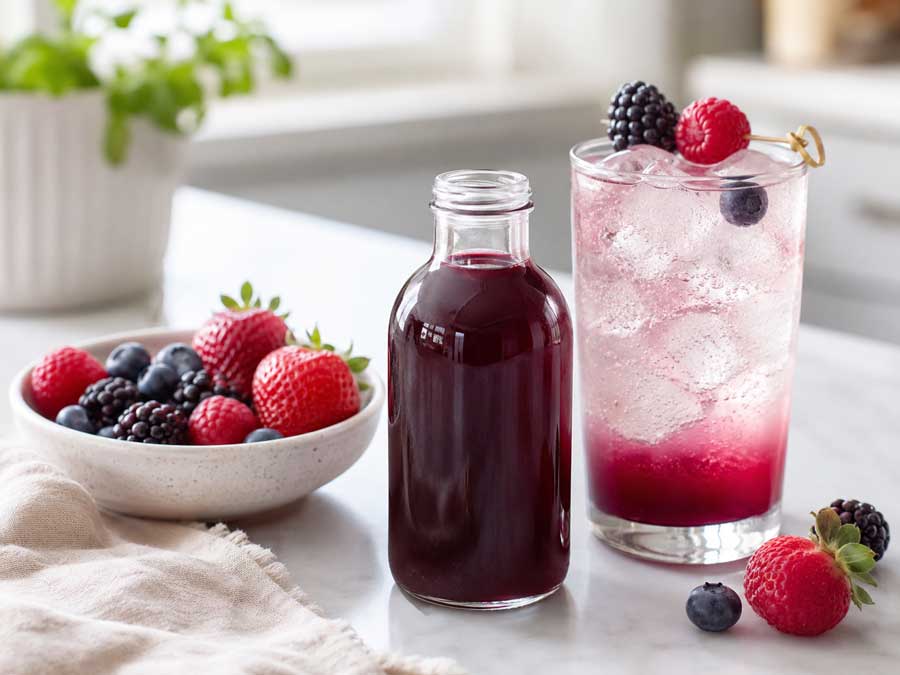
A cold glass of lemonade, iced tea, or sparkling water is already refreshing on a hot summer day, but a splash of homemade syrup can make it feel like something special. Fresh fruit, fragrant herbs, and a little sweetness turn basic beverages into colorful drinks worthy of a backyard party, summer brunch, or quiet afternoon on the porch.
Traditional simple syrup is made by heating equal parts sugar and water until the sugar dissolves. That approach is easy enough, but in the middle of summer, even a few minutes at the stove can feel like too much. These no-cook syrups keep the kitchen cool by relying on muddling, blending, shaking, and time in the refrigerator to draw out the ingredients’ natural flavors.
The four recipes below make the most of seasonal ingredients: cooling mint, juicy watermelon, a colorful mixture of berries, and ripe peaches paired with fresh ginger. Keep one or two syrups in the refrigerator, and you can create a different drink every time you fill your glass.
What Are No-Cook Syrups?
A no-cook syrup delivers the sweetness and concentrated flavor of a traditional drink syrup without requiring heat. Instead of simmering ingredients with sugar and water, you extract their flavor by crushing, blending, or macerating them. Soft summer fruit is particularly well suited to this method because it releases plenty of juice when combined with sugar.
The texture may be slightly different from that of a cooked simple syrup. Fruit-based versions can be thinner, cloudier, and a little more pulpy, depending on how finely they are strained. That isn’t a drawback. In fact, their less-processed character is part of their appeal. Because the fruit and herbs aren’t heated, their flavors remain fresh, bright, and closely connected to the ingredients you started with.
These syrups are also easy to adjust. Taste the fruit before adding the sweetener and use a little less if it is exceptionally ripe. Add extra citrus juice if you prefer a tangier drink, or change the amount of fresh ginger, mint, or other flavoring to suit your taste.
Choosing a Sweetener for No-Cook Syrups
Since these recipes aren’t heated, choosing a sweetener that dissolves easily is important. Superfine sugar is an excellent option because its small crystals dissolve more readily in cold liquids than standard granulated sugar. If you can’t find it, pulse regular granulated sugar in a blender or food processor until the crystals are finer, stopping before the sugar becomes powdery.
Honey and agave syrup are also useful because they blend easily into fruit purées. Honey adds a distinct floral note that works especially well with peaches, berries, ginger, and lemon. Agave has a milder flavor, making it a good option when you want the fruit to remain the focus.
The amount of sweetener in each recipe is a starting point. Fruit varies considerably in sweetness, so taste the mixture before refrigerating it. Remember that the syrup will eventually be diluted with tea, lemonade, or sparkling water, so it should taste somewhat sweeter and more concentrated than you would want to drink on its own.
What You’ll Need
No special equipment is required to make these syrups. A blender makes quick work of the fruit-based recipes, while a muddler or the handle of a wooden spoon is useful for crushing mint leaves. You’ll also need jars or containers with tight-fitting lids and a fine-mesh strainer.
For an especially smooth or clear syrup, line the strainer with cheesecloth before pouring in the mixture. A small funnel also makes it easier to transfer the finished syrup into a bottle or jar without spills. Whatever container you choose, make sure it is thoroughly clean before filling it.
Recipe: Fresh Mint Syrup

Mint syrup brings an instant cooling quality to summer drinks. Its fresh herbal flavor is particularly good in lemonade and limeade, but it can also revive a basic glass of iced green tea or sparkling water. Add cucumber slices or a squeeze of lime, and you have an easy mocktail that feels crisp and sophisticated.
Spearmint is the best choice for a familiar, gently sweet mint flavor. When muddling the leaves, press them only enough to release their aroma. Crushing them too aggressively can break down the leaves and give the syrup a grassy or bitter taste.
Makes about 1¼ cups
Ingredients
- 1 packed cup fresh mint leaves, plus more for serving
- 1 cup superfine sugar
- 1 cup cold water
- 1 tablespoon fresh lemon juice
- 1 wide strip lemon or lime zest, optional
Instructions
- Place the mint leaves and sugar in a large jar or bowl. Using a muddler or the handle of a wooden spoon, gently press and stir the leaves into the sugar for about 1 minute, just until the mint becomes fragrant.
- Add the cold water, lemon juice, and citrus zest, if using.
- Cover the jar tightly and shake for 1 to 2 minutes. Let the mixture rest for 5 minutes, then shake it again. Continue shaking periodically until most of the sugar has dissolved.
- Refrigerate the mixture for at least 4 hours or up to overnight to allow the mint flavor to develop.
- Pour the syrup through a fine-mesh strainer into a clean jar. Press the mint leaves gently, then discard them and the citrus zest.
- Cover and refrigerate until ready to use. Shake or stir the syrup if any sugar settles at the bottom.
Recipe: Fresh Watermelon Syrup

Watermelon is mostly water, which means it blends into an exceptionally light and pourable syrup. Its delicate flavor is enhanced by lime juice and a small pinch of salt, both of which make the watermelon taste sweeter and more vibrant without overpowering it.
This syrup is delicious in classic lemonade, but it is especially refreshing when added to sparkling water. Garnish the drink with a small watermelon wedge, a lime wheel, or a sprig of mint. Because watermelons vary widely in sweetness, begin with the smaller amount of agave and add more only if needed.
Makes about 1½ cups
Ingredients
- 3 cups cubed seedless watermelon
- ⅓ to ½ cup agave syrup or superfine sugar
- 2 tablespoons fresh lime juice
- Pinch of fine salt
Instructions
- Place the watermelon, ⅓ cup agave syrup or sugar, lime juice, and salt in a blender.
- Blend until completely smooth.
- Taste the mixture and add more sweetener if needed. The syrup should taste concentrated and slightly sweeter than you would want on its own.
- Pour the mixture through a fine-mesh strainer set over a bowl. Let it drain, then gently stir the pulp to help the liquid pass through without forcing too many solids into the syrup.
- Transfer the syrup to a clean jar or bottle, cover, and refrigerate until thoroughly chilled.
Recipe: Mixed Berry Syrup

A combination of summer berries creates a syrup with a deeper, more complex flavor than any single berry can provide. Strawberries contribute sweetness and body, while raspberries and blackberries add tartness. Blueberries bring color and a mellow fruitiness that rounds everything out.
You can use any proportion of berries as long as the total amount remains the same. This makes the recipe a useful way to use a handful of strawberries, a few lingering blueberries, or berries that have become slightly too soft for serving fresh. Frozen fruit works well, too; thaw it before measuring so its juices become part of the syrup.
Mixed berry syrup gives lemonade a dramatic jewel-toned color and pairs naturally with black or hibiscus iced tea. For an herbal variation, add a few fresh basil leaves while the berries macerate.
Makes about 1½ cups
Ingredients
- 1 cup hulled and chopped strawberries
- ½ cup blueberries
- ½ cup raspberries
- ½ cup blackberries
- ¾ cup superfine sugar
- 2 tablespoons fresh lemon juice
- 2 tablespoons cold water
- 4 fresh basil leaves or 1 wide strip lemon zest, optional
Instructions
- Combine the strawberries, blueberries, raspberries, blackberries, sugar, lemon juice, and water in a bowl or large jar.
- Using a potato masher, fork, or muddler, crush the berries until they are juicy but not completely puréed.
- Stir in the basil or lemon zest, if using. Cover and refrigerate for at least 4 hours or up to overnight, stirring once or twice as the berries release their juices.
- Pour the mixture through a fine-mesh strainer set over a bowl. Press gently with the back of a spoon to extract the liquid.
- For a smoother syrup, strain the liquid a second time through cheesecloth.
- Transfer the finished syrup to a clean jar or bottle, cover, and refrigerate.
Recipe: Ginger Peach Syrup

Ripe peaches and fresh ginger make a syrup that is fruity at first sip with a pleasantly warming finish. It is an easy way to make peach iced tea without buying a bottled flavored tea, and it is equally good in lemonade or plain sparkling water.
The best peaches for this recipe are ripe, fragrant, and slightly soft when gently pressed. Peeling them is optional, since the syrup will be strained after blending. If your peaches aren’t especially juicy, let them ripen at room temperature for another day or two before making the syrup. Nectarines are an easy substitute and don’t need to be peeled.
Fresh ginger can quickly become dominant, so the recipe begins with one tablespoon. If you enjoy a stronger ginger flavor, taste the mixture after blending and add another teaspoon before refrigerating it.
Makes about 1½ cups
Ingredients
- 3 medium ripe peaches, pitted and chopped
- ½ cup honey or agave syrup
- 2 tablespoons fresh lemon juice
- 1 tablespoon peeled and finely grated fresh ginger
- Pinch of fine salt
- 2 to 4 tablespoons cold water, as needed
Instructions
- Place the chopped peaches, honey, lemon juice, ginger, salt, and 2 tablespoons water in a blender.
- Blend until smooth. If the mixture is too thick to blend easily, add the remaining water 1 tablespoon at a time.
- Taste and add a little more ginger, honey, or lemon juice if desired.
- Transfer the mixture to a covered container and refrigerate it for at least 2 hours to allow the flavors to develop.
- Pour the syrup through a fine-mesh strainer into a bowl, pressing gently to extract as much liquid as possible.
- Transfer the syrup to a clean jar or bottle, cover, and refrigerate until ready to use.
How to Strain Homemade Syrups
Straining determines whether your syrup will have a light, smooth texture or a more substantial, fruit-forward consistency. For most drinks, a fine-mesh strainer removes enough seeds, skins, and pulp while allowing a small amount of the fruit’s body to remain.
If you prefer a clearer syrup, line the strainer with a double layer of cheesecloth. Pour in the mixture and allow it to drain naturally. Pressing hard may push tiny fruit particles through the cloth and make the syrup cloudy. The result may take longer, but it will mix more seamlessly into tea and sparkling water.
Cloudiness is not a sign that anything has gone wrong. Fresh fruit naturally produces syrups that are less clear than commercially processed products. Simply shake the bottle before using if the mixture separates while refrigerated.
How to Flavor Lemonade, Iced Tea, and Sparkling Water
Start with 1 tablespoon of syrup for every 8 ounces of beverage, then add more to taste. The exact amount will depend on the syrup, the sweetness of the original drink, and how strong you want the flavor to be. Sparkling water may need 1 to 2 tablespoons, while already-sweetened lemonade might require only a small splash.
When flavoring homemade lemonade or sweet tea, reduce the amount of sugar in the original recipe so the finished drink doesn’t become overly sweet. You can always add more syrup after tasting. For unsweetened iced tea, stir in the syrup before adding a full glass of ice so it distributes evenly.
When making a sparkling drink, add the syrup to the glass first. Fill the glass with ice, slowly pour in the sparkling water, and stir gently to preserve as many bubbles as possible. A squeeze of lemon or lime can help balance the sweetness and make the fruit flavor taste even brighter.
Here are a few combinations to try:
| Syrup | Lemonade | Iced Tea | Sparkling Water |
| Mint | Classic or lime lemonade | Green or black tea | Plain, lime, or cucumber |
| Watermelon | Classic or strawberry lemonade | Hibiscus tea | Plain or lime |
| Mixed Berry | Classic lemonade | Black or hibiscus tea | Plain or lemon |
| Ginger Peach | Classic or honey lemonade | Black or green tea | Plain or lemon |
Storing No-Cook Syrups
Because these syrups are made with fresh ingredients and aren’t heated, they have a shorter shelf life than traditional cooked simple syrup. Store them in clean, airtight jars or bottles in the refrigerator, and never leave them sitting in the sun or at room temperature for an extended period.
For the freshest flavor, use the mint syrup within about one week. The watermelon, mixed berry, and ginger peach syrups are best used within 3 to 5 days. Always discard a syrup if you notice mold, bubbling, an unusual odor, or any other sign of spoilage.
For longer storage, pour the syrups into ice-cube trays and freeze until solid. Transfer the frozen cubes to a freezer-safe container and add them directly to lemonade, tea, or sparkling water. As the cubes melt, they will flavor the drink without diluting it as quickly as ordinary ice.
Use the Leftover Fruit Pulp
After straining the fruit syrups, you’ll be left with a sweet, flavorful pulp that doesn’t have to go to waste. Spoon the watermelon, berry, or peach mixture over yogurt, stir it into overnight oats, or blend it into a smoothie. It can also be layered into a parfait, spread on toast, or frozen in popsicle molds.
The berry pulp may contain some seeds, so take that into account when choosing how to use it. The peach mixture will retain small pieces of ginger and may be best blended into yogurt or a smoothie. Mint leaves and particularly fibrous ginger solids are less useful after steeping, but they can be added to a compost bin.
A Cooler Way to Make Summer Drinks
Homemade syrups make it easy to create refreshing drinks without filling the refrigerator with bottles of flavored beverages—or heating up the kitchen to make them. With a few minutes of preparation and some time in the refrigerator, seasonal fruit and herbs can become the foundation for countless summer combinations.
Add mint syrup to lemonade one afternoon, mix watermelon syrup with sparkling water the next, or use ginger peach syrup to transform a pitcher of iced tea. Whether you make one flavor or all four, you’ll have an easy way to turn an everyday cold drink into something that tastes unmistakably like summer.



Leave a Reply