
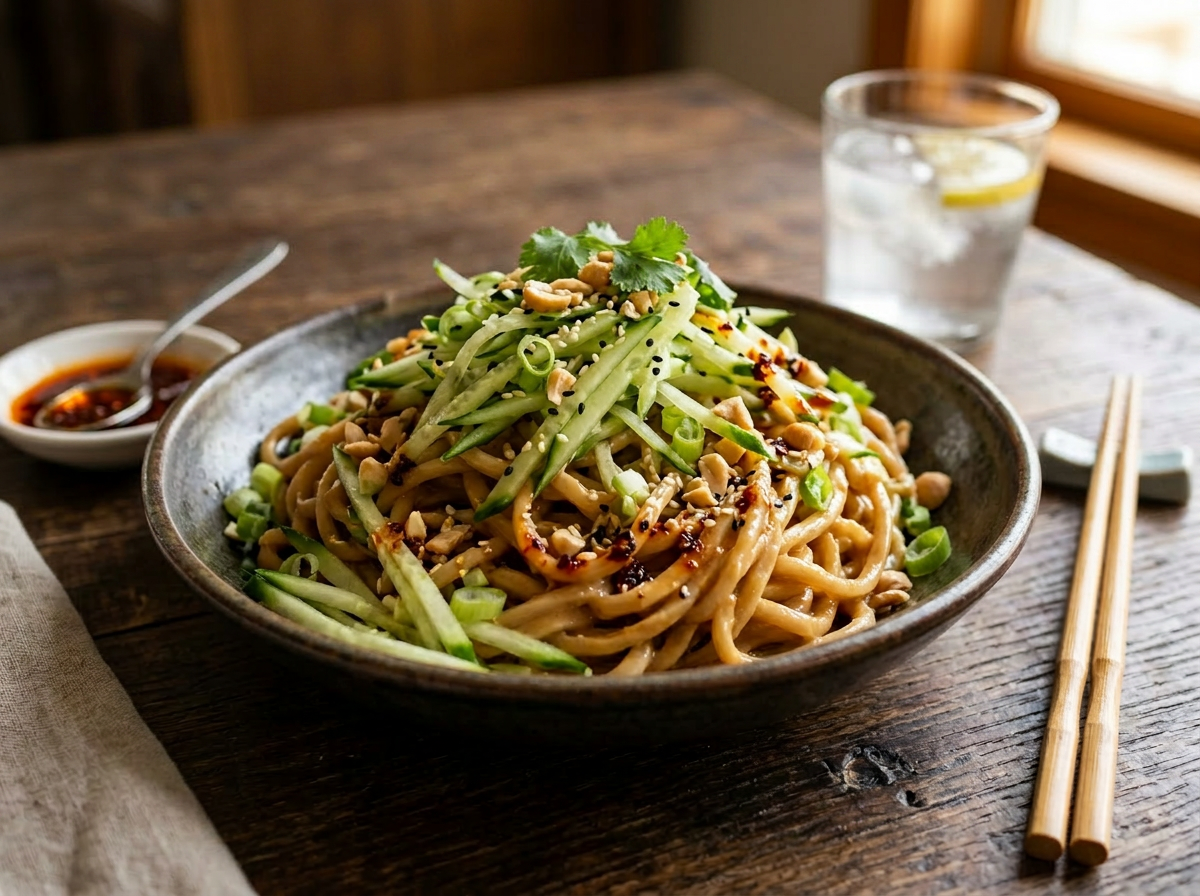
Cold noodle dishes are refreshing, deeply flavorful, and easy to prepare ahead, making them ideal for quick lunches, relaxed dinners, and casual entertaining. These Cold Sesame Peanut Noodles combine chewy noodles with a creamy, savory peanut sauce and plenty of fresh vegetables for a dish that feels both comforting and cooling at the same time.
The sauce is rich with peanut butter and toasted sesame oil, balanced by soy sauce, rice vinegar, garlic, and ginger. A spoonful of chili crisp adds gentle heat and texture, while fresh cucumbers provide crunch and brightness that keep the dish from feeling heavy.
One of the best things about cold peanut noodles is how adaptable they are. They can be served as is for a simple vegetarian meal, or paired with grilled chicken or shrimp. The flavors also improve slightly as the noodles rest, making this an especially good make-ahead recipe.
Whether served straight from the refrigerator on a hot afternoon or as part of a larger summer spread, these noodles deliver bold flavor with minimal effort.
Why You’ll Love This Recipe
Cold sesame peanut noodles strike a balance that many summer meals struggle to achieve: they are satisfying without feeling overly rich or heavy. The creamy sauce coats every strand of noodle while crisp cucumbers and fresh herbs keep the overall dish lively and refreshing.
The recipe is also practical. Most of the ingredients are pantry staples, the sauce comes together in minutes, and the finished noodles hold up beautifully in the refrigerator. That makes them ideal for meal prep, picnics, or easy weeknight cooking when turning on the oven feels unappealing.
Because the recipe is flexible, it also adapts easily to what you have available. Different noodles, vegetables, proteins, or spice levels can all be incorporated without changing the core appeal of the dish.
What Makes Peanut Noodles So Satisfying?
The secret to peanut noodles is the sauce. Peanut butter creates body and richness, while toasted sesame oil adds depth and aroma. Soy sauce contributes savory umami flavor, and rice vinegar brightens the entire mixture with acidity.
When combined, these ingredients form a creamy dressing that clings beautifully to chilled noodles. Garlic and ginger add freshness and complexity, while chili crisp introduces heat and subtle crunch.
The noodles themselves absorb some of the sauce as they sit, creating a dish that tastes layered and deeply seasoned rather than simply coated.
Why Cucumbers Work So Well in This Dish
Cucumbers are more than just a garnish here. Their crisp texture creates contrast against the soft noodles and creamy sauce, making each bite feel lighter and fresher.
They also bring cooling qualities that complement the gentle heat from the chili crisp and the richness of the peanut butter. Thin slices work beautifully, though lightly smashed cucumbers can create an even more rustic texture that absorbs extra flavor.
Visually, the bright green cucumbers also make the dish feel vibrant and seasonal, especially when paired with herbs and scallions.
Tips for the Best Cold Peanut Noodles
Properly salted pasta water is important because the noodles themselves need flavor before the sauce is added. Once cooked, rinsing the noodles under cold water stops the cooking process and removes excess starch that could cause clumping.
The sauce should be smooth and slightly loose before tossing with the noodles, since chilled noodles absorb liquid as they sit. A splash of warm water helps create the ideal consistency.
Allowing the finished dish to chill briefly before serving gives the flavors time to settle together. Fresh garnishes added at the end provide texture, color, and brightness that keep the noodles tasting fresh.
Cold Sesame Peanut Noodles
Makes 4 servings
Ingredients
For the Noodles:
- 8 ounces spaghetti, ramen noodles, or Chinese wheat noodles
- Salt, for cooking water
For the Sesame Peanut Sauce:
- ⅓ cup creamy peanut butter
- 2 tablespoons soy sauce
- 1 tablespoon toasted sesame oil
- 1 tablespoon rice vinegar
- 1 tablespoon chili crisp or chili oil
- 1 tablespoon honey or maple syrup
- 1 garlic clove, grated
- 1 teaspoon freshly grated ginger
- 2–4 tablespoons warm water, as needed
For the Cucumbers & Garnish:
- 2 Persian cucumbers or 1 English cucumber, thinly sliced
- 2 scallions, thinly sliced
- 2 tablespoons chopped cilantro
- 1 tablespoon toasted sesame seeds
- ¼ cup crushed roasted peanuts
- Lime wedges, for serving
Instructions
- Bring a large pot of salted water to a boil and cook the noodles according to package directions until tender. Drain and rinse under cold water until fully cooled. Toss lightly with a small drizzle of sesame oil to prevent sticking.
- In a large bowl, whisk together the peanut butter, soy sauce, sesame oil, rice vinegar, chili crisp, honey, garlic, and ginger. Add warm water a tablespoon at a time until the sauce becomes smooth and pourable.
- Add the cooled noodles to the bowl and toss thoroughly until evenly coated with the sauce.
- Fold in the cucumbers, half of the scallions, and half of the cilantro.
- Transfer to a serving bowl or platter and top with the remaining scallions, cilantro, sesame seeds, and crushed peanuts.
- Serve chilled or at cool room temperature with lime wedges alongside.
Serving Suggestions
These noodles work beautifully on their own, but they also pair well with grilled or roasted proteins. Grilled shrimp, chicken skewers, sesame tofu, or even soft-boiled eggs can turn the dish into a more substantial meal.
For a larger spread, serve alongside edamame, crunchy cabbage slaw, or simple grilled vegetables. Additional chili crisp can be offered at the table for anyone who prefers extra heat.
Because the noodles are served cold, they are also ideal for outdoor dining, packed lunches, and potluck-style meals.
Variations
One of the strengths of this recipe is how easily it can be adapted. Shredded carrots, snap peas, thinly sliced red cabbage, or bell peppers all add extra crunch and color.
Different noodles can also change the character of the dish. Soba noodles create a nuttier flavor profile, while rice noodles make the recipe naturally gluten-free when paired with tamari.
For additional protein, grilled chicken, shrimp, tofu, or shredded rotisserie chicken can be added directly to the noodles before serving.
Make-Ahead Tips
The peanut sauce can be prepared several days ahead and stored in the refrigerator. The noodles can also be cooked and chilled in advance, though they may need a splash of water or extra sauce before serving.
For the best texture, cucumbers and herbs should ideally be added shortly before serving so they remain crisp and fresh.
Leftovers keep well refrigerated for up to two days, making this recipe especially useful for meal prep.
Frequently Asked Questions
Can I Serve These Warm?
Yes, though the dish is especially refreshing when chilled or served at cool room temperature.
What Type of Peanut Butter Works Best?
Creamy peanut butter creates the smoothest sauce, though natural peanut butter also works well if stirred thoroughly.
How Do I Prevent the Noodles from Clumping?
Rinsing the noodles after cooking and tossing them lightly with oil helps keep them separate.
Can This Be Made Gluten-Free?
Yes. Use rice noodles and substitute tamari for the soy sauce.
Cold Sesame Peanut Noodles is the kind of dish that becomes especially valuable during warmer months: easy, adaptable, satisfying, and full of bold flavor. The creamy sesame-peanut sauce, crunchy cucumbers, and chilled noodles create a balance that feels both comforting and refreshing at the same time.
Whether prepared for meal prep lunches, casual summer dinners, or outdoor gatherings, this is a recipe that delivers maximum flavor with very little effort.



Leave a Reply