
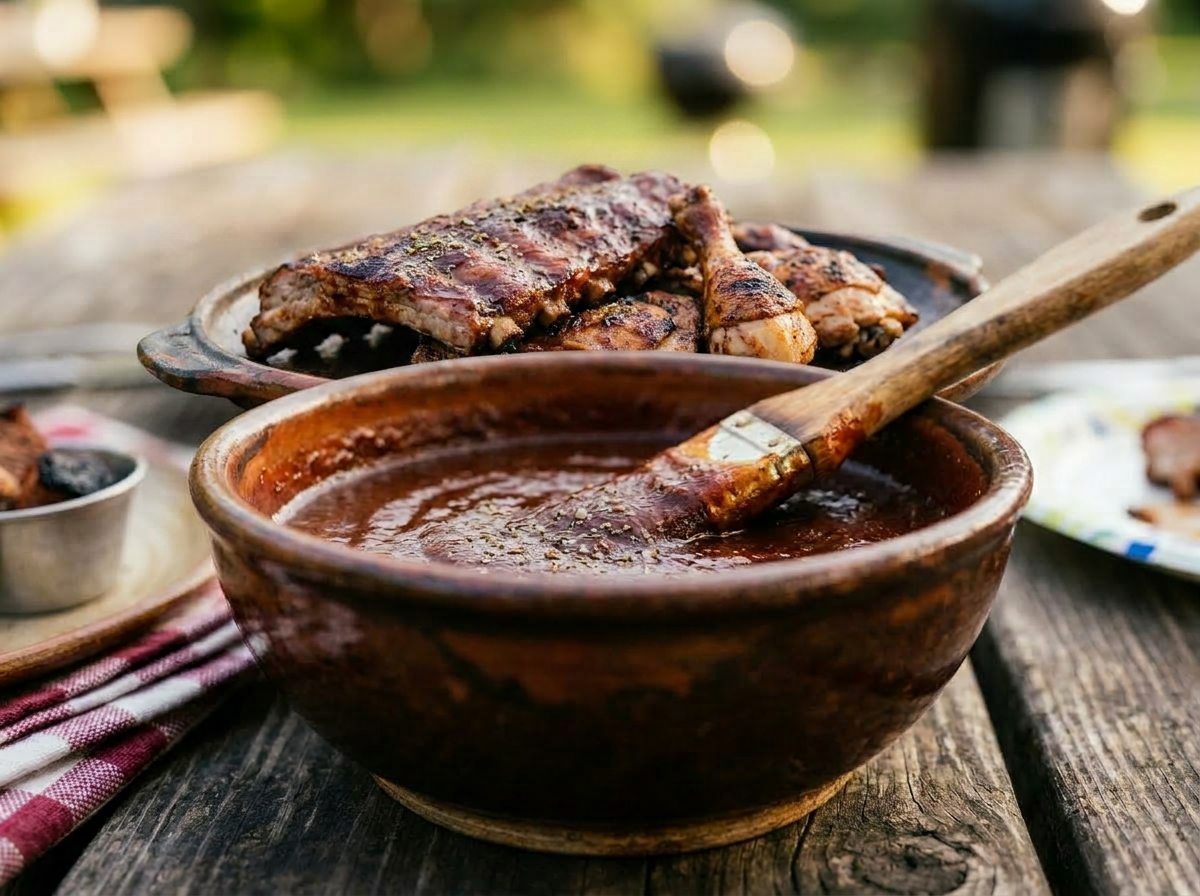
Barbecue sauce means very different things depending on where you are in the United States. In some regions, sauce is thick and sweet. In others, it is sharp with vinegar or built around mustard. And in places like Texas and Memphis, the meat itself — seasoned simply and cooked low and slow — often takes center stage over sauce entirely.
Still, when most people picture “classic barbecue sauce,” they are usually thinking of Kansas City-style sauce: thick, smoky, glossy, sweet, and tomato-based. It is the flavor profile that dominates grocery store shelves and backyard cookouts alike.
This guide provides a quick overview of the four major American barbecue styles before diving into the ingredients, techniques, and recipe behind a classic homemade Kansas City-style barbecue sauce.
The 4 Main American Barbecue Styles
Kansas City Style
Kansas City barbecue is known for its wide variety of smoked meats and its signature thick, tomato-based sauce. The flavor is balanced between sweet, smoky, tangy, and savory, making it one of the most approachable and recognizable barbecue styles in America. This is the style most people associate with bottled barbecue sauce.
Texas Style
Texas barbecue focuses heavily on beef — especially brisket — and often emphasizes smoke, salt, pepper, and slow cooking more than sauce. While sauces do exist in Texas barbecue traditions, they are usually thinner and less sweet than Kansas City-style versions and are often served sparingly.
Carolina Style
Carolina barbecue is best known for pulled pork and vinegar-forward flavors. Eastern Carolina barbecue features a peppery vinegar sauce, while South Carolina is famous for its mustard-based “Carolina Gold” sauce. The overall flavor profile tends to be brighter and tangier than the sweeter Midwestern styles.
Memphis Style
Memphis barbecue is closely associated with pork ribs that are either “wet” or “dry.” Dry ribs are coated with spice rubs instead of sauce, highlighting seasoning and smoke rather than sweetness. Even when sauce is served, it is generally thinner and more restrained than Kansas City-style barbecue sauce.
Why Kansas City-Style Sauce Became the Classic
Kansas City-style barbecue sauce became commercially popular because it strikes an easy balance between sweetness, acidity, smoke, and spice. It works well with nearly every type of grilled or smoked meat, from ribs and chicken to burgers and pulled pork.
Its thick consistency also makes it practical for home cooking. The sauce clings beautifully to food, caramelizes well on the grill, and doubles as both a glaze and a dipping sauce. Compared to more regionally specific vinegar or mustard sauces, Kansas City-style sauce has a broader appeal that helped it become the default “barbecue sauce” flavor for many Americans.
Making it at home is also surprisingly simple. Most versions rely on pantry staples and can be adjusted easily depending on whether you prefer a sweeter, smokier, tangier, or spicier sauce.
Understanding the Key Ingredients
A great Kansas City-style barbecue sauce is built from layers of flavor rather than any single ingredient. Each component contributes something important to the final balance.
Ketchup: The Foundation
Ketchup forms the base of most classic barbecue sauces. It provides tomato flavor, sweetness, acidity, and body all at once, creating a smooth starting point for the rest of the ingredients.
Using ketchup also gives the sauce its familiar texture — thick enough to coat ribs and burgers without becoming overly heavy. Since ketchup already contains vinegar and sugar, it helps unify the sauce quickly and consistently.
Brown Sugar: Sweetness and Caramelization
Brown sugar gives barbecue sauce its signature sweetness while also helping it caramelize during cooking. The molasses naturally present in brown sugar contributes a subtle depth that plain white sugar cannot provide.
As the sauce cooks, the sugar softens the sharper edges of vinegar and spice, creating the rounded flavor associated with traditional bottled barbecue sauces.
Molasses: Depth and Richness
Molasses is what gives many barbecue sauces their darker, more developed flavor. It adds richness, slight bitterness, and complexity that keep the sauce from tasting one-dimensional.
Even a small amount can dramatically deepen the overall flavor profile and reinforce the classic barbecue character people expect from Kansas City-style sauce.
Vinegar: Balance and Brightness
Without acidity, barbecue sauce can quickly become overly sweet and heavy. Vinegar cuts through the richness and keeps the sauce tasting lively rather than sticky or flat.
Apple cider vinegar is especially common because it adds brightness with a slightly fruity edge that pairs naturally with smoked meats.
Worcestershire Sauce: Savory Complexity
Worcestershire sauce adds subtle umami depth and savory notes that make homemade barbecue sauce taste more complete and layered.
Because it contains ingredients like anchovy, tamarind, and vinegar, it contributes saltiness, tanginess, and complexity all at once without overpowering the sauce.
Smoked Paprika: Smoke Without a Smoker
Even if you are not cooking over wood smoke for hours, smoked paprika helps introduce that familiar smoky flavor associated with barbecue.
It also contributes warmth and color while blending seamlessly into the sauce. Combined with molasses and brown sugar, it helps create the deep, rich flavor profile that defines Kansas City-style barbecue sauce.
Garlic, Onion, and Spice
Garlic powder, onion powder, black pepper, and chili powder round out the sauce with savory warmth and mild heat.
These ingredients are not meant to dominate the flavor. Instead, they create background complexity that balances the sweetness and acidity. A good barbecue sauce should taste layered and full rather than simply sugary.
Recipe: Classic Barbecue Sauce
Makes about 3 cups
Ingredients
- 2 cups ketchup
- 1/2 cup dark brown sugar
- 1/4 cup molasses
- 1/3 cup apple cider vinegar
- 2 tablespoons Worcestershire sauce
- 1 tablespoon yellow mustard
- 2 teaspoons smoked paprika
- 1 teaspoon garlic powder
- 1 teaspoon onion powder
- 1 teaspoon chili powder
- 1/2 teaspoon freshly ground black pepper
- 1/2 teaspoon kosher salt
- 1–2 teaspoons hot sauce, optional
Instructions
- Add all ingredients to a medium saucepan and whisk thoroughly until smooth and evenly combined. At this stage, the sauce may taste sharp or overly sweet in spots, but the flavors will mellow and blend as it cooks.
- Place the saucepan over medium-low heat and bring the sauce to a gentle simmer. Avoid boiling aggressively, which can scorch the sugars and thicken the sauce too quickly.
- Cook for 20 to 25 minutes, stirring occasionally, until the sauce darkens slightly and develops a richer aroma. The finished consistency should be thick enough to coat the back of a spoon while still remaining pourable.
- Allow the sauce to cool before transferring it to jars or airtight containers. Refrigerated, it will keep well for up to two weeks.The flavor often improves after a day in the refrigerator as the ingredients continue to meld together.
How to Use Barbecue Sauce
One of the advantages of homemade barbecue sauce is the ability to customize it. For a tangier sauce, add another splash of vinegar. For a sweeter finish, stir in additional brown sugar or molasses. If you prefer more heat, increase the hot sauce or add cayenne pepper. If the sauce thickens too much as it cools, whisk in a tablespoon or two of water until it reaches your preferred consistency.
This sauce is incredibly versatile and works across a wide range of grilled and smoked foods. Brush it onto ribs during the final stage of cooking for a glossy glaze, spoon it over pulled pork sandwiches, or use it as a dipping sauce for grilled chicken and fries.
It also works well stirred into baked beans, spread onto burgers, or used as a quick marinade for chicken thighs before grilling.
Because the sauce contains sugar, it is best applied toward the end of cooking rather than early on. This prevents the sugars from burning before the meat is fully cooked.
Barbecue traditions vary dramatically across the United States, and each region approaches smoke, seasoning, and sauce differently. But Kansas City-style sauce remains the version most people think of first because of its broad appeal and balanced flavor.
Homemade barbecue sauce also offers something store-bought versions often cannot: freshness and flexibility. Once you understand the purpose behind each ingredient, it becomes easy to adjust the sauce to suit your own taste — sweeter, smokier, tangier, or spicier — while still keeping the classic Kansas City barbecue character intact.



Leave a Reply