
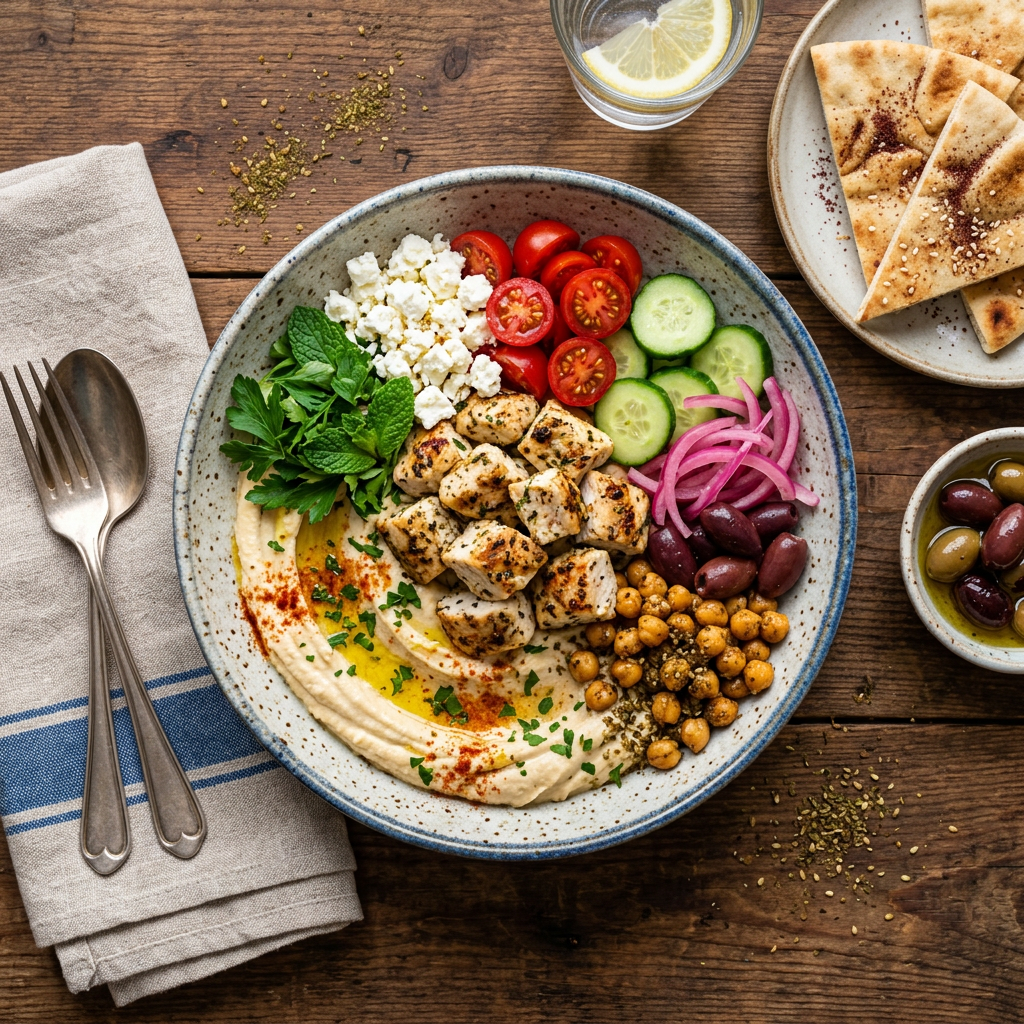
Hummus bowls are the kind of meal you can build from almost anything you have on hand; equal parts satisfying, flexible, and visually inviting. At their best, they balance creamy, crunchy, fresh, and savory elements in every bite, anchored by a generous layer of smooth, flavorful hummus.
The key is starting with a hummus that’s truly worth building on. Once you have that, assembling a hummus bowl becomes less about following a recipe and more about mixing and matching ingredients in a way that suits your mood, your pantry, or the season.
The Foundation: A Simple, Smooth Hummus Recipe
A great hummus bowl begins with hummus that’s light, creamy, and scoopable, not dense or pasty. The difference comes down to one simple technique: adding ice water while blending.
As the food processor runs, drizzling in ice water helps emulsify the tahini and olive oil with the chickpeas, transforming the mixture into something noticeably smoother and fluffier.
Basic Hummus Recipe
Makes about 2 cups (serves 4–6 as a base for bowls)
Ingredients
- 1 (15-ounce) can chickpeas, drained and rinsed
- ¼ cup tahini
- 2–3 tablespoons fresh lemon juice
- 2 tablespoons olive oil, plus more for serving
- ½ teaspoon salt, plus more to taste
- 3–6 tablespoons ice water
Instructions
- Add the chickpeas, tahini, lemon juice, olive oil, and salt to a food processor.
- Blend until thick and mostly smooth, stopping to scrape down the sides as needed.
- With the processor running, slowly drizzle in the ice water, one tablespoon at a time.
- Continue blending until the hummus becomes smooth, light, and fluffy.
- Taste and adjust with more salt or lemon juice as needed.
- Spoon into a bowl and use the back of a spoon to create swoops. Drizzle lightly with olive oil before serving.
How to Assemble a Hummus Bowl
Once your hummus is ready, building a bowl is simple—and highly adaptable.
- Start with a Generous Base: Spread a thick layer of hummus across the bottom of a shallow bowl. Use the back of a spoon to create ridges and swirls; these catch olive oil and toppings, adding both flavor and texture.
- Layer with Intention: Think about contrast. Pair warm ingredients with cool ones, soft textures with crisp ones, and bright flavors with rich ones.
- Finish Thoughtfully: A final drizzle of olive oil, a sprinkle of herbs, or a handful of something crunchy brings everything together.
The Hummus Bowl Formula
Use this as a guide to build your own combinations.
Proteins
A protein makes the bowl more substantial and turns it into a complete meal. You can go warm or room temperature here—either works well against the creamy hummus. Choose something simply seasoned or spiced so it complements rather than overwhelms the base.
- Grilled chicken
- Spiced ground lamb or beef
- Grilled shrimp or salmon
- Falafel
- Hard-boiled or jammy eggs
- Grilled tofu or tempeh
Vegetables
Aim for a mix of textures and colors. Combining fresh and roasted vegetables adds contrast and keeps the bowl from feeling one-note. Crisp vegetables bring brightness, while roasted ones add depth and warmth.
- Cucumbers
- Cherry tomatoes
- Shredded carrots
- Radishes
- Cauliflower (Raw or cooked)
- Roasted eggplant
- Grilled zucchini
- Roasted squash (Butternut, Acorn)
- Chopped kale, spinach, or other greens
- Pickled red onions
- Olives
- Pepperoncini
Grains or Base Add-Ins
Grains aren’t required, but they can make the bowl heartier and more filling. They also absorb flavors from the hummus and toppings, tying everything together. Keep portions moderate so the hummus still feels like the foundation.
- Rice
- Quinoa
- Bulgur
- Farro
- Warm pita or flatbread on the side
Cheese (Optional)
A small amount of cheese adds richness and a salty contrast to the hummus. Crumbly or creamy cheeses work especially well, and a little goes a long way.
- Feta
- Goat cheese
- Labneh
Crunch Elements
Texture is what makes a hummus bowl feel complete. Adding something crunchy creates contrast with the smooth hummus and soft toppings, making each bite more interesting.
- Toasted pine nuts
- Sliced almonds
- Sesame seeds
- Crispy chickpeas
Fresh Herbs & Bright Finishes
Fresh herbs and citrus bring lift and balance to the bowl. They cut through richness and make the overall dish feel lighter and more vibrant.
- Parsley
- Mint
- Dill
- Lemon zest or an extra squeeze of lemon juice
Sauces & Drizzles
A finishing drizzle adds moisture and ties the components together. You don’t need much—just enough to enhance flavor and add a final layer.
- Olive oil
- Tahini sauce
- Yogurt sauce
- Harissa or chili oil
Hummus Bowl Combinations to Try
If you’re looking for a place to start, these combinations come together easily and highlight different flavor profiles.
- Mediterranean Chicken Hummus Bowl
Hummus, grilled chicken, cucumber, cherry tomatoes, red onion, feta, parsley, olive oil - Roasted Vegetable Hummus Bowl
Hummus, roasted cauliflower, carrots, zucchini, quinoa, tahini drizzle - Spiced Lamb Hummus Bowl
Hummus, warm spiced ground lamb, toasted pine nuts, parsley, yogurt sauce - Falafel Hummus Bowl
Hummus, falafel, cucumber, tomato, pickled red onions, tahini sauce - Simple Garden Hummus Bowl
Hummus, a mix of fresh vegetables, herbs, seeds, and a generous drizzle of olive oil
Tips for the Best Hummus Bowls
- Serve hummus slightly warm or at room temperature for the best texture.
- Season each component individually so the entire bowl tastes balanced.
- Avoid overcrowding. Leave space so each ingredient stands out.
- Use a wide, shallow bowl for easier assembly and eating.
A good hummus bowl doesn’t require a strict recipe—just a strong foundation and a sense of balance. Once you have a smooth, flavorful hummus and a mix of complementary toppings, the possibilities are nearly endless. It’s the kind of meal you can return to again and again, adjusting with what’s in season or already in your kitchen.



Leave a Reply