
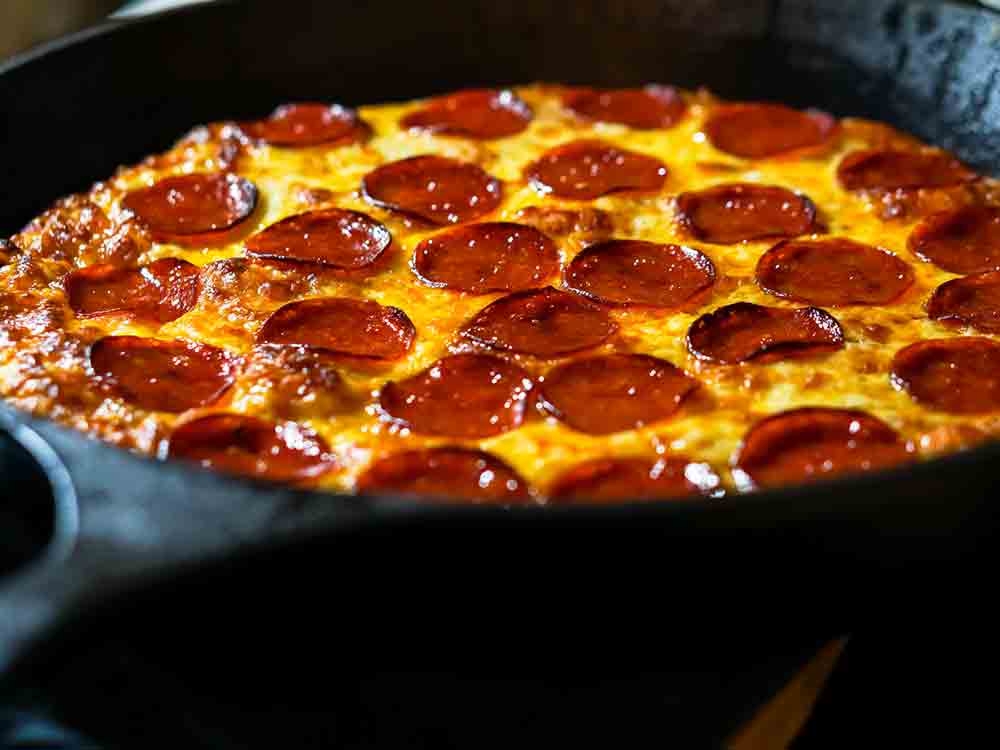
Cast iron pizza sits at the intersection of several beloved pizza styles, all of which rely on the same core idea: sustained, even heat and direct contact between dough and pan. Long before home cooks were chasing blistered Neapolitan crusts, pan pizzas were delivering deeply golden bottoms, soft interiors, and generous toppings baked right into the dough. That’s exactly what cast iron excels at.
Well-seasoned cast iron retains heat far better than standard sheet pans, allowing the dough to fry slightly in oil as it bakes, creating a crisp, almost caramelized crust that’s difficult to achieve any other way at home. This method echoes classic pan-style pizzas popularized by pizza chains decades ago, as well as Detroit-style pizza, which relies on a heavy metal pan and oil to create its signature crispy edges. Even Chicago deep-dish pizza shares this DNA, though it uses a richer dough and a layered topping approach that sets it apart. Cast iron pizza doesn’t aim to replicate any one style exactly; instead, it borrows the best elements from each to create a deeply satisfying, highly adaptable home version.
For home cooks without a pizza stone or steel, cast iron offers a forgiving, repeatable method that works in a standard oven and produces consistently impressive results.
Dough, Thickness, and What Works Best in a Skillet
Cast iron pizza favors doughs that lean slightly thicker than traditional thin-crust styles. A classic pizza dough with moderate hydration works beautifully, especially when allowed enough time to relax and stretch easily into the pan. Same-day doughs are perfectly acceptable here, but a cold-fermented dough will reward you with better flavor and texture if time allows. For a deeper dive into dough basics, including hydration, fermentation, and flour choices, see our Pizza Dough 101 story, which breaks down how small adjustments can dramatically change the final crust.
Because the dough is pressed directly into the skillet rather than stretched thin and launched onto a hot surface, this method is especially friendly to newer pizza makers. The pan supports the dough, encourages even baking, and helps prevent tearing. The amount of dough you use will determine the final thickness: less dough yields a thinner, crispier base, while a slightly larger portion creates a softer, more bread-like interior reminiscent of classic pan pizza.
Preparing the Pan and Building the Pizza
A well-oiled skillet is the foundation of great cast iron pizza. The oil serves two purposes: it prevents sticking and actively contributes to browning and flavor. As the pizza bakes, the dough essentially shallow-fries where it meets the pan, developing a golden crust with crisp edges and a tender crumb.
Once the dough is pressed into the skillet, it’s worth giving it a short rest to relax before topping. This helps prevent shrinkage and promotes an even thickness throughout. Sauce should be applied with restraint; pan pizzas can handle more than thin crusts, but too much moisture will weigh the dough down. Cheese acts as both a topping and a protective layer, especially when spread close to the edges, where it can melt against the pan and form irresistibly crisp, browned bits.
Toppings should be chosen with balance in mind. Cast iron pizzas are generous by nature, but restraint still matters. Vegetables with high moisture content benefit from a quick sauté before baking, and meats should be fully cooked or at least rendered beforehand to avoid excess grease.
Baking for a Crisp Crust and Tender Interior
Cast iron pizza thrives in a hot oven, typically baked on a lower rack to encourage bottom browning while still allowing the top to cook evenly. As the pizza bakes, the pan stores and redistributes heat, mimicking the effect of a professional deck oven. The result is a crust that sets quickly, rises evenly, and browns deeply without scorching.
Visual cues are more important than strict timing. Look for bubbling cheese, lightly blistered edges, and a crust that pulls slightly away from the sides of the pan. If the top finishes before the bottom is fully browned, a brief stint on the stovetop can deepen the crust color without overbaking the toppings.
Once baked, the pizza should rest briefly before slicing. This allows the cheese to set and makes removing the pizza from the pan easier and cleaner.
Serving, Variations, and Why This Method Endures
Cast iron pizza is inherently casual and shareable. It can be sliced directly in the pan for a relaxed meal or transferred to a board for a more polished presentation. Its sturdy structure makes it ideal for creative toppings, seasonal vegetables, and bold flavor combinations without sacrificing texture.
This method endures because it’s flexible, reliable, and deeply satisfying. Whether you’re channeling the nostalgic comfort of classic pan pizza, borrowing the crisp-edged appeal of Detroit-style pies, or simply looking for a foolproof way to make excellent pizza at home, cast iron delivers. It invites experimentation, rewards intuition, and proves that great pizza doesn’t require specialized equipment, just good dough, a hot oven, and a well-loved skillet.
Cast Iron Pizza (Basic Recipe)
Makes 2–3 servings
Ingredients
- 12–14 oz pizza dough, at room temperature
- 2 tablespoons olive oil, divided
- ½ to ¾ cup pizza sauce
- 1½ to 2 cups shredded low-moisture mozzarella
- Desired toppings (pre-cooked as needed)
Instructions
- Preheat the oven to 450°F with a rack positioned in the lower third.
- Add 1½ tablespoons olive oil to a 10–12 inch cast iron skillet, coating the bottom and sides.
- Press the dough evenly into the pan, forming a slight rim at the edges. Let rest 10–15 minutes if the dough resists stretching.
- Spread sauce evenly over the dough, followed by cheese and toppings.
- Bake for 18–25 minutes, until the cheese is bubbling and the crust is golden.
- Remove from oven and allow pizza to rest briefly before removing from pan to slice and serve.
RELATED: Pizza Topping Inspiration

Pepperoni & Hot Honey Spicy, salty pepperoni finished with a sweet drizzle of hot honey. 
Sausage & Broccoli Savory sausage paired with tender roasted broccoli. 
Zucchini Ricotta: Light, fresh zucchini with creamy ricotta and melted cheese. 
Arugula & Prosciutto: Salty prosciutto topped with fresh arugula after baking. 
Philly Cheesesteak: Thin-sliced beef, sautéed peppers and onions, and plenty of melted cheese. 
Spinach & Artichoke: Creamy, savory flavors inspired by the classic dip. 
Mediterranean: Feta, olives, onion, and spinach for a bright, briny bite. 
Buffalo Chicken: Bold, tangy buffalo chicken with melty cheese. 
French Onion: Caramelized onions and Gruyère inspired by French onion soup.



Leave a Reply