
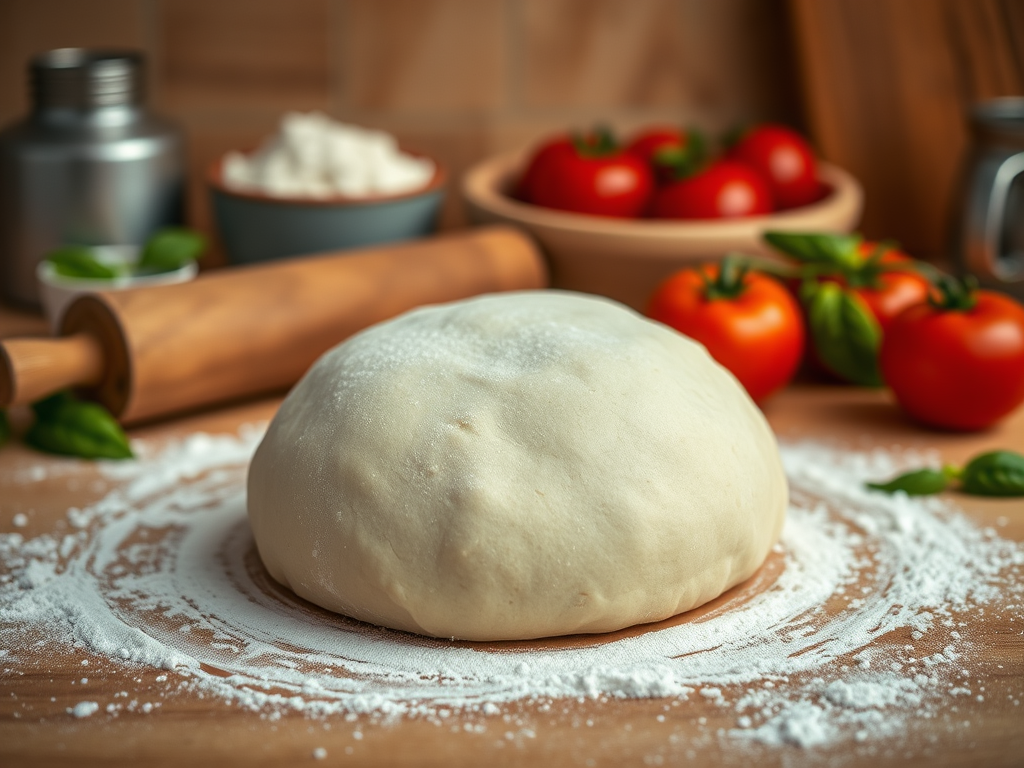
Homemade pizza dough has a reputation for being difficult or time-consuming, but in reality, it’s one of the most forgiving doughs you can make. With just a few pantry ingredients and a little patience, you can create a crust that’s crisp on the outside, chewy on the inside, and far more flavorful than most store-bought options.
This guide walks through the fundamentals of pizza dough—what each ingredient does, how the dough should look and feel at each stage, and how to adapt the process for a home kitchen. Once you understand the basics, pizza night becomes less about following a strict formula and more about developing a feel for the dough.
The Core Ingredients
Pizza dough is built on five simple ingredients, each playing a specific role. Flour provides structure; all-purpose flour works well for most home ovens, while bread flour adds extra chew thanks to its higher protein content. Yeast is responsible for fermentation and rise, and both active dry and instant yeast work equally well when used properly.
Water hydrates the flour and activates the yeast. Slightly warm water encourages fermentation, but overly hot water can damage the yeast. Salt is essential for flavor and also strengthens the dough’s structure, while olive oil adds tenderness and helps the dough stretch more easily. A small amount of sugar is optional—it can help with browning and give yeast a quick start, but it isn’t strictly necessary.
Understanding Dough Texture & Hydration
Hydration refers to how much water is in the dough relative to the flour. Higher-hydration doughs tend to be airier and more elastic but can feel sticky and harder to handle. Lower-hydration doughs are firmer and easier to shape, making them a good choice for beginners.
For most home kitchens, a moderately soft dough that feels slightly tacky but not sticky is ideal. If the dough clings aggressively to your hands or the counter, it likely needs more flour. If it feels stiff and resists stretching, a bit more water can help.
The Process
Pizza dough can be mixed by hand or with a stand mixer. The goal in either case is to combine the ingredients until they form a cohesive dough, then knead until smooth and elastic. Kneading develops gluten, which gives the dough strength and stretch.
Well-kneaded dough should feel supple and bounce back slightly when pressed. If you stretch a small piece gently, it should thin without tearing easily. Over-kneading is rare in home kitchens, but if the dough becomes very tight and difficult to stretch, letting it rest will help relax the gluten.
After kneading, the dough needs time to rise. During this stage, yeast produces gas and flavor, causing the dough to expand and develop complexity. A warm, draft-free spot helps the dough rise efficiently.
Longer fermentation—especially in the refrigerator—leads to better flavor and texture. Even a basic dough benefits from an overnight rest, though a same-day rise works well when time is limited. Properly risen dough should roughly double in size and feel light and airy.
Shaping & Baking
Stretching pizza dough by hand preserves air bubbles and creates a more tender crust than rolling. Start by pressing the dough into a flat round, then gently stretch it outward from the center, leaving a slightly thicker edge for the crust.
If the dough springs back or refuses to stretch, it needs more rest. Letting it relax for 10–15 minutes before continuing usually solves the problem. Avoid forcing the dough, which can cause tearing or dense spots.
Home ovens can’t reach the temperatures of commercial pizza ovens, but good results are still possible. Preheating your oven thoroughly—ideally with a pizza stone or steel inside—helps create a crisp crust. High heat and short bake times are key.
Place the pizza on the lower or middle rack, depending on your oven, and bake until the crust is golden and the cheese is bubbling. Par-baking the crust briefly before adding toppings can help prevent sogginess, especially with heavier toppings.
Storage & Make-Ahead Tips
Pizza dough is an excellent make-ahead recipe. After the first rise, it can be refrigerated for up to three days, where it will continue to develop flavor. It can also be frozen for several months; thaw overnight in the refrigerator before using.
Cold dough is easier to handle but needs time to come to room temperature before shaping. Let it sit out for 30–60 minutes until relaxed and pliable.
Basic Pizza Dough Recipe
Makes 2 medium pizzas (10–12 inches each)
Ingredients
- 3 cups all-purpose flour (plus more for dusting)
- 1 teaspoon salt
- 1 teaspoon sugar (optional)
- 2¼ teaspoons active dry or instant yeast (1 packet)
- 1 cup warm water (about 110°F)
- 2 tablespoons olive oil
Instructions
- In a large bowl, combine the flour, salt, sugar (if using), and yeast.
- Add the warm water and olive oil, stirring until a shaggy dough forms.
- Turn the dough out onto a lightly floured surface and knead for 8–10 minutes, until smooth and elastic. Alternatively, knead in a stand mixer with a dough hook for 5–6 minutes.
- Shape the dough into a ball and place it in a lightly oiled bowl. Cover and let rise in a warm spot until doubled in size, about 1–1½ hours.
- Punch down the dough and divide it into two equal portions. Shape each into a ball and let rest for 10–15 minutes before shaping into pizzas.
- Stretch, top, and bake as desired in a fully preheated oven at 475–500°F until the crust is golden and cooked through, about 10–14 minutes.
Assembling the Perfect Pizza
One of the great joys of homemade pizza is that it doesn’t require strict measurements or rigid rules. Once you have a good dough and a hot oven, pizza becomes an intuitive, mix-and-match meal where personal taste matters more than precision. A handful of this, a scatter of that, and a little restraint go a long way. This gallery highlights a variety of topping combinations to spark ideas, not prescribe exact formulas. Think of them as starting points you can adapt based on what’s in your fridge, what’s in season, or what you’re craving.
That said, a few universal principles will help ensure your pizza turns out balanced, flavorful, and well-cooked every time.
Key Tips for Topping Any Pizza
- Don’t overload the pizza. Too many toppings can weigh down the dough, make the center soggy, and prevent proper browning. A lighter hand allows each ingredient to shine and helps the crust bake evenly.
- Pre-cook moisture-heavy vegetables. Ingredients like mushrooms, onions, bell peppers, zucchini, and spinach release a lot of water as they cook. A quick sauté or roast before topping concentrates their flavor and keeps excess moisture off the dough.
- Use sauce sparingly. More sauce doesn’t equal more flavor. A thin, even layer allows the dough to crisp and prevents the pizza from becoming soupy in the center.
- Cut toppings evenly and thoughtfully. Thin slices cook more quickly and distribute more evenly across the pizza, ensuring every bite gets a balanced mix of flavors.
- Layer strategically. Cheese can act as a barrier between sauce and wetter toppings, while delicate ingredients like fresh herbs or arugula are best added after baking.
- Balance flavors and textures. Aim for contrast: something salty with something fresh, something rich with something bright or acidic. This keeps the pizza from tasting flat or one-note.
- Finish with intention. A drizzle of olive oil, a sprinkle of flaky salt, chili flakes, or a handful of fresh herbs after baking can elevate even the simplest pizza.
Pizza Topping Inspiration

Pepperoni & Hot Honey Spicy, salty pepperoni finished with a sweet drizzle of hot honey. 
Sausage & Broccoli Savory sausage paired with tender roasted broccoli. 
Zucchini Ricotta: Light, fresh zucchini with creamy ricotta and melted cheese. 
Arugula & Prosciutto: Salty prosciutto topped with fresh arugula after baking. 
Philly Cheesesteak: Thin-sliced beef, sautéed peppers and onions, and plenty of melted cheese. 
Spinach & Artichoke: Creamy, savory flavors inspired by the classic dip. 
Mediterranean: Feta, olives, onion, and spinach for a bright, briny bite. 
Buffalo Chicken: Bold, tangy buffalo chicken with melty cheese. 
French Onion: Caramelized onions and Gruyère inspired by French onion soup.
Use these tips as a framework, then trust your instincts. Pizza is meant to be flexible, forgiving, and fun — and once you stop worrying about exact measurements, it becomes one of the easiest and most satisfying meals to make at home.



Leave a Reply