
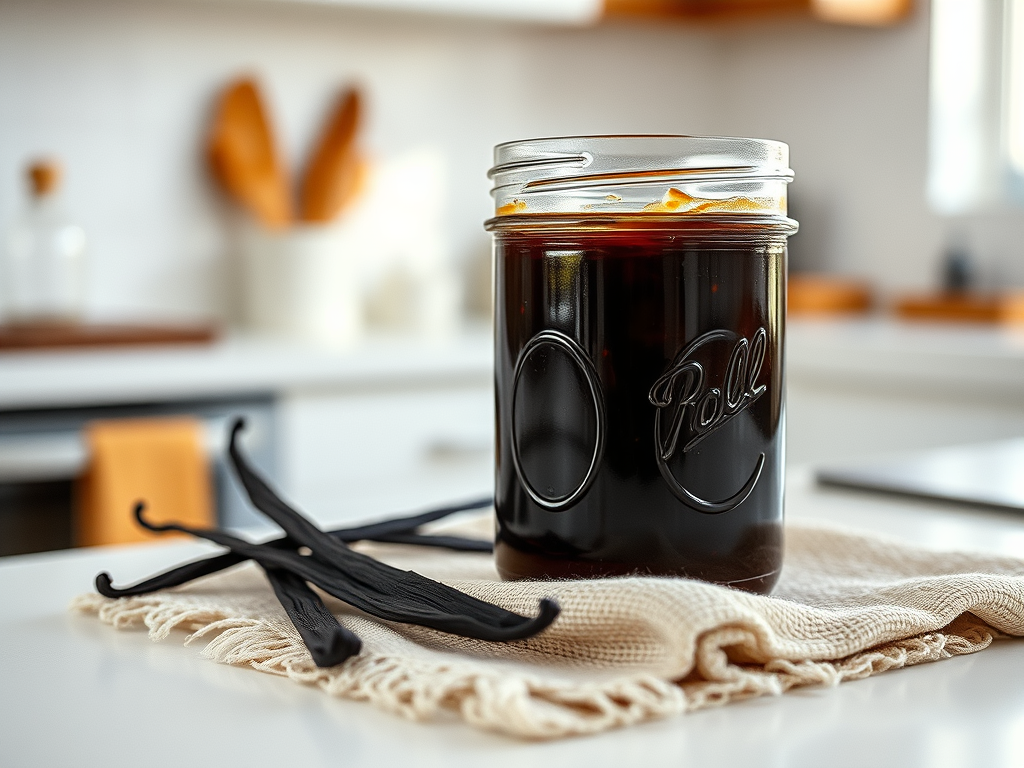
Vanilla bean paste is a baker’s secret: all the visual charm of scraped vanilla seeds and the concentrated flavor of whole beans, in a spoonable jar that’s easy to measure and easy to use. This homemade version uses a short ingredient list and a simple blender method to produce a glossy, richly speckled paste that’s perfect for cookies, custards, buttercreams, and holiday cakes.
Because this recipe uses a small amount of corn syrup for body and vodka to help extract and preserve flavor, it has the thick, scoopable texture bakers expect. If it’s too thick for your blender, a splash of water loosens the mixture just enough for processing.
Why this formula works
- Whole vanilla beans provide a concentrated, authentic vanilla flavor.
- Sugar provides sweetness and body while helping stabilize the paste.
- Corn syrup creates the glossy, scoopable texture without thinning the paste like simple syrup would.
- Vodka extracts and carries the vanilla oils and helps preserve the paste.
Homemade Vanilla Bean Paste Recipe
Makes about 1 cup
Ingredients
- 2 oz whole vanilla beans (by weight; roughly 6–8 beans depending on size)
- 1 cup granulated sugar
- 2 tablespoons light corn syrup
- 2 oz (¼ cup) plain vodka
- Up to 1–2 tablespoons water, if needed for blending
Instructions
- Using a sharp knife, split each vanilla bean lengthwise and scrape out the seeds. Reserve both the seeds and the scraped pods. For easier processing, cut the pods into ½–1″ pieces. Weigh the total beans first so you reach 2 oz if using variable-size beans.
- In a high-speed blender or food processor add the vanilla seeds, chopped pods, 1 cup sugar, 2 tablespoons corn syrup, and 2 oz vodka.
- Pulse to break up the pods, then blend on medium-high until the mixture looks thick, homogeneous, and glossy. If the mixture is too stiff to blend smoothly, add 1 tablespoon water and blend again; add up to 1 more tablespoon only if necessary.
- The ideal paste is thick and scoopable — similar to molasses but with visible vanilla seeds. If it seems grainy from undissolved sugar, you can warm the mixture very gently in a small saucepan over low heat for 1–2 minutes, stirring, just to dissolve any remaining sugar; do not boil. Let cool before transferring.
- Transfer to a clean jar, seal, and let the paste rest at room temperature for 24–48 hours to let flavors marry.
- Keep refrigerated or in a cool, dark cupboard. Use within 12 months. Shake or stir before each use as seeds may settle.
Usage & Conversion
- Substitution: Use vanilla bean paste anywhere you’d use extract or whole beans. A reliable working conversion is:
1 tablespoon vanilla bean paste = 1 tablespoon vanilla extract = 1 whole vanilla bean (approximately) - Because this paste is robust, start with the recipe’s indicated amount and adjust to taste.
Tips & Troubleshooting
- Weigh your beans. Vanilla bean sizes vary; weighing 2 oz ensures consistent flavor intensity.
- Blender power matters. A high-speed blender or food processor gives the smoothest result; if you have coarser pod bits after blending, a brief warming step helps.
- Don’t over-thin. Add water sparingly — too much will make the paste runny. Corn syrup is the primary thickener.
- Sweetness control. If you prefer a slightly less sweet paste, reduce the sugar by up to 2 tablespoons and test; texture will remain spoonable thanks to the corn syrup.
- Label jars. Date and note bean variety (Madagascar, Tahitian, Mexican) for reference.
Storage & Gifting
Store in a sterilized, airtight jar and keep in a cool, dark place or refrigerator. Properly stored, paste will keep up to 12 months and often deepens in flavor with time. Small jars of homemade paste make excellent gifts — pair with a cookie recipe card for a ready-to-bake present.



Leave a Reply