
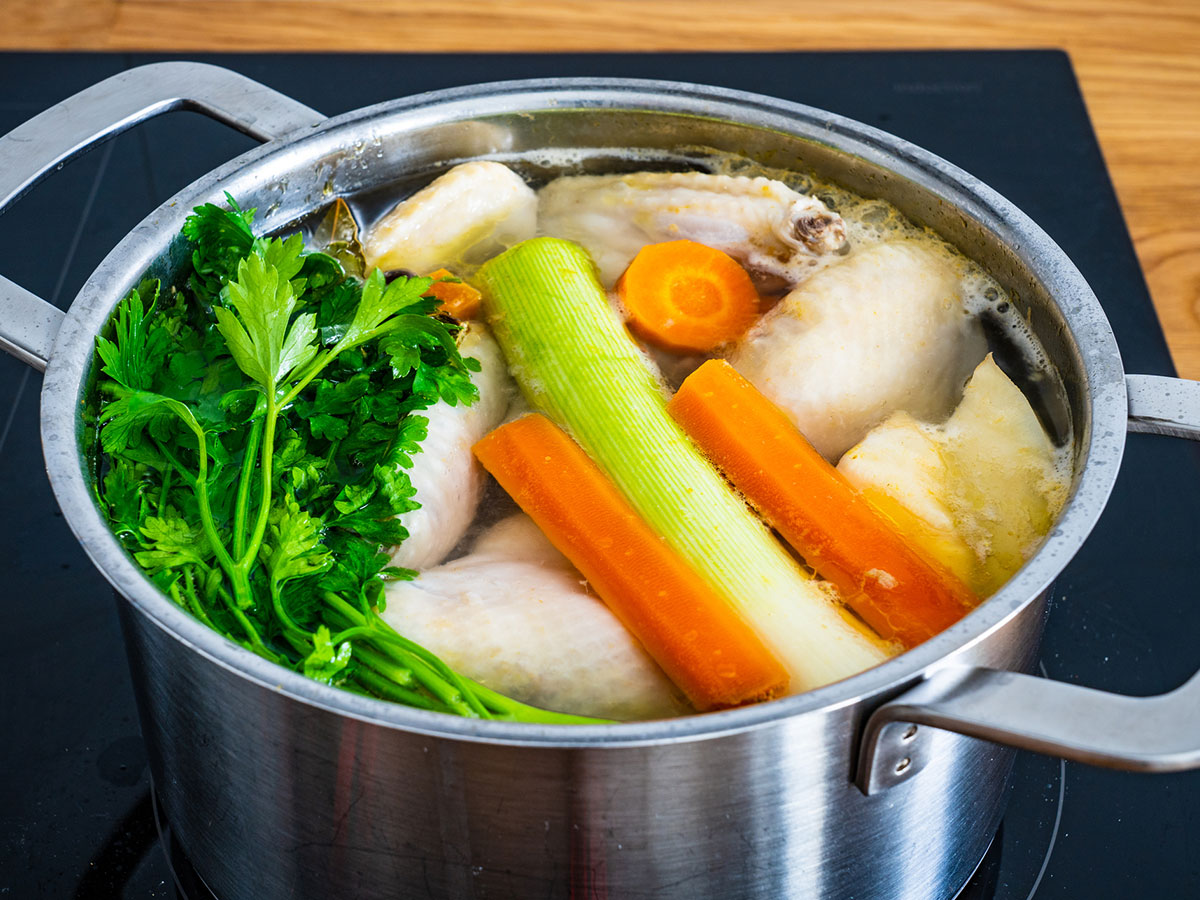
A good soup, sauce, or risotto always starts the same way—with a great stock or broth. These humble kitchen basics are the unsung heroes of cooking, transforming simple ingredients into something layered and deeply satisfying. Making your own at home is surprisingly easy, economical, and a smart way to reduce food waste by using bones and vegetable trimmings that might otherwise be discarded. Once you’ve made your own stock or broth, you’ll never go back to the boxed kind.
Stock vs. Broth: What’s the Difference?
At first glance, stock and broth might seem interchangeable, but they have key differences that affect flavor, texture, and use.
Stock is made primarily from bones—often roasted first for an even richer taste—along with a mix of aromatics like onion, carrot, and celery. The long, gentle simmer (typically 4–6 hours) extracts collagen and minerals from the bones, creating a silky texture and a deep, savory backbone ideal for soups, stews, and sauces.
Broth, on the other hand, is made with more meat than bone and simmered for a shorter time, usually 1–2 hours. It’s lighter and more delicately flavored—perfect for sipping or when you want the other ingredients in a dish to shine.
Think of stock as your building block and broth as your finishing touch. Stock forms the base for recipes; broth can stand on its own.
The Basic Building Blocks
1. Bones or Base Ingredients
- For Stock: Chicken carcasses, beef marrow bones, pork necks, or seafood shells. Roasting them first in a 400°F oven until golden adds incredible depth.
- For Broth: Meaty pieces like chicken wings, thighs, or drumsticks; beef shanks; or vegetables for a vegetarian version.
2. Aromatics
The classic trio—onion, carrot, and celery—is your foundation. Add garlic, leeks, bay leaf, parsley stems, or peppercorns for extra dimension. Avoid salt at this stage so you can season more precisely later.
3. Water & Time
Use cold water and add enough to just cover the ingredients by an inch or two. Bring to a gentle simmer, never a full boil, to keep your liquid clear and clean-tasting.
Types of Stock & Broth
- Chicken Stock or Broth: Mild, versatile, and works in almost any recipe.
- Beef Stock or Broth: Deep, hearty, and ideal for stews or gravies.
- Vegetable Broth: Light and aromatic, perfect for vegetarian dishes.
- Seafood Stock: Fragrant and briny, used for chowders, risottos, and paella.
- Bone Broth: A longer-simmered version of stock (12–24 hours) prized for its collagen and minerals.
How to Make It: Step-by-Step
- Combine ingredients in a large stockpot or slow cooker.
- Add cold water to cover by about 2 inches.
- Bring to a gentle simmer over medium heat. Skim foam or fat that rises to the top.
- Lower heat and maintain a slow, steady simmer for the recommended time.
- Strain through a fine-mesh sieve, discarding solids.
- Cool quickly, then refrigerate or freeze for later use.
Recipes
Basic Roasted Poultry Stock
Makes about 8 cups
Ingredients
- 2–3 pounds chicken or turkey bones (wings, backs, necks, or a mix)
- 2 medium carrots, cut into chunks
- 2 celery stalks, cut into chunks
- 1 large onion, quartered (no need to peel)
- 3 garlic cloves, smashed
- 1 bay leaf
- 1 teaspoon black peppercorns
- A few sprigs of parsley or thyme
- 12 cups cold water
Instructions
- Preheat oven to 400°F. Place bones on a rimmed baking sheet and roast for 30–40 minutes, until golden brown.
- Transfer roasted bones and any pan drippings to a large stockpot. Add remaining ingredients and water.
- Bring to a gentle simmer over medium heat. Skim any foam that rises.
- Reduce heat to low and simmer uncovered for 4–6 hours, adding water as needed to keep bones submerged.
- Strain through a fine-mesh sieve, discard solids, and cool.
- Refrigerate up to 5 days or freeze up to 3 months.
Vegetable Broth
Makes about 6 cups
Ingredients
- 2 medium carrots, chopped
- 2 celery stalks, chopped
- 1 large onion, quartered
- 2 garlic cloves, smashed
- 1 teaspoon black peppercorns
- 1 bay leaf
- ½ teaspoon dried thyme or 2 fresh sprigs
- 8 cups cold water
Instructions
- Combine all ingredients in a large pot.
- Bring to a simmer, then reduce heat and cook gently for 1–1½ hours.
- Strain and cool.
- Season lightly with salt, if desired, before using.
Simple Bone Broth (Slow Cooker Method)
Makes about 10 cups
Ingredients
- 2–3 pounds beef or chicken bones (roasted preferred)
- 2 carrots, cut into chunks
- 2 celery stalks, cut into chunks
- 1 onion, quartered
- 2 tablespoons apple cider vinegar
- 12–14 cups water
- Optional: a few garlic cloves, herbs, or peppercorns
Instructions
- Place all ingredients in a slow cooker and add water to cover.
- Cook on low for 12–24 hours. The longer it simmers, the more collagen and flavor are extracted.
- Strain, discard solids, and cool.
- Once chilled, a gelatinous texture is normal—it’s a sign of rich collagen content.
- Store in the refrigerator up to 5 days or freeze up to 3 months.
Storing, Freezing & Reheating
- Refrigerate: Up to 5 days in airtight containers.
- Freeze: Up to 3 months in freezer-safe jars, silicone cubes, or quart bags (lay flat for easy stacking).
- Reheat: Gently on the stove; do not boil once defrosted, as it can dull the flavor.
Tip: Freeze broth in ice cube trays for quick additions to pan sauces or sautés.
Creative Ways to Use Stock & Broth
- Cook grains or lentils in broth instead of water for instant flavor.
- Use to deglaze pans after searing meat or vegetables.
- Simmer vegetables, chicken, or seafood for quick soups.
- Sip warm bone broth on cold mornings for a nourishing start.
Flavor Boosters & Variations
- Add a spoonful of tomato paste or a splash of soy sauce for umami depth.
- Stir in fresh herbs or lemon peel at the end for brightness.
- Save onion skins, carrot peels, and parsley stems in a freezer bag—perfect for a zero-waste vegetable broth base.
Troubleshooting & Pro Tips
- Cloudy Stock? Keep it at a gentle simmer, never a rolling boil.
- Weak Flavor? Continue simmering to reduce, or roast bones longer next time.
- Too Fatty? Chill and remove the solidified fat from the surface before reheating.
Stock & Broth Cheat Sheet
| Type | Key Ingredients | Simmer Time | Flavor | Best For |
| Chicken Stock | Roasted bones + aromatics | 4–6 hrs | Rich, balanced | Soups, sauces |
| Chicken Broth | Meaty pieces + aromatics | 1–2 hrs | Light, clean | Sipping, light soups |
| Beef Stock | Roasted marrow bones + aromatics | 6–8 hrs | Deep, hearty | Stews, gravies |
| Vegetable Broth | Mixed vegetables + herbs | 1–1.5 hrs | Light, aromatic | Vegetarian dishes |
| Bone Broth | Roasted bones + vinegar | 12–24 hrs | Collagen-rich | Drinking, wellness |



Leave a Reply