
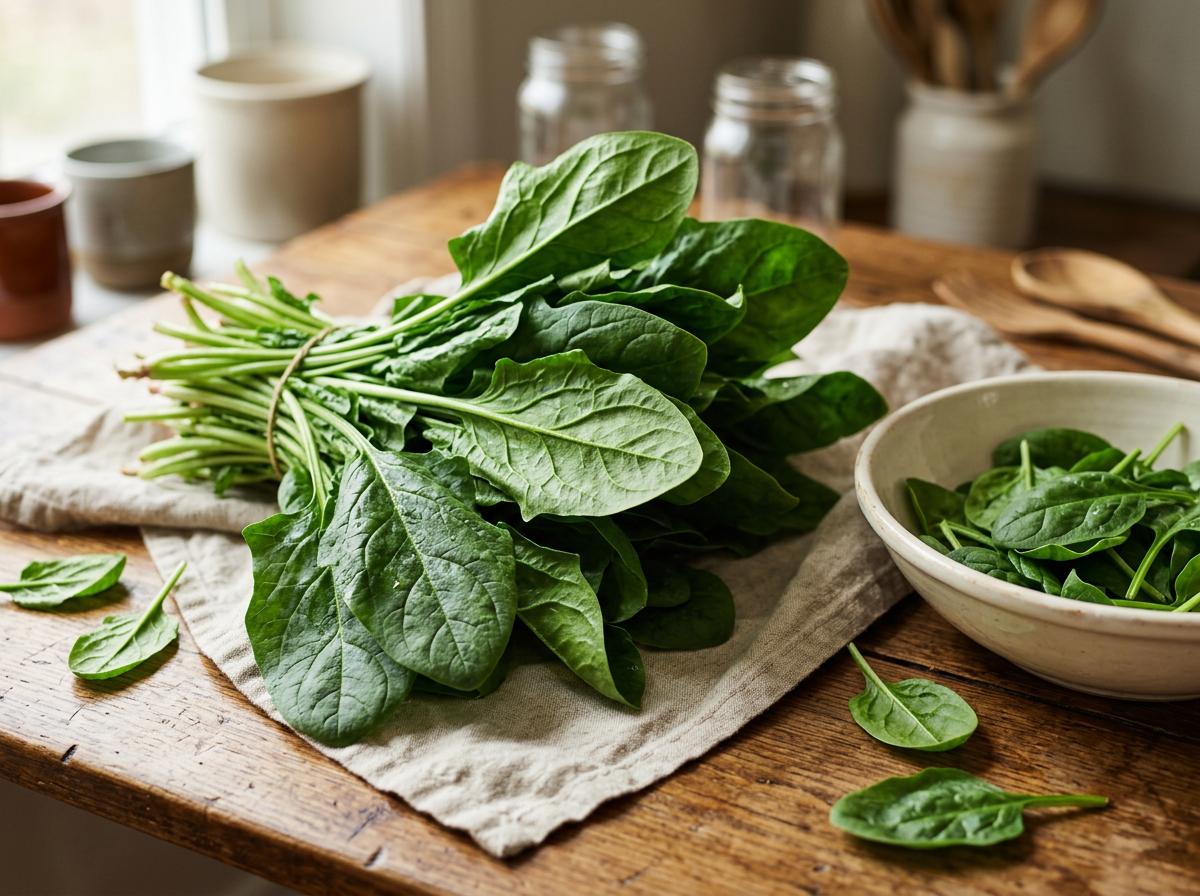
Spinach can go from a crisp salad to a silky cream sauce in a matter of minutes. Its mild, earthy flavor works with sweet roasted squash, salty feta, golden garlic, and buttery leeks, making it an especially useful green to bring home when you want several different meals from one ingredient.
Although spinach is available year-round, it thrives in cool weather, with local harvests often arriving in spring and fall. Baby spinach has small, tender leaves that are easy to use straight from the package, while mature spinach brings more texture and a fuller flavor to cooked dishes. Flat-leaf varieties are smooth; savoy spinach has crinkled leaves that need a little extra attention when washing. Each has a place in the kitchen, whether dinner calls for a handful of fresh greens or a generous panful cooked down until tender.
Buying & Storing Cheat Sheet
Fresh spinach should look lively, with green leaves and stems that feel firm rather than limp. Moisture is usually the biggest challenge once you get it home, so keep the leaves dry until you are ready to cook. Bunched spinach may carry sand in its folds and around its stems; a thorough wash just before using makes all the difference.
| DOs | DON’Ts |
| Choose crisp, deeply green leaves with fresh-looking stems. | Don’t buy spinach with slimy patches, extensive yellowing, or an unpleasant smell. |
| Look for packages with mostly dry, loosely settled leaves. | Don’t choose bags with excessive condensation or wet, matted greens. |
| Refrigerate unwashed spinach in a container or loosely closed bag with a dry paper towel. Replace the towel if damp. | Don’t pack the leaves tightly or store them wet. |
| Use spinach promptly, ideally within a few days, and follow package dates and storage directions. | Don’t assume every bunch or bag will keep for the same length of time. |
| Swish loose spinach in a large bowl of cold water, lift it out, and repeat with fresh water until no grit remains. Dry well. | Don’t pour gritty soaking water back over the leaves. |
| Follow the directions on spinach labeled prewashed or ready to eat. | Don’t assume loose or bunched spinach has already been washed. |
| Use tender baby leaves for salads and larger leaves for cooking. | Don’t mistake ordinary wilting for spoilage but discard slimy or foul-smelling greens. |
General Uses for Spinach
Spinach is an easy ingredient to work into the meals you already make. Baby leaves create a tender salad base, especially alongside crisp fruit, roasted vegetables, nuts, and a sharp vinaigrette. Dry the leaves thoroughly so the dressing clings rather than collecting in the bottom of the bowl and toss just before serving to keep the greens fresh.
For warm dishes, add spinach to soups, beans, pasta, or rice near the end of cooking. It needs only a short time to wilt, and a handful can bring color and a fresh vegetable element to an otherwise rich meal. A quick sauté with olive oil and garlic is equally useful alongside chicken, fish, or roasted potatoes.
Egg dishes are another natural home for spinach, from scrambled eggs and omelets to frittatas and baked eggs. Cook the spinach first when adding a substantial amount, letting its moisture evaporate so it does not water down the eggs. For pies, pastries, and other fillings, go a step further: cool the cooked spinach and squeeze it firmly to remove excess liquid before chopping and mixing it with the remaining ingredients.
Remember that spinach shrinks dramatically. A large mound of raw leaves becomes a modest amount once cooked, so shop by weight when following a recipe. Frozen chopped spinach is particularly convenient for fillings and casseroles because much of that preparation is already done. Thaw and squeeze it very dry, and use the amount specified in the recipe; equal weights of fresh and frozen spinach are not automatically interchangeable.
Pairs Well With
Spinach has enough flavor to hold its own while leaving room for other ingredients. Rich dairy rounds out its earthy notes, savory vegetables add depth, and a small amount of spice can make a familiar spinach dish feel more complete.
Mushrooms: Browned mushrooms and spinach make a savory combination for pasta, omelets, tart fillings, and skillet dinners. Cook mushrooms until their liquid evaporates and their edges brown before adding the greens, giving both ingredients room to develop flavor.
Cream: Cream gives spinach a smooth, mellow finish in soups, sauces, and classic creamed spinach. Let excess water cook out of the greens first so the finished sauce stays rich rather than thin.
Cheese: Feta adds a salty tang, Gruyère brings a nutty richness, and Parmesan contributes a savory finish. Ricotta is especially useful in spinach fillings, where its soft texture balances the leaves. Taste before adding salt, particularly when using feta or a generous amount of Parmesan.
Nutmeg: A small pinch of nutmeg adds gentle warmth to spinach, especially in dishes with cream, cheese, or béchamel. Start lightly; the flavor should support the greens without taking over.
Eggs: Spinach and eggs work together in everything from a quick breakfast scramble to a leisurely baked brunch. The greens bring color and an earthy counterpoint to the richness of the yolks.
Garlic and onions: Garlic adds a bold, savory note, while softened onions, scallions, shallots, and leeks bring sweetness. These aromatics form a useful foundation for spinach dishes, whether you are making a simple sauté or a creamy chicken dinner.
Spinach Recipes
Spinach and Squash Salad

Roasted delicata squash gives this salad sweet, caramelized edges without the extra work of peeling. Thin apple slices provide crunch, while pecans and sharp cheddar make the tender spinach feel substantial enough for a fall lunch or a generous dinner side. A cider vinaigrette ties the sweet and savory ingredients together with just enough tang.
Let the squash cool until barely warm before placing it over the spinach. Hot squash will wilt the leaves quickly, while slightly cooled squash keeps the salad fresh and gives you a better mix of textures. You can roast it ahead and bring it toward room temperature while preparing the other ingredients.
Makes 4-6 servings
Ingredients
For the salad:
- 1 medium delicata squash, about 1–1¼ pounds
- 1 tablespoon olive oil
- ¼ teaspoon fine salt
- ¼ teaspoon freshly ground black pepper
- 5 ounces baby spinach, washed if needed and thoroughly dried
- 1 crisp apple, cored and thinly sliced
- ⅓ cup toasted pecans, roughly chopped
- ⅓ cup shaved sharp cheddar
For the cider vinaigrette:
- 3 tablespoons extra-virgin olive oil
- 1½ tablespoons apple cider vinegar
- 1 teaspoon Dijon mustard
- 1 teaspoon maple syrup
- ¼ teaspoon fine salt, or to taste
- Freshly ground black pepper, to taste
Instructions
- Heat the oven to 425°F. Line a large, rimmed baking sheet with parchment paper.
- Scrub the squash, trim the ends, and halve lengthwise. Scoop out the seeds and cut into ½-inch-thick half-moons; leave the skin on.
- Toss with the olive oil, salt, and pepper. Spread in a single layer and roast for 25–30 minutes, turning halfway through, until tender and browned. Let cool until barely warm.
- Whisk together all the vinaigrette ingredients in a small bowl.
- Place the spinach in a large bowl and toss with about half the dressing. Arrange on a platter with the squash, apple, pecans, and cheddar. Drizzle with additional dressing to taste and serve immediately.
Sautéed Spinach with Crispy Garlic

This simple side makes the most of the contrast between soft spinach and crisp, golden garlic. Starting the sliced garlic in cool oil gives you more control as it cooks and leaves behind a fragrant oil for the greens. Remove the garlic as soon as it turns pale gold; it will deepen slightly as it cools, and dark garlic can taste bitter.
A full pound of spinach may look excessive at first, but it cooks down quickly. Add it in batches, turning the leaves as they soften to make room for more. Finish with lemon and scatter the garlic over the top at the last moment so it keeps its crunch.
Makes 4 servings
Ingredients
- 1 pound fresh spinach, washed thoroughly and dried, tough stems removed
- 3 tablespoons olive oil
- 4 garlic cloves, thinly and evenly sliced
- ¼ teaspoon red pepper flakes, optional
- ¼ teaspoon fine salt, plus more to taste
- Freshly ground black pepper, to taste
- 1–2 teaspoons fresh lemon juice
- Lemon wedges, for serving
Instructions
- Place the olive oil and garlic in a large, deep skillet over medium-low heat. Cook for 3–5 minutes, stirring frequently, until the garlic is lightly golden. Transfer the garlic to a paper-towel-lined plate with a slotted spoon, leaving the oil in the skillet.
- Increase the heat to medium. Add the pepper flakes, if using, followed immediately by a large handful of spinach. Turn with tongs, adding more spinach as the leaves wilt.
- Once all the spinach is added, cook for 2–4 minutes, tossing, until tender and most of the released liquid has evaporated. If liquid pools heavily, spoon off the excess.
- Season with salt, black pepper, and lemon juice. Transfer to a serving dish and top with the crispy garlic. Serve immediately with lemon wedges.
Easy Spinach Pie Bites

These little puff pastry parcels tuck spinach, feta, scallions, and dill into a crisp, buttery shell. They have the familiar flavors of spinach pie in a size that works for an appetizer platter, a brunch spread, or a light lunch with salad. Using frozen chopped spinach keeps the preparation manageable and makes it easy to keep the ingredients on hand.
The most important step is squeezing the spinach dry. Excess moisture can soften the pastry and make the seams difficult to seal. Keep the pastry cool as you work and leave a clean border around the filling so the edges can stick together. The assembled bites can be refrigerated, covered, for several hours before baking.
Makes 18 bites
Ingredients
- 1 package frozen puff pastry, about 17.3 ounces, containing 2 sheets, thawed according to package directions
- 1 package frozen chopped spinach, 10 ounces, thawed
- 4 ounces feta, crumbled
- 3 scallions, finely sliced
- 2 tablespoons chopped fresh dill
- 1 large egg, beaten, for the filling
- ¼ teaspoon freshly ground black pepper
- Pinch of ground nutmeg, optional
- All-purpose flour, for rolling
- 1 large egg beaten with 1 tablespoon water, for brushing
- 1 teaspoon sesame seeds, optional
Instructions
- Squeeze the thawed spinach firmly in a clean kitchen towel until very dry. Place in a bowl and loosen with a fork.
- Stir in the feta, scallions, dill, filling egg, pepper, and nutmeg, if using.
- On a lightly floured surface, roll each pastry sheet into a 12-inch square. Cut each into nine 4-inch squares, making 18 total.
- Place about 1 tablespoon of filling just off-center on each square, dividing it evenly. Lightly brush the borders with water, fold diagonally into triangles, and press out any trapped air. Crimp the edges with a fork.
- Arrange on two parchment-lined baking sheets and refrigerate for 15–20 minutes. Meanwhile, heat the oven to 400°F with racks in the upper and lower thirds.
- Brush the tops with egg wash, avoiding heavy drips along the edges. Cut a small vent in each and sprinkle with sesame seeds, if using.
- Bake for 20–25 minutes, switching and rotating the pans halfway through, until puffed and deeply golden. Let cool for 5–10 minutes before serving.
Chicken Florentine

Chicken Florentine brings spinach into the center of a comforting skillet dinner. Thin chicken cutlets cook quickly, then return to a creamy sauce flavored with shallot, garlic, Parmesan, and a little lemon. The spinach wilts directly into the pan, bringing a fresh, earthy balance to the rich sauce.
Use a wide skillet so the chicken can brown without crowding, cooking in batches if necessary. The sauce should simmer gently once the cream is added, and the chicken needs only enough time back in the pan to finish cooking. Serve with rice, pasta, or mashed potatoes to catch the sauce.
Makes 4 servings
Ingredients
- 2 large boneless, skinless chicken breasts, about 1½ pounds total
- ¾ teaspoon fine salt, divided, plus more to taste
- ½ teaspoon freshly ground black pepper, divided
- ¼ cup all-purpose flour
- 2 tablespoons olive oil
- 1 tablespoon unsalted butter
- 1 small shallot, finely chopped
- 3 garlic cloves, minced
- ¾ cup low-sodium chicken broth
- ¾ cup heavy cream
- ⅓ cup finely grated Parmesan
- 8 ounces baby spinach, washed if needed and dried
- 1 teaspoon finely grated lemon zest
- 1–2 teaspoons fresh lemon juice, to taste
Instructions
- Slice the chicken breasts horizontally into 4 cutlets. Pound any thick areas to an even ½-inch thickness. Season with ½ teaspoon salt and ¼ teaspoon pepper, then lightly coat with flour, shaking off the excess.
- Heat the olive oil in a large skillet over medium-high heat. Cook the chicken for 3–4 minutes per side, working in batches if needed, until golden. Transfer to a plate; it will finish cooking in the sauce.
- Reduce the heat to medium. Add the butter and shallot and cook for 2–3 minutes. Add the garlic and cook for 30 seconds.
- Pour in the broth, scraping up the browned bits. Simmer for 2–3 minutes, then stir in the cream. Reduce to medium-low and simmer gently for 3–4 minutes, until slightly thickened.
- Stir in the Parmesan, then add the spinach in batches, allowing it to wilt. Add the remaining ¼ teaspoon each salt and pepper, adjusting for the saltiness of the broth and cheese.
- Return the chicken and any juices to the skillet. Simmer gently for 2–5 minutes, until the thickest part of each cutlet reaches 165°F on an instant-read thermometer. If the sauce becomes too thick, add a splash of broth.
- Remove from the heat and stir in the lemon zest and 1 teaspoon lemon juice. Taste and add more lemon juice or salt as needed. Spoon the sauce and spinach over the chicken to serve.
Baked Eggs with Spinach, Leeks, and Cream

Softened leeks give these baked eggs a subtle sweetness, while spinach and cream create a tender base beneath each yolk. Individual ramekins make them feel special enough for brunch, but the ingredients are simple enough for a quiet breakfast or light supper. Serve with toast for scooping up the greens and creamy eggs.
Wash the sliced leeks carefully, since grit often hides between their layers, and let the spinach mixture cook until it no longer looks watery. A hot-water bath helps the eggs cook gently. Start checking early, as ramekin shape and oven temperature can change how quickly the whites set.
Makes 4 servings
Ingredients
- 1 tablespoon unsalted butter, plus more for greasing
- 1 large leek, white and light green parts only, halved lengthwise, thinly sliced, washed, and drained
- 6 ounces baby spinach, washed if needed and dried
- ¼ teaspoon fine salt, plus a little for the eggs
- ¼ teaspoon freshly ground black pepper
- Pinch of ground nutmeg
- ¼ cup heavy cream, divided
- 4 large eggs
- 1 tablespoon chopped fresh chives, optional
- Toast, for serving
Instructions
- Heat the oven to 375°F. Butter four 6-ounce ovenproof ramekins and place them in a deep baking dish. Heat a kettle of water.
- Melt the butter in a skillet over medium-low heat. Add the leek and cook for 7–9 minutes, stirring occasionally, until soft but not browned. Add a splash of water if it starts to catch.
- Add the spinach in batches and cook until wilted and its excess moisture has evaporated, about 3–4 minutes. Stir in the salt, pepper, and nutmeg.
- Divide the vegetables among the ramekins, making a shallow well in each. Add ½ tablespoon cream to each ramekin, crack an egg into each well, and spoon the remaining cream around the eggs. Season lightly with salt.
- Place the baking dish on the oven rack. Carefully pour hot water into the dish until it reaches halfway up the ramekins. Bake for 14–20 minutes, checking from 12 minutes, until the whites are set and the yolks reach your preferred firmness. Bake longer for firm yolks.
- Carefully lift the ramekins out of the water bath. Sprinkle with chives, if using, and serve warm with toast.
Spinach earns its place in the kitchen through the variety it brings to everyday cooking. One day it can be the tender base of a squash salad; another, the filling in a flaky pastry or the greens tucked beneath a baked egg. Choose fresh leaves, keep them dry, and pay attention to moisture when you cook them. With those simple habits, spinach becomes an easy ingredient to build a meal around or fold into whatever is already on the stove.



Leave a Reply