
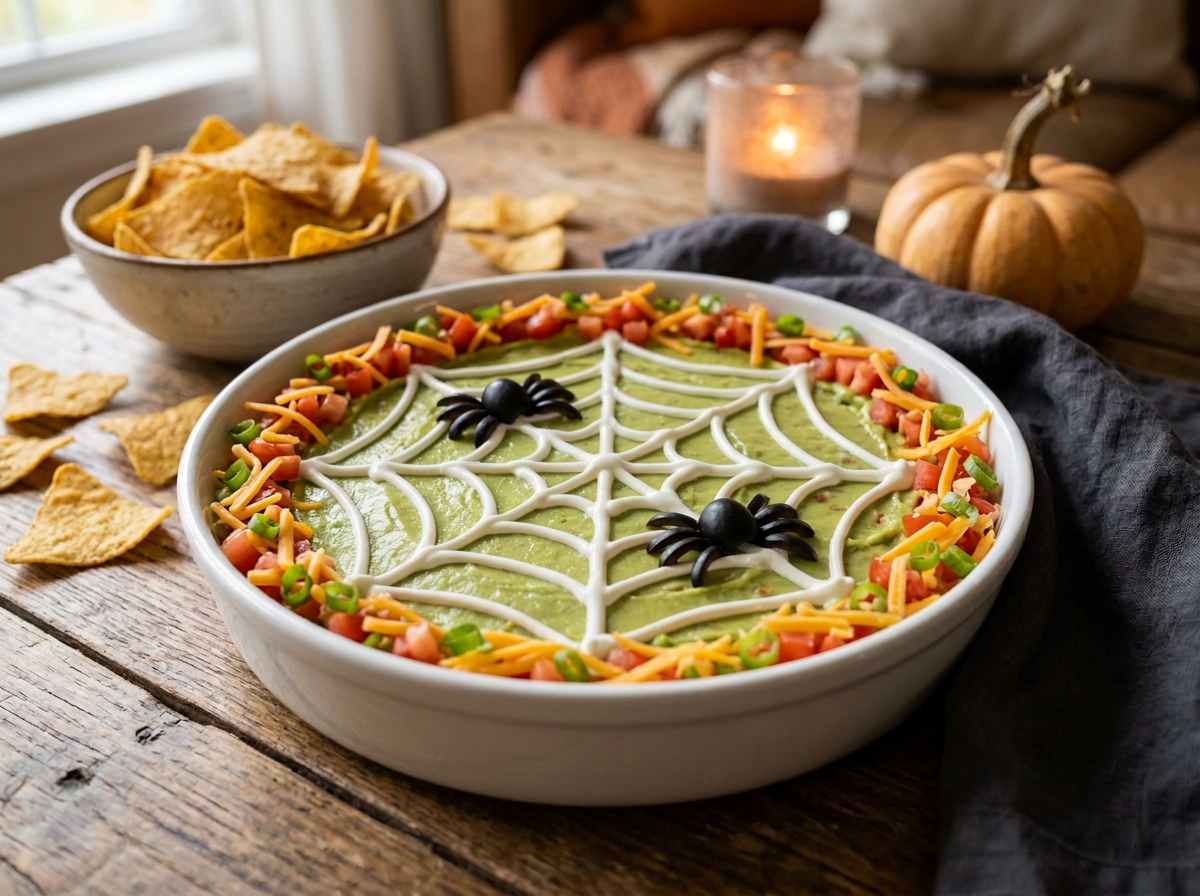
Give your Halloween snack table a savory centerpiece with this Spiderweb Taco Dip. Beneath the sour cream web are layers of refried beans, taco-seasoned cream cheese, salsa, shredded cheese, and guacamole. Black olive spiders complete the scene, turning a familiar party appetizer into something festive with just a few extra minutes of decorating.
The dip comes together without turning on the oven, and most of the ingredients can go straight from their containers into the serving dish. Set it out with a generous bowl of sturdy tortilla chips and let guests scoop through the creamy, cheesy layers.
Why You’ll Love This Spiderweb Taco Dip
This recipe delivers the familiar flavors of layered taco dip in a presentation that fits right into a Halloween party. The beans give it substance, the seasoned cream cheese adds a rich, tangy layer, and the salsa brings enough brightness to balance the creamy ingredients. Guacamole creates a green background for the white spiderweb, so the decoration becomes part of the dip itself.
It’s also an approachable project even if decorating food isn’t usually your thing. A small plastic bag works perfectly well for piping, and the web doesn’t need to be perfectly symmetrical. Slightly uneven strands and a couple of olive spiders still make the design immediately recognizable.
The ingredients are easy to adjust for your guests, too. Keep everything mild for a family gathering or choose a hotter salsa and add jalapeños around the edge for a crowd that enjoys some heat.
What You’ll Need
Refried beans form the bottom layer and help each scoop feel satisfying. Choose a variety you enjoy eating on its own, since its flavor will come through in the finished dip. If the beans are particularly stiff, stir in a small amount of water so they spread easily without dragging against the serving dish.
The next layer combines softened cream cheese, sour cream, and taco seasoning. Softening the cream cheese first makes a noticeable difference: it blends more smoothly and spreads over the beans with less effort. Taco seasoning blends vary in salt and heat, so taste the mixture before adding any extra seasoning.
Thick salsa and finely shredded cheese sit beneath the guacamole. Drain any loose liquid from the salsa before adding it; excess moisture can seep into the other layers and make the dip watery. A smooth or lightly chunky guacamole is easiest to spread into an even surface for decorating.
Regular full-fat sour cream generally pipes the clearest web. Black olives provide everything needed for the spiders, while tomatoes, scallions, and a little extra cheese create a colorful border. Keeping those toppings at the edge leaves plenty of open space for the design.
How to Make Spiderweb Taco Dip
A shallow round dish makes this dip easy to assemble and gives the web a natural shape. A 10-inch pie plate or similarly sized serving dish works well. Avoid a deep bowl, which makes it harder for guests to reach all the layers with a chip.
Spread the beans across the bottom, then add the seasoned cream cheese in small dollops. Gently connect the dollops with the back of a spoon or a small offset spatula. Use the same approach with the guacamole later; spreading several small portions is easier than pushing one large mound across a delicate layer.
Once the salsa, cheese, and guacamole are in place, smooth the top and add the border toppings. Pipe straight lines that cross at the center, then connect them with curved strands to form the web. Finish with the olive spiders and refrigerate the dip until serving.
Tips for a Neat Sour Cream Spiderweb
The most useful decorating trick is to start with a tiny opening in the piping bag. You can always make it larger, but a wide opening releases too much sour cream and makes the web harder to control. If you’re using a zip-top bag, fill one corner, press out excess air, and snip off just the tip.
Stir the sour cream until smooth before filling the bag. It should flow under gentle pressure while still holding its shape. If it seems unusually stiff, stir in milk a few drops at a time. Avoid thinning it more than necessary, since a runny web can spread into the guacamole.
Pipe four lines across the center of the dip to create eight spokes. Then work around the center, connecting neighboring spokes with short, gently curved lines. Two or three rings of connecting strands are enough to create the effect without covering the entire surface in sour cream.
For the spiders, place an olive half cut-side down on the dip and arrange four thin olive strips on each side. Assemble them directly on the surface so you don’t have to move the finished spiders.
Recipe: Spiderweb Taco Dip
This cold layered taco dip combines creamy, savory ingredients with an easy Halloween decoration. Use a shallow dish so each scoop can reach from the guacamole down to the beans.
Makes about 12 appetizer servings
Ingredients
- 1 can (16 ounces) refried beans
- 1–2 tablespoons water, only if needed to loosen the beans
- 8 ounces cream cheese, softened
- ½ cup sour cream, for the cream cheese layer
- 2 tablespoons taco seasoning
- ¾ cup thick salsa, measured after draining excess liquid
- 1 cup finely shredded cheddar or Mexican cheese blend
- 1½ cups guacamole
- ⅓ cup sour cream, for the spiderweb
- 6–8 large pitted black olives
Optional border toppings:
- ⅓ cup finely diced tomatoes, drained and patted dry
- 2 tablespoons thinly sliced scallions
- ¼ cup finely shredded cheddar or Mexican cheese blend
For serving:
- Sturdy tortilla chips
- Mini sweet pepper halves or bell pepper strips, optional
Instructions
- Stir the refried beans until smooth, adding water a little at a time only if needed to make them spreadable. Spread evenly across the bottom of a 10-inch round pie plate or shallow serving dish.
- Beat the softened cream cheese, ½ cup sour cream, and taco seasoning until smooth. Spoon small dollops over the beans and gently spread into an even layer.
- Spoon the drained salsa over the cream cheese mixture and spread gently. Sprinkle evenly with 1 cup shredded cheese.
- Add the guacamole in small dollops over the cheese. Gently spread into an even layer and smooth the surface.
- Stir the remaining ⅓ cup sour cream until smooth and transfer it to a small piping bag or zip-top bag. Snip a very small opening in the tip. Pipe four lines across the dip, crossing at the center to create eight spokes. Connect the spokes with short, curved lines, making two or three rings to form a spiderweb.
- Arrange the optional tomatoes, scallions, and extra cheese in a narrow border around the outside edge.
- Cut 1 or 2 olives in half lengthwise for spider bodies. Cut the remaining olives lengthwise into thin strips. Place the bodies cut side down on the dip, then arrange four olive strips on each side of each body for legs.
- Refrigerate for 30 minutes before serving. If covering the dish, use a domed lid or tent the cover above the surface to protect the web. Serve with tortilla chips and vegetables, if desired.
Recipe Notes
Choose thick ingredients: Drain loose liquid from the salsa and use guacamole that holds its shape. Both help keep the layers distinct and prevent moisture from collecting in the dish.
Adjust the seasoning: Taco seasoning varies by brand. Start with less if yours is particularly salty or spicy, then taste the cream cheese mixture and add more as needed.
Easy Variations
For a spicier version, use medium or hot salsa and scatter well-drained pickled jalapeños around the border. You can also stir a small amount of hot sauce into the cream cheese mixture. Keeping extra heat in the toppings is a convenient option when some guests prefer a milder dip.
If you prefer a softer, lighter layer, replace the cream cheese mixture with sour cream seasoned to taste with taco seasoning. The finished dip will be looser, so spread the other ingredients gently and serve it with sturdy chips.
You can also skip the guacamole. In that version, layer the beans, salsa, and cheese first, then spread the seasoned cream cheese mixture over the top. Pipe the web with sour cream tinted with enough smooth taco sauce to create a visible orange contrast. Add the taco sauce sparingly so the piping mixture stays thick.
Making It Ahead
For the freshest appearance, prepare the seasoned cream cheese mixture and border toppings ahead, then assemble and decorate the dip closer to serving. Keep the components covered and refrigerated, with the diced tomatoes stored separately so their juices don’t collect in the dip.
If you want to get more of the assembly finished early, layer the beans, seasoned cream cheese, salsa, and cheese in the serving dish several hours ahead. Cover and refrigerate, then add the guacamole, sour cream web, olive spiders, and border toppings shortly before the party. This keeps the green surface looking fresh and protects the decoration from being smudged by a cover.
What to Serve with Spiderweb Taco Dip
Thick tortilla chips are the best match for the substantial layers. Offer a mix of traditional yellow corn and blue corn chips for a little extra Halloween color or arrange them in separate bowls around the serving dish so guests can reach them easily.
Mini sweet pepper halves, bell pepper strips, and cucumber rounds add a crisp alternative alongside the chips. Pat washed vegetables dry before serving so they don’t drip water into the dip.
On a larger Halloween buffet, this dip pairs well with warm finger foods such as mummy-wrapped jalapeño poppers or small portions of eyeball subs. Place the chips close to the dip and leave enough room around the dish for guests to scoop comfortably.
Storing Leftovers
Cover leftover dip and refrigerate promptly. It is best enjoyed within two days, although the guacamole may darken and the salsa may release some liquid as it sits. Scoop leftovers onto a plate and serve with fresh chips or spoon them into a tortilla for an easy snack.
The web will lose its shape as guests serve themselves, but that’s part of the fun. Give everyone a moment to admire the spiders, then let them dig into the layers beneath.



Leave a Reply