
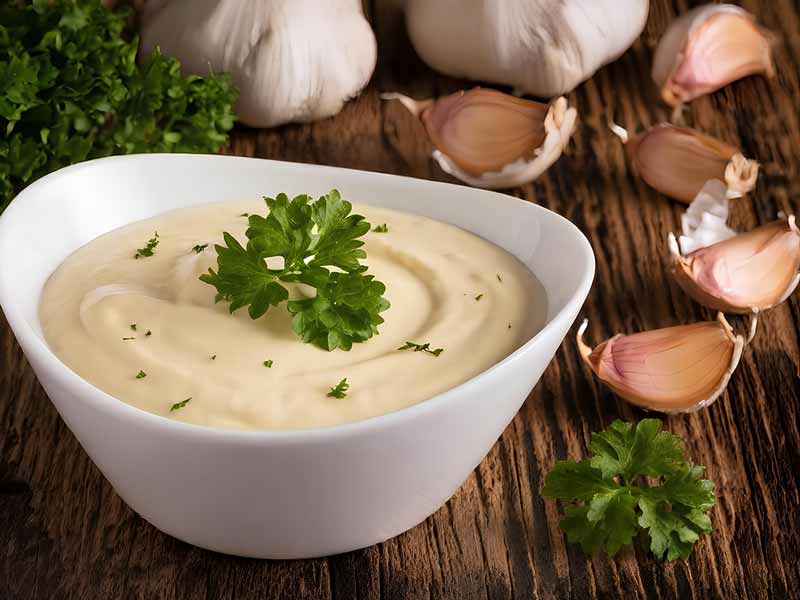
Few sauces are as simple or as transformative as aioli. Rich, creamy, and deeply flavorful, it has the power to elevate everything from roasted vegetables to sandwiches and seafood. Once you understand the basics, it becomes one of the most useful sauces you can keep in your culinary toolkit.
In this guide, we’ll cover what aioli actually is, how it differs from mayonnaise, how to make it from scratch, how to fix it if it breaks, and plenty of ways to use it.
What Is Aioli?
At its most traditional, aioli is a Mediterranean sauce made from garlic and olive oil that are emulsified together into a thick, creamy paste. The name comes from the Provençal words for garlic (“alh”) and oil (“òli”).
In modern cooking, especially in the United States, “aioli” often refers to a garlic-flavored mayonnaise made with egg yolk, oil, lemon juice, and garlic. While purists might argue the difference, both versions are delicious, and understanding the distinction helps you decide which method works best for you.
Traditional vs. Modern Aioli
Traditional Aioli (Garlic + Olive Oil)
Authentic aioli contains no egg. It’s made by crushing garlic into a paste using a mortar and pestle, then slowly working in olive oil until the mixture emulsifies. The result is bold, intensely garlicky, and slightly rustic in texture.
This method takes patience and steady technique, as the emulsion forms entirely through mechanical action and the natural emulsifying properties of garlic.
Modern Aioli (Garlic Mayonnaise)
Most home cooks prefer the modern version, which uses egg yolk as an emulsifier. Egg yolk contains lecithin, a natural emulsifier that binds oil and liquid together more easily and reliably.
This version is:
- Creamier
- More stable
- Milder in garlic intensity
- Faster and easier to prepare
For everyday cooking, this is the most practical and foolproof approach.
The Science of Emulsification (Made Simple)
Aioli is an emulsion, meaning it combines two ingredients that don’t naturally mix (oil and water-based liquids like lemon juice).
When you whisk egg yolk with lemon juice and slowly add oil, the lecithin in the yolk helps suspend tiny droplets of oil throughout the mixture. If the oil is added too quickly, the droplets can’t properly disperse, and the sauce may “break,” becoming thin and separated.
The key is slow, steady incorporation.
Foolproof Aioli Recipe
This version is stable, creamy, and ideal for beginners.
Ingredients
- 1 large egg yolk (room temperature)
- 1–2 cloves garlic, finely grated or mashed into a paste
- 1 teaspoon Dijon mustard (optional, for added stability)
- 1 tablespoon fresh lemon juice (or white wine vinegar)
- ¾ cup neutral oil (such as avocado or light olive oil)
- Salt, to taste
Optional: Replace up to half the neutral oil with extra virgin olive oil for more flavor.
Instructions
- In a medium bowl, whisk together egg yolk, garlic, Dijon (if using), and lemon juice until smooth.
- While whisking constantly, add oil drop by drop at first. This step is critical for forming the emulsion.
- Once the mixture begins to thicken, slowly drizzle in the remaining oil in a steady, thin stream while whisking.
- Once thick and creamy, season with salt and additional lemon juice if needed. The final texture should be thick, glossy, and spoonable.
Shortcut Aioli Recipe
If you’re short on time, this quick method works beautifully.
Ingredients
- 1 cup high-quality mayonnaise
- 1 clove garlic, finely grated
- 1–2 teaspoons lemon juice
- Salt, to taste
Instructions
Stir everything together and refrigerate for 30 minutes before serving to allow flavors to meld.
This version lacks the depth of freshly emulsified aioli but is excellent for weeknight meals.
Flavor Variations
Once you’ve mastered the base recipe, you can customize it endlessly.
- Roasted Garlic Aioli: Replace raw garlic with roasted garlic for a sweeter, mellow flavor.
- Lemon Aioli: Add extra lemon zest for brightness.
- Herb Aioli: Blend in chopped parsley, basil, dill, or chives.
- Spicy Aioli: Stir in sriracha, chili paste, or cayenne.
- Smoked Paprika Aioli: Add ½ teaspoon smoked paprika for depth.
- Truffle Aioli: Finish with a few drops of truffle oil.
How to Fix Broken Aioli
If your aioli becomes thin or separates, don’t panic — it’s usually fixable.
Method to Rescue:
- In a clean bowl, whisk one fresh egg yolk.
- Slowly drizzle the broken aioli into the new yolk while whisking constantly.
- The emulsion should reform and thicken.
Prevention tip: Always add oil slowly at the beginning, and make sure ingredients are at room temperature.
Ways to Use Aioli
Aioli is incredibly versatile. Try it with:
- Roasted potatoes or fries
- Grilled vegetables
- Burgers and sandwiches
- Crab cakes or shrimp
- Grilled chicken or steak
- As a dip for artichokes
- Spread on flatbreads or wraps
It instantly adds richness and depth to even the simplest dishes.
Storage & Food Safety
Homemade aioli should be stored in an airtight container in the refrigerator and used within 2–3 days.
Because it contains raw egg yolk, use very fresh eggs. If you’re concerned about food safety, look for pasteurized eggs.
Always keep aioli refrigerated and avoid leaving it at room temperature for extended periods.
Frequently Asked Questions
Is aioli just flavored mayonnaise?
Traditionally, no. Modern versions, however, are essentially garlic mayonnaise.
Can I use only olive oil?
You can, but strong extra virgin olive oil may produce a slightly bitter flavor. Many cooks prefer a mix of neutral oil and olive oil.
Can I make it in a blender or with an immersion blender?
Yes. Add all ingredients except oil, blend briefly, then slowly stream in oil while blending.
Aioli may seem like a small addition, but it has an outsized impact. Mastering this simple emulsion gives you a versatile, customizable sauce that can elevate everyday cooking with minimal effort.
Once you make it from scratch, you may never look at plain mayonnaise the same way again.



Leave a Reply