
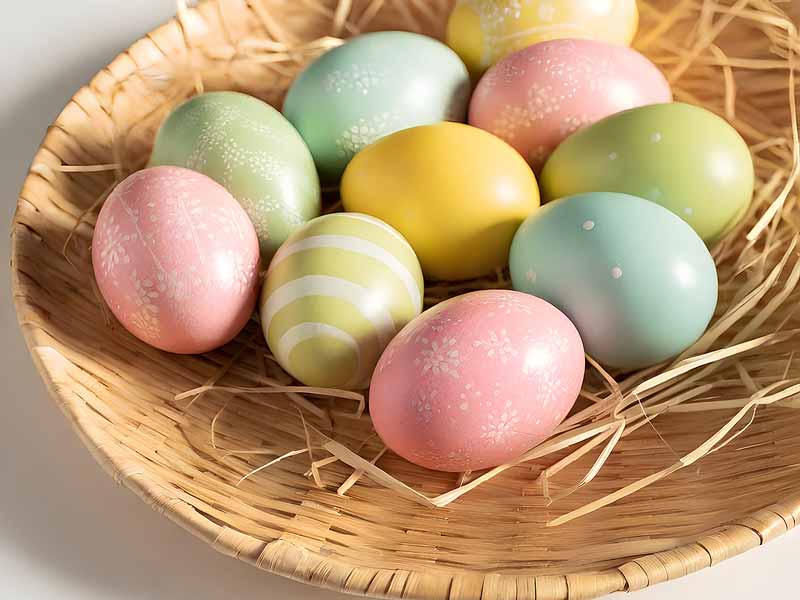
Few Easter traditions are as intricate and meaningful as Pysanky, the Ukrainian art of decorating eggs using a wax-resist method. These beautifully detailed eggs are “written” with symbols in beeswax and dyed in layered colors, resulting in stunning geometric and floral designs rich with meaning.
Traditional Pysanky are deeply rooted in Ukrainian history and culture, with techniques and motifs passed down through generations. While the authentic process requires specialized tools and practice, you can create a simplified, inspired version at home using basic materials and a handmade tool. This approachable method focuses on bold dots and simple lines rather than intricate patterns—an accessible way to explore the beauty of wax-resist egg decorating while honoring its origins.
What Is Pysanky?
The word pysanka comes from the Ukrainian verb pysaty, meaning “to write.” Rather than painting or dyeing freely, designs are written onto the egg in melted beeswax using a stylus called a kistka. The egg is then dyed in stages, moving from lighter to darker colors. Wax is applied between dye baths to preserve the previous color. Once complete, the wax is gently melted away to reveal layered, intricate designs beneath.

Traditionally, Pysanky are created in the weeks leading up to Easter and are filled with symbolism. Common motifs include:
- Sunbursts and stars representing life and light
- Wheat and plant forms symbolizing harvest and abundance
- Geometric patterns reflecting harmony and protection
Colors also carry meaning. Red often symbolizes love and life, yellow represents harvest and warmth, and black conveys eternity.
This art form is both decorative and symbolic—each egg telling a story through pattern and color.
A Simplified At-Home Version
While traditional Pysanky require practice and specialized tools, a simplified version can be created at home using fewer layers and less intricate designs.
Instead of elaborate geometric motifs, this approach focuses on:
- Dots
- Simple lines
- Bands
- Leaves
- Basic sunbursts
Rather than a traditional kistka, you can make your own wax-writing tool by inserting a sewing pin into the eraser end of a pencil. The pin tip holds a small amount of melted wax, allowing you to dot or gently drag designs across the egg’s surface.
The result won’t replicate authentic Pysanky—but it beautifully captures the spirit of the wax-resist technique in a more accessible way.
Supplies You’ll Need
- White eggs (hard-boiled for traditional dyeing or blown-out eggs for keepsakes)
- Beeswax (pellets or a small block)
- A candle to melt the wax
- A sewing pin
- A pencil with an eraser (to hold the pin)
- Egg dye (store-bought kits or homemade vinegar-based dye)
- Small cups or bowls for dye
- Paper towels
- Spoon for dipping eggs
- Soft cloth for polishing finished eggs
How to Make Simplified Wax-Resist Eggs
1. Prepare the Egg
Make sure the egg is clean and dry. If you’d like guidelines, lightly divide the egg into sections with a pencil—horizontal or vertical lines can help anchor your design.
2. Make Your DIY Wax Tool
Insert a sewing pin firmly into the eraser end of a pencil. This becomes your simple stylus. You can also use tracing tools found in craft stores. We like these embossing tools for creating a variety of dots and patterns.
Light a candle and allow a small amount of beeswax to melt. Carefully dip the tip of the pin into the melted wax.
3. Apply Wax Designs
Using the wax-coated pin, dot or drag simple patterns onto the egg. Work slowly and re-dip into wax as needed.
Remember: wherever you apply wax will remain the current color of the egg (initially white).
Start with the areas you want to preserve as white.
4. First Dye Bath
Place the egg into the lightest dye color and let it sit according to the dye instructions. Remove and allow it to dry completely.
5. Add More Wax (Optional)
If you’d like layered color, apply additional wax over areas you want to preserve in the first dye color.
Keep the designs simple—bold dots and clean lines tend to produce the clearest results.
6. Second Dye Bath (Optional)
Dip the egg into a darker dye color. Allow it to dry fully.
You can continue layering in this way, always moving from lighter to darker shades.
7. Remove the Wax
Once the egg is fully dry, hold it near (but not directly in) the candle flame just long enough for the wax to soften. Gently wipe away the melted wax with a soft cloth or paper towel.
As the wax lifts away, the preserved colors and patterns will be revealed.
Simple Design Ideas for Beginners
If you’re new to wax-resist decorating, start with:
- Scattered polka dots
- Horizontal or diagonal bands
- A simple sunburst on the top or bottom
- Dividing the egg into quarters with cross lines
- Repeating leaf shapes
- Alternating dots along penciled guidelines
Resist the urge to overfill the surface—negative space makes the design more striking.
Safety Tips
- Work carefully around open flames.
- Keep wax and candle on a stable surface.
- Never leave a burning candle unattended.
- Allow eggs to cool before handling extensively.
If crafting with children, adult supervision is essential when working with hot wax and flame.
Displaying Your Finished Eggs
Blown-out eggs are ideal if you’d like to keep them from year to year. Once finished, they can be:
- Arranged in a ceramic bowl
- Displayed in a wooden tray
- Placed in a simple egg carton
- Used as part of an Easter table centerpiece
Their layered patterns and soft color transitions make them feel both traditional and modern.
Honoring the Tradition
While this simplified tutorial offers an accessible way to experiment with wax-resist egg decorating, traditional Ukrainian Pysanky are a deeply meaningful folk art with generations of history behind them. Exploring the craft—even in a simplified way—can be a way to appreciate the symbolism, patience, and artistry that define the tradition.
By slowing down and carefully writing each line in wax, you’re participating in a creative process that celebrates renewal, light, and the arrival of spring—values that feel especially meaningful during the Easter season.



Leave a Reply