
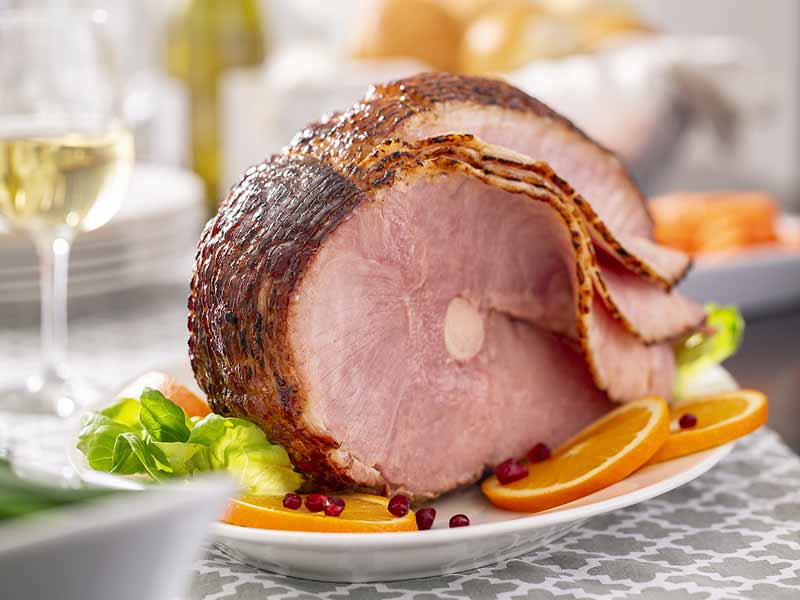
A beautifully glazed ham has long been the centerpiece of celebratory meals, and this Honey-Glazed Ham with Dijon and Brown Sugar delivers everything you want in a holiday main dish: glossy caramelization, balanced sweetness, and tender slices that feed a crowd with ease.
The glaze is simple but layered in flavor. Honey brings floral sweetness and shine. Brown sugar adds warmth and depth. Dijon mustard cuts through the richness with gentle acidity and subtle heat. As the ham warms in the oven, the glaze slowly caramelizes, forming a lacquered exterior that contrasts beautifully with the savory meat beneath.
Whether you’re hosting Easter brunch, a spring gathering, or a traditional holiday dinner, this is a ham worth gathering around.
Why This Glaze Works
The key to a memorable baked ham is balance. Too sweet, and it overwhelms. Too sharp, and it distracts from the meat. This glaze strikes the right middle ground.
- Honey provides natural sweetness and helps create that glossy, sticky finish.
- Brown sugar deepens the flavor with subtle molasses notes and caramelizes beautifully in the oven.
- Dijon mustard introduces brightness and just enough sharpness to keep the glaze from tasting sugary.
- A touch of butter rounds everything out and helps the glaze cling to the ham as it bakes.
Brushing the glaze onto the ham in stages ensures that it builds flavor gradually and develops a rich, burnished exterior without scorching.
Choosing the Right Ham
Selecting the right ham makes preparation straightforward.
Bone-In vs. Boneless
A bone-in ham offers slightly deeper flavor and a more traditional presentation. It’s ideal for holiday tables and tends to stay moist. A boneless ham is easier to slice and slightly simpler to serve, making it a convenient choice for smaller gatherings.
Spiral-Cut vs. Whole
Spiral-cut hams are pre-sliced, which makes serving effortless and allows the glaze to seep between the slices. A whole, unsliced ham retains moisture beautifully but requires carving at the table.
For this recipe, either works well. Most importantly, choose a fully cooked ham, as the goal is reheating and glazing rather than cooking from raw.
Tips for Success
- Bring the ham to room temperature for about 30–45 minutes before baking to ensure even heating.
- If the ham is not spiral-cut, lightly score the surface in a shallow diamond pattern. This helps the glaze penetrate and creates a beautiful presentation.
- Cover loosely with foil during the initial reheating to prevent drying.
- Apply the glaze in multiple layers during the final stage of baking.
- Allow the ham to rest before slicing so the juices redistribute.
Recipe: Honey-Glazed Ham with Dijon and Brown Sugar
Serves 10–12
Ingredients
1 fully cooked bone-in ham (8–10 pounds)
½ cup honey
½ cup packed brown sugar
¼ cup Dijon mustard
2 tablespoons unsalted butter
2 tablespoons orange juice (optional)
Instructions
- Preheat the oven to 325°F. Place the ham cut-side down in a roasting pan. If the ham is not spiral-cut, score the surface in a shallow diamond pattern using a sharp knife.
- Cover the ham loosely with foil and bake for about 10–15 minutes per pound, or until the internal temperature reaches 135–140°F.
- While the ham is warming, prepare the glaze. In a small saucepan over medium heat, combine the honey, brown sugar, Dijon mustard, butter, and orange juice if using. Stir until the butter is melted and the sugar has dissolved. Remove from heat.
- During the final 30–45 minutes of baking, remove the foil and brush a generous layer of glaze over the ham. Return to the oven uncovered. Brush with additional glaze every 10–15 minutes, allowing each layer to caramelize slightly before adding the next.
- If needed, increase the oven temperature to 400°F for the last 5–10 minutes to deepen the caramelization, watching carefully to prevent burning.
- Remove the ham from the oven and let rest for 15–20 minutes before slicing. Spoon any pan juices over the slices when serving.
Serving Suggestions
Honey-Glazed Ham pairs beautifully with simple, seasonal sides. Consider serving it with roasted carrots, buttery peas, scalloped potatoes, or a bright green salad for contrast.
Dinner rolls or biscuits are perfect for soaking up extra glaze and juices. For a spring meal, balance the richness of the ham with lighter vegetable dishes and fresh herbs.
Make-Ahead and Storage
The glaze can be prepared up to three days in advance and stored in the refrigerator. Warm gently before using.
Leftover ham keeps well in the refrigerator for up to four days. Wrap tightly or store in an airtight container. It also freezes well when properly wrapped.
Extra slices are perfect for sandwiches, omelets, quiche, or soups. A baked ham often means meals for days, making it both celebratory and practical.
Honey-Glazed Ham with Dijon and Brown Sugar is proof that a classic dish doesn’t need complicated ingredients to feel memorable. With a well-balanced glaze and simple technique, you can create a centerpiece that looks impressive, tastes deeply flavorful, and brings everyone to the table.
It’s a recipe that’s easy enough for a relaxed gathering and elegant enough for your most special occasions—exactly the kind of dish that becomes a tradition.



Leave a Reply