
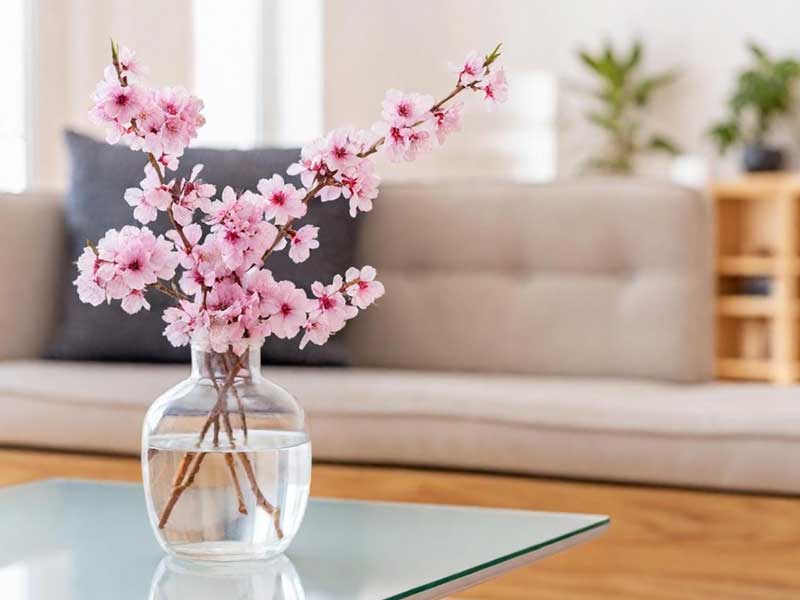
As winter fades and the first signs of spring begin to appear, bringing natural elements indoors is one of the easiest ways to refresh a home. Branches and spring blossoms add height, movement, and softness to everyday spaces, creating arrangements that feel both effortless and seasonal.
Whether clipped from the garden, gathered on a walk, or purchased at a local market, these simple stems offer remarkable versatility. A few flowering branches in a tall vase can transform an entryway, while a single blossom in a bud vase can brighten a bedside table.
Decorating with branches and blossoms celebrates the beauty of the season in its most natural form.
Why Branches Make Beautiful Seasonal Decor
Branches offer qualities that many traditional floral arrangements don’t. Their sculptural shapes create movement and visual interest, making even a small arrangement feel dynamic.
One of their greatest advantages is height. A few long stems can instantly draw the eye upward and fill vertical space on a table, mantel, or console without the need for large bouquets.
Branches also tend to last longer than delicate flowers. Many blooming branches remain beautiful for a week or more, and even bare branches with swelling buds offer subtle seasonal charm.
Because of their scale and simplicity, branches create a dramatic visual impact with minimal effort—a few stems in a thoughtfully chosen vessel often look more sophisticated than elaborate arrangements.
Best Spring Branches and Blossoms to Decorate With
Many flowering trees and shrubs produce beautiful stems suitable for indoor arrangements. Here are several favorites often used in seasonal decorating.

Cherry Blossoms
Cherry branches are beloved for their soft pink blossoms and airy, cloud-like clusters. They work beautifully in tall vases and create an elegant, romantic look in entryways or dining rooms.

Forsythia
Forsythia’s bright yellow flowers appear early in spring and add instant cheer to a room. The slender branches are easy to arrange and look especially striking against neutral backgrounds.

Flowering Quince
Quince branches feature vibrant red, coral, or pink blossoms that appear along slightly thorny stems. Their bold color and sculptural form make them ideal for statement arrangements.

Dogwood
Dogwood branches are graceful and architectural, often featuring delicate white or pink blooms. They pair well with simple ceramic or stoneware vases.

Magnolia
Magnolia branches are dramatic and elegant, with large blossoms and thick stems. A single magnolia branch can create a stunning focal point in a room.

Pussy Willow
Soft gray catkins give pussy willow branches a subtle, textural quality. They are especially useful in minimalist arrangements and often last for weeks.

Apple or Pear Blossoms
These delicate blossoms feature soft white or blush petals and create arrangements that feel light and fresh—perfect for spring tables.
How to Arrange Branches in a Vase
Arranging branches is simpler than traditional floral design, but a few techniques help create a natural-looking display.
Choose the Right Vase
The vessel sets the tone for the arrangement.
Tall ceramic or glass vases work well for dramatic flowering branches, while wide-mouthed containers allow stems to spread into a more relaxed shape. For smaller stems, pitchers, bottles, or simple bud vases can be just as effective.
Heavier containers are often helpful for large branches, as they provide stability.
Trim and Prepare the Branches
Proper preparation helps branches last longer.
Cut stems at a sharp angle with clean pruning shears. Remove any buds or leaves that would sit below the water line to prevent cloudiness.
For thicker, woody stems—such as magnolia or cherry—gently split the bottom inch of the stem to help it absorb water more easily.
Create a Balanced Arrangement
Start with the tallest branch and place it slightly off-center in the vase. Add additional stems at varying angles, allowing them to cross naturally.
Rather than forcing perfect symmetry, let the branches lean and curve. The most beautiful arrangements often feel loose and slightly asymmetrical.
Decorating Ideas Using Branches and Blossoms
Branches can be used throughout the home in both large and small arrangements.
A Statement Arrangement for the Entryway
An entryway is the perfect place for a dramatic arrangement of branches. A tall vase filled with cherry blossoms, magnolia stems, or dogwood branches instantly welcomes guests.
Place the arrangement on a console table or entry cabinet and pair it with a mirror or artwork above. Keeping the surrounding décor simple allows the natural beauty of the branches to stand out.
A large ceramic, stoneware, or glass vessel works particularly well in this setting.
A Soft Spring Dining Table Centerpiece
Branches can create a dining table centerpiece that feels light and seasonal rather than overly formal.
One tall vase of blossoms works well for casual tables, while several small bottles arranged down the center of the table create a relaxed, collected look.
Pair the arrangement with linen runners, simple dinnerware, and neutral napkins to maintain a fresh spring palette.
Branches on the Mantel
A mantel provides an ideal backdrop for branches with interesting shapes.
One asymmetrical arrangement placed toward one side creates balance when paired with candles, small framed artwork, or decorative objects. Flowering quince or pussy willow branches work especially well here because of their graceful lines.
The goal is to create movement without overcrowding the space.
Bedside or Bathroom Blossoms
Branches don’t need to be large to make an impact. Even a single stem can bring life to smaller spaces.
A small branch placed in a bud vase beside the bed creates a gentle seasonal touch. In a bathroom, a small arrangement on the vanity or shelf can add freshness and color.
Apple blossoms, dogwood, or small cherry branches are ideal for these intimate displays.
Hanging Branch Displays
For a more creative approach, branches can become part of a sculptural display.
A single branch suspended above a dining table or kitchen island creates a striking seasonal feature. Small blossoms can be tied to the branch with fine thread or ribbon so they appear to float in the air.
Branches can also be hung in front of a window where natural light highlights the flowers and casts delicate shadows.
Forcing Spring Branches to Bloom Indoors
One of the most rewarding ways to decorate with branches is by forcing them to bloom indoors before they flower outside.
This process works especially well with early spring trees and shrubs.
How to Force Branches
- Cut branches while buds are still closed but beginning to swell.
- Choose stems that are 12–24 inches long.
- Place them in warm water immediately after cutting.
- Recut the stems at an angle once indoors.
- Place the vase in a bright location away from direct heat.
Within one to three weeks, the buds will begin to open, creating beautiful blossoms indoors.
Branches that force particularly well include:
- Forsythia
- Cherry
- Apple
- Flowering quince
Watching the flowers slowly emerge can be one of the most satisfying parts of early spring decorating.
Styling Tips for Natural-Looking Arrangements
- A few simple techniques help keep branch arrangements looking effortless and elegant.
- Use fewer stems than you think you need. Sparse arrangements often feel more refined.
- Allow branches to lean and curve naturally rather than forcing them into rigid shapes.
- Mix budding branches with bare stems for subtle texture and variation.
- Choose simple containers so the branches remain the focal point of the arrangement.
A Simple Way to Celebrate the Season
Decorating with branches and blossoms is one of the simplest ways to bring the feeling of spring indoors. A few thoughtfully arranged stems can brighten a room, add height and movement, and reflect the changing season outside.
Whether gathered from the garden, clipped from a flowering tree, or found at a market, these natural elements offer endless possibilities for seasonal decorating.
Sometimes the most beautiful arrangements come from the simplest materials—a reminder that spring’s beauty doesn’t need much embellishment to shine.



Leave a Reply