
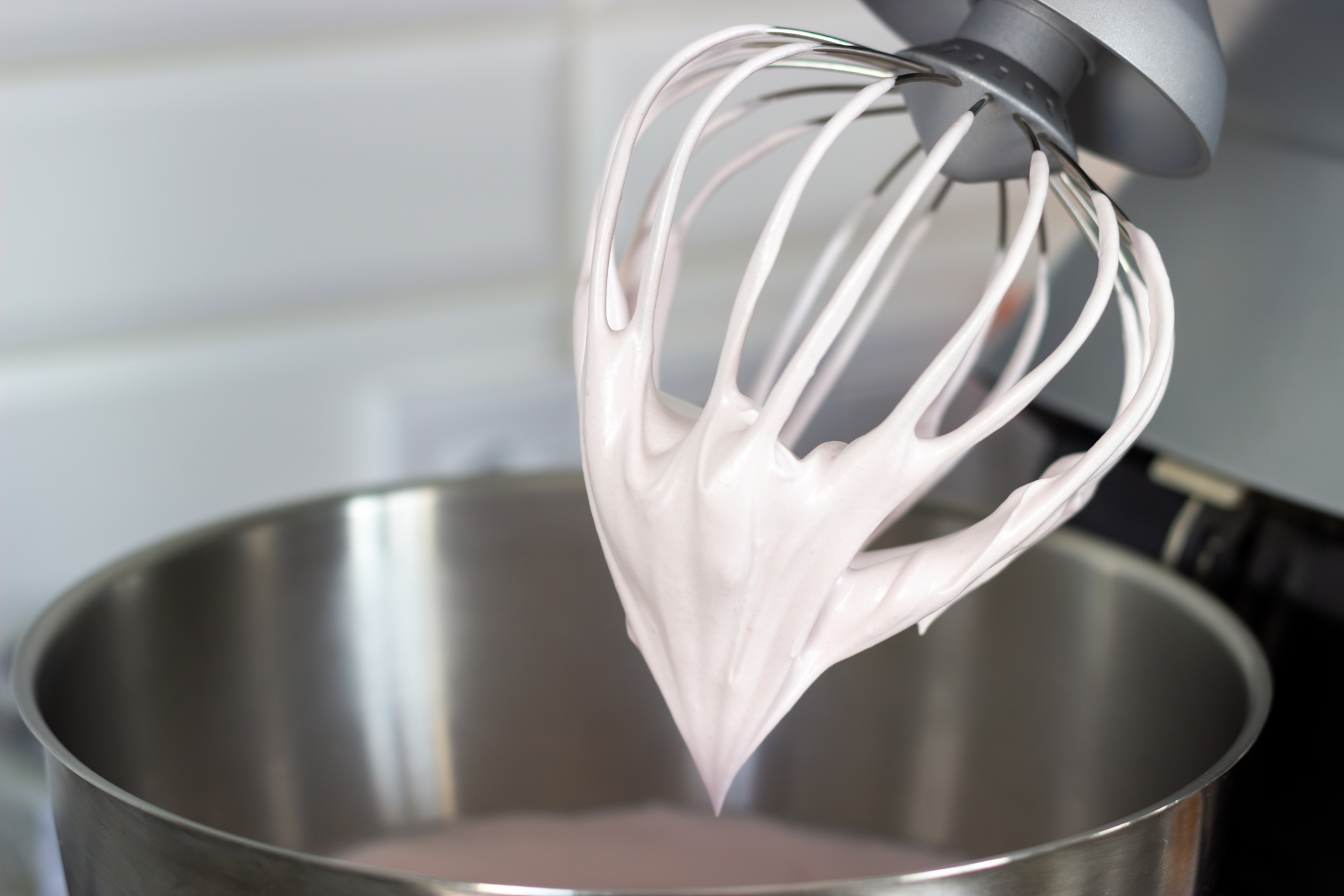
Whipping egg whites into soft peaks is one of the basics of baking. Meringue is a simple, versatile staple that can take many forms—from crisp and airy pavlovas to creamy pie toppings and delicate cookies. And while the ingredient list is short (egg whites and sugar, mostly), the method matters.
What Is Meringue, Really?
Meringue is the result of egg whites whipped with sugar until they transform into glossy, structured peaks. The air you beat in creates volume, while the sugar stabilizes the foam and adds sweetness. It’s one of those foundational recipes that can shape-shift into endless dessert possibilities.
The Basics
- The two most common techniques for making meringue are the French and Swiss methods.
- The French method is to simply whip the egg whites with sugar and cream of tartar or some other acid to stabilize the mixture. This is the easiest method and is a good option if you’re further cooking or baking the meringue as with pavlova or cookies.
- With the Swiss method, the egg whites are cooked over a double-boiler before whipping. The cooking helps stabilize the meringue so no additional acid is needed. This method is great for topping pies (like lemon meringue) or if you’re just uncomfortable eating raw egg whites.
- Either method can be used when meringue is called for in a recipe. We prefer the Swiss method because it’s super reliable, far less likely to weep or separate and we don’t have to worry about serving it to someone that can’t have raw eggs, like pregnant guests.
- You can use liquid egg whites or separate whole eggs by hand. If you choose to separate the eggs yourself, that’s easier to do when the eggs are cold. Just make sure to let the egg whites come to room temperature before whipping them.
- Egg whites will never form stiff peaks if they come into contact with fat. That includes the egg yolk, grease or oily residue on the mixer or whisk attachment, or even the natural oils on your skin if you’re separating the eggs by hand. To ensure your egg whites whip up properly, make sure none of the egg yolk gets into the whites, wash your hands before handling the eggs and wipe down your clean mixing bowl and whisk attachment with a paper towel moistened with a little vinegar or lemon juice.
- French meringue often calls for cream of tartar, which you can find in the baking aisle of most supermarkets, where bottled herbs and spices are sold. It’s an acid, so if you can find it, you can substitute the same amount of vinegar or double the amount of lemon juice. Don’t worry; there’s enough sugar in the recipe so this will not make the meringue taste sour.
- Meringue can be lightly flavored with extracts. If you want to color your meringue, we suggest using a gel dye since liquid can throw off the balance of the meringue.
The Recipes
French Meringue
Ingredients
- 4 room temperature egg whites
- 1 cup granulated sugar
- ¼ tsp cream of tartar or white vinegar or 1/2 tsp. lemon juice
- 1/2 tsp. vanilla extract (optional)
Instructions
- In a clean, dry bowl, beat the egg whites with cream of tartar or salt until soft peaks form.
- Gradually add the sugar, one spoonful at a time, while continuing to beat.
- Beat until glossy, stiff peaks form and the sugar has dissolved (rub a bit between your fingers—it should feel smooth, not gritty).
Swiss Meringue
Ingredients
- 4 egg whites
- 1 cup granulated sugar
- 1/2 tsp. vanilla extract (optional)
Instructions
- In a heatproof bowl set over a pot of simmering water (double boiler style), whisk egg whites and sugar constantly until the mixture reaches 160°F (71°C) and the sugar has fully dissolved.
- Remove from heat and beat the mixture with a mixer until it becomes thick, glossy, and cool to the touch—about 5–7 minutes.
How to Use Meringue
Pavlova

Pavlova is a cloud-like meringue dessert with a crisp exterior and marshmallowy center—perfect for topping with whipped cream and fresh fruit.
To make the base, spoon or pipe your meringue onto a parchment-lined baking sheet. You can shape it precisely using a piping bag for a more elegant finish, or simply use a spatula to create a rustic, billowy look. Either make one large round pavlova about 7 to 9 inches wide, or several smaller individual ones. Use the back of a spoon to gently create a shallow well in the center—this will hold your toppings later.
Bake at 225°F for 1 to 1½ hours, depending on the size. Once the baking time is up, turn off the oven and let the pavlova cool completely inside with the door slightly ajar to help prevent cracks.
After the pavlova base has cooled, it’s ready to be topped. Try a simple layer of whipped cream and fresh berries, or dress it up with lemon curd, pastry cream, sliced stone fruit, pomegranate seeds, or a drizzle of chocolate. The base is delicate, so assemble just before serving for the best texture.
Pie Topping

Meringue makes a classic topping for many cream and custard pies—and how it’s finished depends on the type of pie you’re making.
For pies like lemon meringue, the topping is spread over the filling and then baked in the oven until the meringue is lightly golden and set. This method not only toasts the exterior but also helps bond the meringue to the hot filling underneath, which reduces weeping or shrinking.
For other pies, like chocolate cream or coconut cream, the filling is fully cooked and cooled before the meringue is added. In these cases, the meringue is typically toasted with a kitchen torch rather than baked. This gives it a beautifully bronzed finish while keeping the filling cold and stable.
Whether baked or torched, pile the meringue high and make sure it touches the crust edge to help anchor it in place. It’s both a visual flourish and a sweet, airy counterpoint to rich, creamy fillings.
Meringue Cookies

Light as air and crisp all the way through (and did we mention fat-free?!), meringue cookies are one of the simplest and most versatile ways to use meringue. Just pipe or spoon the Swiss meringue onto a parchment-lined baking sheet and bake low and slow until completely dry.
You can keep them plain or fold in extras like mini chocolate chips, cocoa powder, finely chopped nuts, or flavored extracts before baking. For a festive twist, swirl in food coloring or dip the finished cookies in melted chocolate once cooled.
Bake at 200°F for 1½ to 2 hours, then let them cool in the oven with the door ajar to prevent cracks and ensure they dry out completely. Properly baked meringue cookies should be crisp on the outside and nearly melt in your mouth.
These sweet little bites store beautifully in an airtight container and make great gifts, party favors, or a quick dessert with coffee or fruit.
Baked Alaska

Baked Alaska is a showstopping dessert where meringue becomes both a decoration and insulation. It’s made by covering a dome of cake and ice cream with fluffy meringue, then briefly baking or torching the exterior to create a golden, toasted shell.
To assemble, layer cake on the bottom (usually sponge or pound cake), top with a molded dome or block of ice cream, and freeze until very firm. Just before serving, cover the entire surface with meringue, making sure it’s completely sealed to prevent melting. You can pipe it in decorative swirls or spread it with a spatula for a rustic look.
The meringue is then quickly browned either in a very hot oven (around 500°F 3–5 minutes) or with a kitchen torch. The outer layer caramelizes while the ice cream inside stays frozen, thanks to the insulating power of the meringue.
Baked Alaska is all about drama—flame-kissed edges, cold centers, and that perfect hot-meets-cold bite.
Dacquoise

Dacquoise is a crisp, nut-studded meringue that’s baked into thin layers and used in elegant, layered desserts. Made by folding finely ground nuts—usually almonds or hazelnuts—into stiff meringue, dacquoise bakes up crisp, airy, and just slightly chewy in the center.
The baked layers can be used in a variety of ways: stacked with buttercream, ganache, or whipped cream to make a classic layered dacquoise cake, or incorporated as a single crunchy layer in a more complex dessert like an entremet or semifreddo.
To make dacquoise, pipe or spread the nutty meringue into rounds or rectangles on parchment-lined baking sheets, then bake low and slow until dry and lightly golden. Let cool completely before assembling, and store layers in an airtight container to keep them crisp.
Delicate yet decadent, dacquoise adds both texture and flavor to refined desserts—and proves that meringue can do so much more than just float on top.
Did you know?
The most luscious, creamy buttercream frosting begins with meringue? Continue to whip the Swiss meringue recipe while adding 3 sticks of soft butter, 1 tablespoon at a time. Beat until smooth. Finish your Swiss Meringue Buttercream with extract and coloring of your choice.
Final Thoughts
Meringue may seem delicate, but it’s more forgiving than you think. Once you understand the basics, you can layer, torch, bake, or fold it into almost anything—adding a light, airy magic to even the most rustic desserts.



Leave a Reply